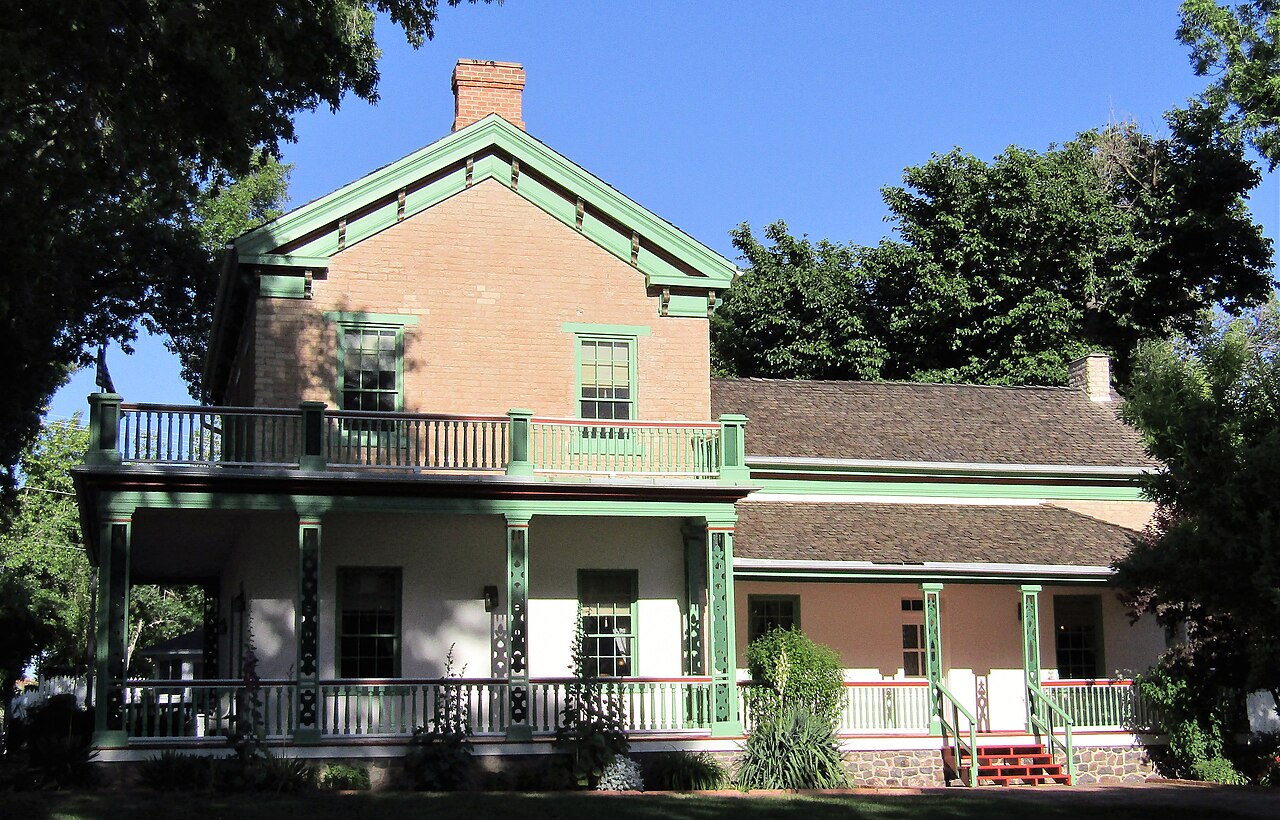
Just a few minutes west of St. George, in the small town of Santa Clara, stands a two-story sandstone house that tells a different part of the region's story. Jacob Hamblin was a frontier missionary known for working with Native American communities across the Colorado Plateau, and in the early 1860s he built this home for his family. The stone walls, thick and cool in the summer, were made from local rock, and the layout includes a central hall, large rooms and a porch that still looks out over fields. Today the house is preserved as a historic site run by The Church of Jesus Christ of Latter-day Saints. Tours are brief and informal, led by volunteers who tell stories about Hamblin's travels, his relationships with Paiute and Navajo leaders and the daily life of the settlers who lived near the creek.
The site is small but atmospheric. A courtyard and shade trees surround the house, and benches invite you to sit while a guide explains the story. Inside, rooms hold period furniture, tools and household items, with a focus on how a large pioneer family used the space for sleeping, cooking and receiving visitors. Because the walls are thick, the interior stays comfortable on hot days, which is a clue to why settlers favored stone.
The surrounding town of Santa Clara is a charming place to wander. Orchards and old fields remain along the creek, and a few other historic buildings, a small park and a handful of cafes are within a few minutes' drive. This is a good stop on the way to or from the Tuacahn amphitheatre and Snow Canyon State Park, both covered in the Zion and Bryce Canyon guide, because it adds historical depth to a day spent mainly outdoors.
Hamblin's story is complicated and rewards some reading beforehand. He served as a missionary and negotiator during years of tension, and historians continue to debate his legacy. Guides generally focus on the practical side of his life, including how he found springs and routes for later settlers, but visitors can ask about the more difficult questions and expect a thoughtful answer. A short visit to the site is a good way to start thinking about the many communities who shaped this landscape before and after the pioneer period.
Plan about thirty minutes. Check hours in advance, since volunteer-run sites keep seasonal schedules. The house is free, parking is easy and the walkways are mostly level. Families with children usually do well because the tour is short, and the open courtyard offers space for movement. If the weather is hot, go early or late, and bring water for the rest of the day.
Combine it with a lunch in Santa Clara or a drive toward the nearby red-rock country. Photographers will appreciate the contrast between the red stone, green trees and sharp desert sky, especially in the morning. For a calm, authentic and free introduction to the area's frontier past, this small house delivers more than its size suggests.
If you enjoy visiting several historic houses in one trip, ask the guides whether other nearby properties or interpretive signs are worth your time. Santa Clara has a few quiet corners that reward slow exploration, including streets lined with old fruit trees. Carry a bottle of water, and consider timing your visit so that you finish before the afternoon heat. Small sites like this reward patience and curiosity more than speed.
What to expect
The experience
A short volunteer-led tour of a restored sandstone home, with a shaded courtyard.
Best time
Morning or late afternoon, outside the hottest hours.
How long
About thirty minutes.
Tips
Check hours first, ask about local Native American history and pair with a drive to Snow Canyon or Tuacahn.
Quick picks
- Best for
- History fans who want a small, authentic site away from downtown crowds.
- Families
- Easy and short; the courtyard gives kids room to move.
- Couples
- A quiet detour on a scenic drive west of town.
- Pair with
- Snow Canyon State Park, Tuacahn and lunch in Santa Clara or Ivins.
- Time needed
- Thirty minutes at the site, plus drive time.
Good questions
Is there a fee?+
The home is generally free to visit.
Where is it?+
In Santa Clara, a short drive west of downtown St. George.
Who was Jacob Hamblin?+
A frontier missionary and negotiator who worked widely with Native American communities and helped open routes for settlers in southern Utah.
How long does a visit take?+
About half an hour, including the tour and the courtyard.
Is it open every day?+
Hours vary by season and volunteer availability, so check ahead.