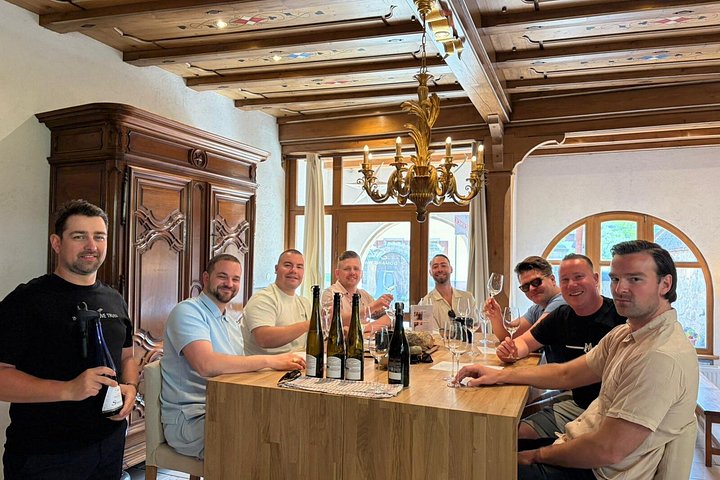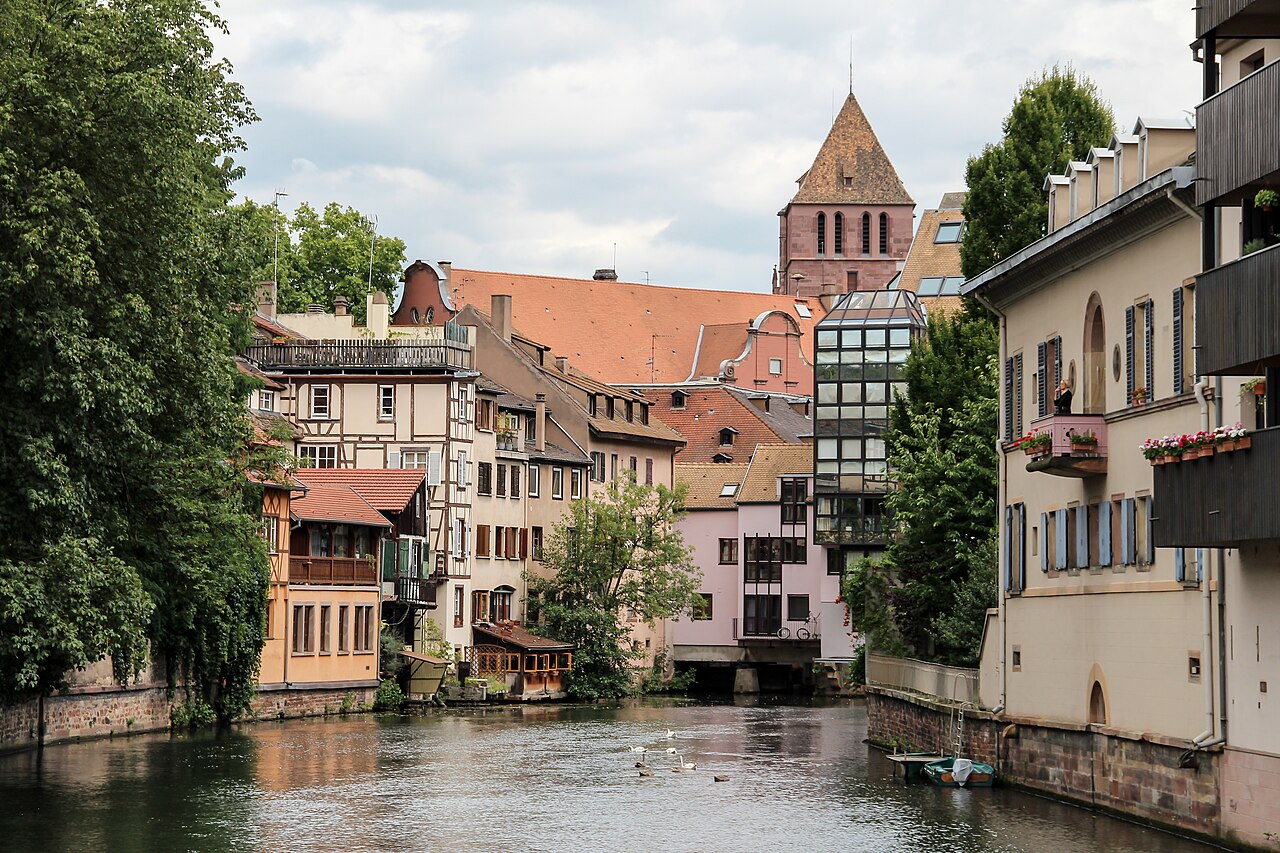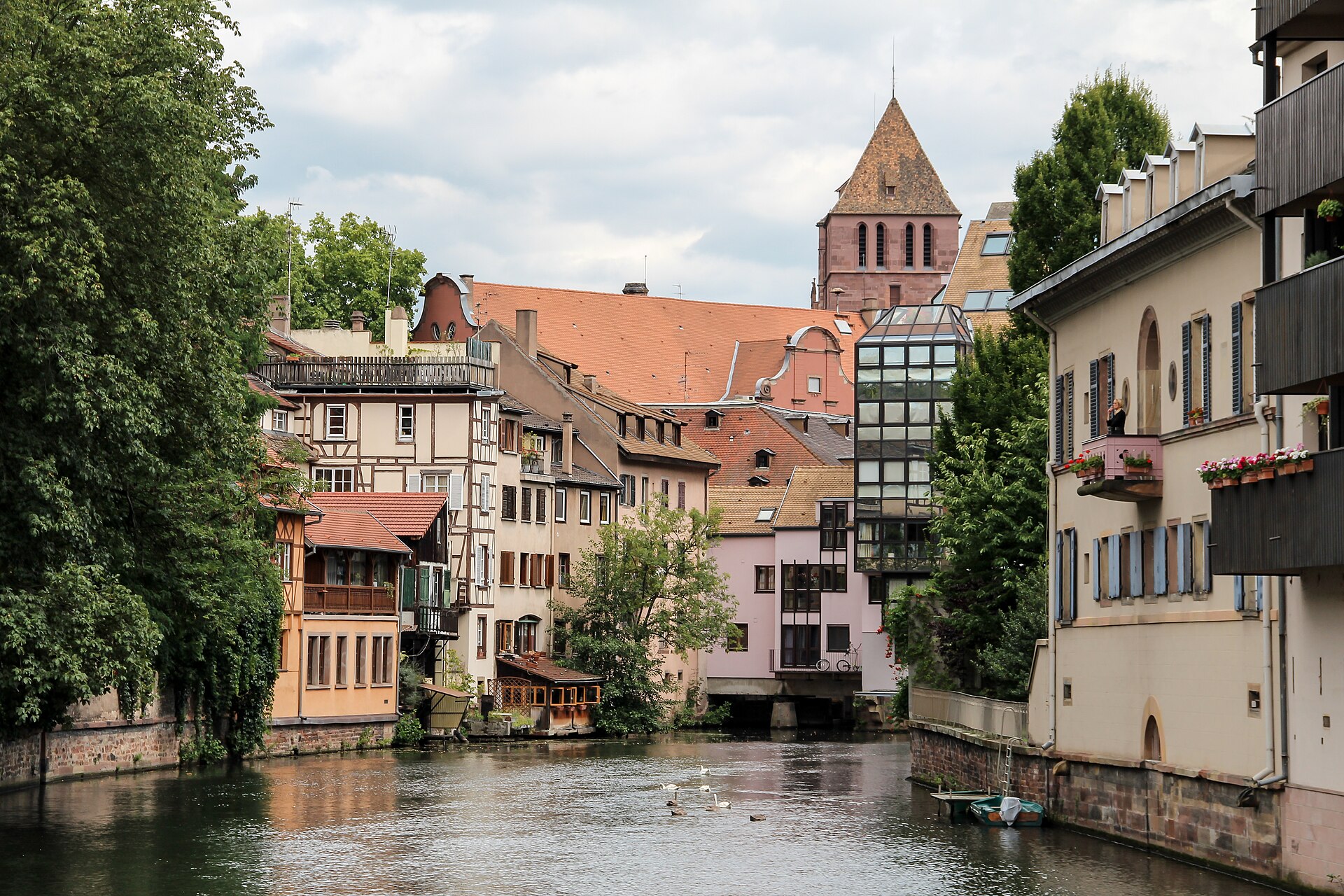
Kaysersberg is one of the great stops on the Alsace Wine Route, and in 2017 it was voted France’s favourite village in a television contest hosted by Stéphane Bern. It lies about ten kilometres from Colmar, at the mouth of a valley that climbs into the Vosges, and its long main street follows the river Weiss between rows of half-timbered houses, Renaissance mansions and flower-filled courtyards. The town’s signature image is the fortified bridge across the river, a stone bridge with a small chapel built into it that has been photographed countless times. Above the town, the ruins of a castle overlook the roofs, and the climb up to the keep is rewarded with a panoramic view of the vineyards, the valley and the plain of Alsace beyond. Kaysersberg is also known as the birthplace of Albert Schweitzer, the theologian, musician and doctor who won the Nobel Peace Prize in 1952, and his birthplace now houses the Schweitzer Center, which presents his life and humanitarian work. As on the rest of the Wine Route, independent winegrowers offer tastings, notably of the Grand Cru Schlossberg, a Riesling-dominated hillside wine that takes its name from the castle above. Cellar doors, bakeries, winstubs and gift shops line the main street, so it is easy to turn a short visit into a leisurely half-day. Smaller side lanes lead off the main street towards riverside walks, and the setting, with forested hills rising behind the vines, gives it a more alpine feel than its neighbours on the plain, which is part of its charm and a good reason to linger for a meal.
How to visit
Kaysersberg is a short drive from Colmar and about an hour and a quarter from Strasbourg by car. There is a bus link from Colmar, though timetables are thin, so many visitors come on a small-group tour or add it to a Wine Route day. Park in the car parks at the edge of the old town, which are a short walk from the main street, and wander in on foot.
The streets and the bridge are free and open at all hours. The castle climb is a steady walk uphill on a cobbled path, so wear sturdy shoes, and check the opening arrangements at the foot of the path before you set out.
What to expect
The main street is the focus, with the town hall, the old hospital and the church on the way to the bridge. Most visitors need about two or three hours, including the walk to the castle, a stop at the bridge and a tasting. Weekends and summer afternoons are busy. If you want the Schweitzer Center, check its hours before you go, as small museums often close at lunchtime or on certain days of the week.
Making the most of it
Pair Kaysersberg with Riquewihr and Eguisheim, which are within a short drive, and plan lunch at a winstub, booking ahead at weekends. Try the local Pinot Noir and Riesling, and ask producers about the Schlossberg Grand Cru. In the weeks before Christmas the village decorates its streets and hosts a small market, which is less crowded than the big city markets, though still busy on weekends. Evenings are quiet, so day visitors have the town to themselves late in the day if they stay on for dinner.
What to expect
The experience
A walk along the main street to the fortified bridge, an uphill climb to the castle keep and optional Grand Cru tastings.
Best time
Weekday mornings and late afternoons, when the village is calm.
How long
Two to three hours including the castle climb.
Tips
Wear sturdy shoes for the cobbled path to the castle and reserve a winstub for lunch on weekends.
Quick picks
- Best for
- Photographers, wine lovers and anyone interested in Albert Schweitzer.
- Families
- Children enjoy the bridge and the castle ruins, but the path uphill is steep.
- Couples
- A tasting of Grand Cru Schlossberg followed by a winstub dinner.
- Pair with
- Riquewihr, Eguisheim and Colmar on a Wine Route day.
- Time needed
- Half a day.
Good questions
How far is Kaysersberg from Colmar?+
About ten kilometres, a short drive. A bus link exists but timetables are thin, so many visitors come on a small-group tour.
What is Kaysersberg famous for?+
Its fortified bridge over the river Weiss, its castle ruins, its wine and its link to Albert Schweitzer, who was born there.
Can I climb to the castle?+
Yes, a cobbled path leads up from the town to the ruins, and the keep offers a panoramic view. Wear sturdy shoes.
What wine should I try?+
Look for the Grand Cru Schlossberg, a hillside wine named after the castle, and the region’s Riesling and Pinot Noir.
Is it free to visit?+
Yes, the streets and the bridge are free and open at all hours. Tastings and museum entry are paid separately.