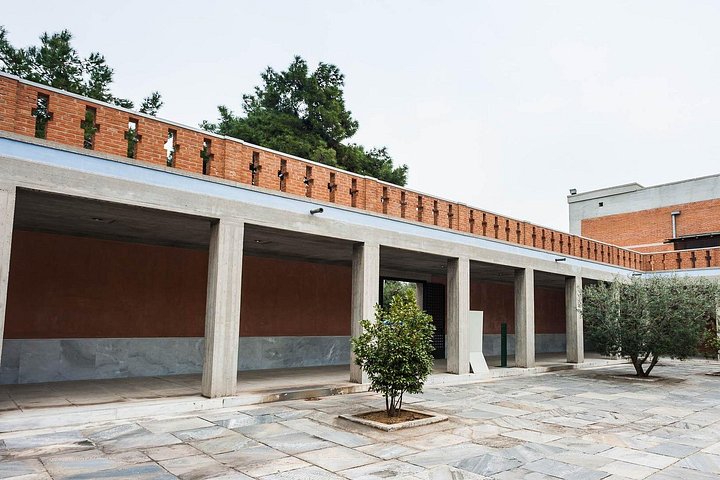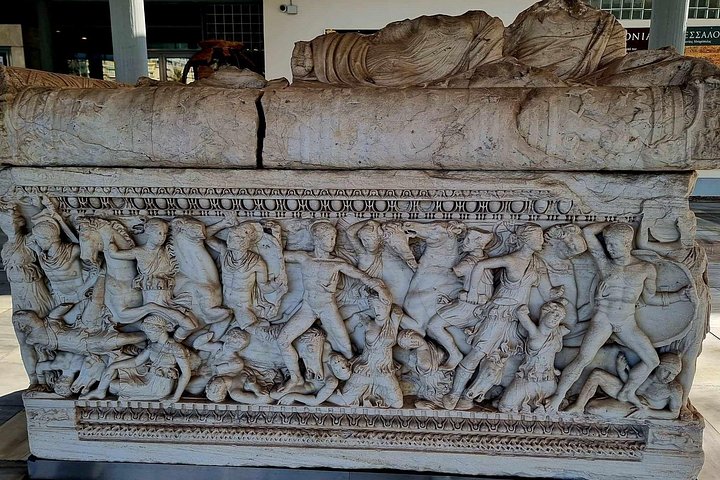
The Archaeological Museum of Thessaloniki is the best single place to understand northern Greece before Rome and Byzantium. Its collections bring together finds from Macedonia and the wider region, from prehistoric pottery and classical sculpture to Roman portraits, mosaics and the shining gold jewellery and wreaths that Macedonian aristocrats took with them to the grave. A visit makes sense of the day trips on offer from the city: after seeing the gold and the grave goods here, a trip to the royal tombs of Vergina becomes far more vivid. The building is a modern, light-filled museum with clear labels in English and enough space to move at your own pace. It is also a good choice in cold or wet weather, because the galleries are indoors and easy to navigate. The museum sits within walking distance of the centre of town and the main seafront, so it fits comfortably into a day of museums and monuments, and can be split across a morning and a coffee break.
How it works
You buy an entry ticket at the museum, and the museum site gives the current hours and prices. In winter, from 1 November to 31 March, it is open 09:00 to 17:00 and closed on Tuesdays, with last entry about twenty minutes before closing. It also closes on a handful of holidays, including 25 and 26 December and 1 January. Admission is free on the first and third Sunday of each month between November and March, which is useful for budget travellers but also means those Sundays can be busy.
What to expect
The galleries are arranged by theme and period, and the most striking rooms hold the gold work and the burial finds, which show how rich and well connected the Macedonian elite were. Plan around two hours for a satisfying visit, or a little longer if you like to read every label. If step-free access matters to you, confirm the details on the museum site before you go.
Making the most of it
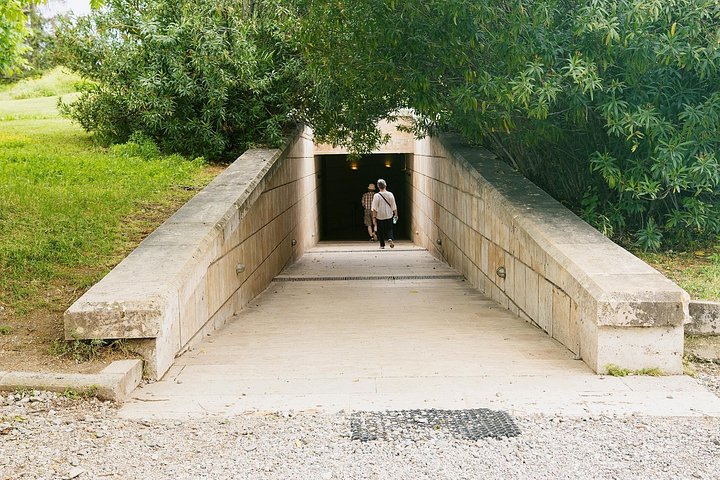
Go in the morning, when the rooms are quietest, and do the museum before a Vergina day trip if you can, because the gold work gives context for what you will see underground. Combine it with a stop at the Museum of Byzantine Culture, which covers the later centuries, and you have a clear story from the first Macedonian kings to the Byzantine city.
What to expect
The experience
A self-guided walk through galleries of ancient Macedonian finds, from prehistoric pottery to Roman mosaics and gold grave goods.
Best time
Morning for the quietest rooms, or any rainy or cold day.
How long
Two hours is comfortable; allow three if you love ancient history.
Tips
The museum is closed on Tuesdays in winter, and entry is free on the first and third Sunday of each month from November to March, so expect crowds then.
Quick picks
- Best for
- History lovers and anyone planning a day trip to Vergina or Pella.
- Families
- The golden jewellery and mosaics hold children's attention, and a short visit of about ninety minutes works well.
- Couples
- A calm indoor morning, followed by lunch near the centre.
- Pair with
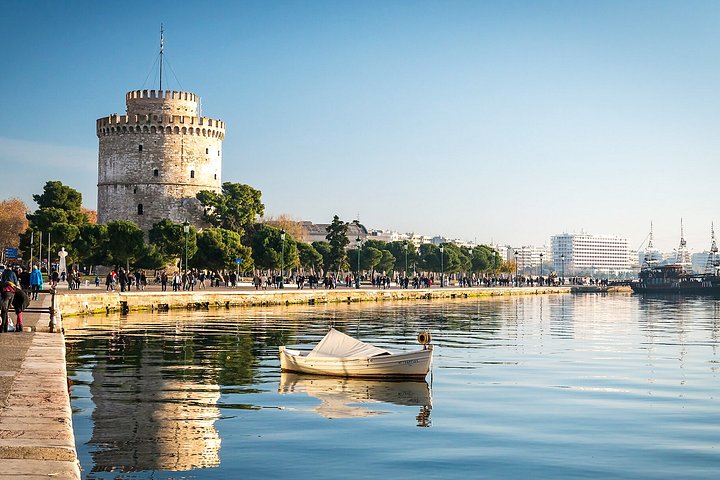
- The Museum of Byzantine Culture and the White Tower.
- Time needed
- Half a day with a coffee break.
Good questions
What are the highlights of the museum?+
The gold jewellery and wreaths from Macedonian burials, the Roman mosaics and the classical sculpture stand out. Together they show how wealthy and well connected ancient Macedonia was.
What are the winter opening hours?+
From 1 November to 31 March the museum is open 09:00 to 17:00 and closed on Tuesdays, according to the museum site. Hours can change without notice, so confirm before travelling.
Is the museum ever free?+
Yes, entry is free on the first and third Sunday of each month from November to March, and on a few named days in the year. Young EU residents under 25 also qualify for free entry.
Should I visit before or after a Vergina day trip?+
Before is better, because seeing the gold work and burial finds here gives context for the tombs. If you only have time afterwards it still works as a deeper look.
Is it suitable in bad weather?+
It is one of the best wet-day choices in the city because everything is indoors and the galleries are easy to follow. Allow two hours and add the Byzantine museum if you want a full day.