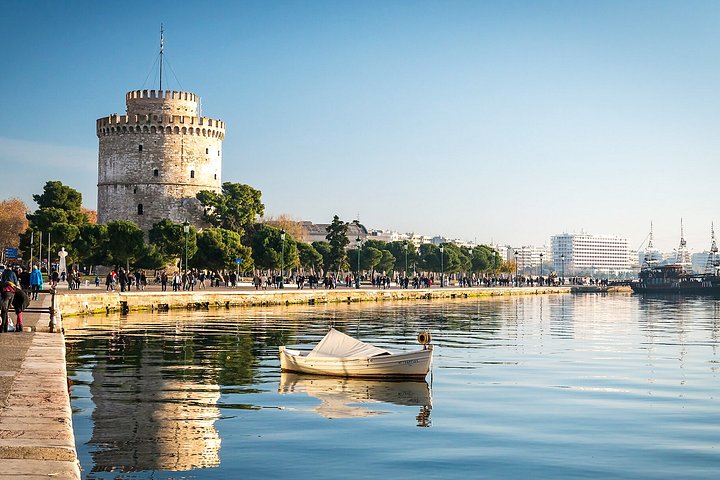
The White Tower is the building most people picture when they think of Thessaloniki. It rises from the old waterfront at the end of the long seafront promenade, a round stone tower that once formed part of the city defences and later served as a notorious prison. Today it is a museum, and the city tourism board describes a permanent exhibition that traces Thessaloniki from its founding in 316 or 315 BC to the present day. Each floor has its own theme, and the displays use projections, video, audio and interactive screens as well as photo panels, which makes the visit easy to follow even if you know little about local history. Climb to the roof and you get a wide view across the bay and back along the promenade towards the city centre. The tower is small, so it works as an hour-long stop that pairs naturally with a walk along the seafront, a coffee in one of the cafes nearby and an evening stroll when the stone catches the light.
How it works
You buy a modest entry ticket at the tower, and there is no need to plan far ahead. The museum is run by the state, so hours change with the season, and the tourism board gives winter hours of 08:30 to 15:30 from 1 November to 31 March, with summer hours running much later in the evening. Last entry is about twenty minutes before closing. Ticket prices and discounts change from time to time, so check the museum site before you go, and note that young European citizens under 25 enter free.
What to expect
The visit is vertical. You climb a stone staircase past the exhibition floors, each one covering a different period or theme, and finish on the roof terrace. It is not a large museum, and in winter you should allow about an hour. The stairs are narrow and there is no easy step-free route to the top, so travellers with limited mobility should ask at the entrance what can be seen at ground level.
Making the most of it
Arrive soon after opening in winter, when the tower closes early in the afternoon, and then walk the promenade towards Aristotelous Square. Late afternoon is the best time to look at the tower from outside, with the bay behind it. Pair it with the Archaeological Museum and the Museum of Byzantine Culture, which sit further along the same side of town, and keep in mind that state museums close on some public holidays.
What to expect
The experience
A self-guided museum visit up a stone tower, with a different theme of the city story on each floor and a roof terrace at the top.
Best time
Soon after opening for quiet rooms, then a late afternoon walk along the promenade to see the tower from the outside.
How long
About one hour inside; add time for the seafront walk and a coffee.
Tips
In winter the museum closes in mid afternoon, so visit before lunch and wear shoes with grip for the stone stairs.
Quick picks
- Best for
- First-time visitors who want the city story in one short, central stop.
- Families
- Children usually enjoy the climb and the screens, but the stairs are steep and narrow, so keep a close eye on small ones.
- Couples
- Walk the promenade at the end of the day and see the tower from the water side as the light fades.
- Pair with
- The seafront promenade, the Archaeological Museum and Aristotelous Square.
- Time needed
- One hour, or a relaxed half morning with the promenade.
Good questions
What is inside the White Tower?+
The tower is a museum with a permanent exhibition on the history of Thessaloniki from its founding to today. Each floor has its own theme and uses screens, audio and photographs.
Can you go up to the roof?+
Yes, the stairs lead to a roof terrace with a wide view of the bay and the city. There is no lift, so plan for a climb on narrow stone steps.
What are the winter opening hours?+
The tourism board gives winter hours of 08:30 to 15:30 from 1 November to 31 March. Hours are set by the state and can change, so confirm before you go.
How much time should I allow?+
About an hour is enough for the exhibition and the roof. Add more if you want to walk the promenade or sit at a cafe nearby.
Is it worth visiting if I have only one day?+
Yes, because it is short, central and gives a clear outline of the city story. It also marks the end of the waterfront walk, so it fits naturally into a first day.