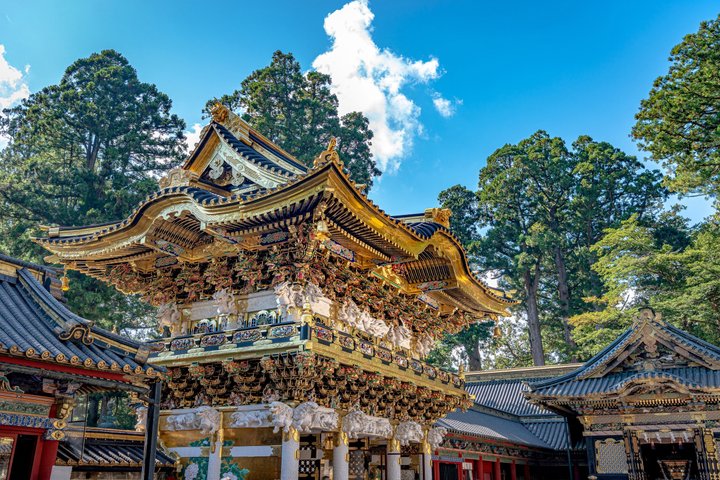
Nikko is where Japan's shoguns chose to be remembered. Toshogu, the shrine to Tokugawa Ieyasu, founder of the shogunate that ran the country for more than 250 years, is a UNESCO World Heritage complex of lacquered halls, gold leaf and carved wood set among enormous cedars, and its decoration is so lavish that it is often called the opposite of Japanese restraint. Here you find the carving of the three wise monkeys, the ornate Yomeimon gate and the avenues of moss-covered stone lanterns. Beyond the shrine, the road climbs into Nikko National Park to Lake Chuzenji and the Kegon Falls, a waterfall that drops close to a hundred meters from the lake outlet into a rocky gorge. This day trip links the two in a coach tour from Tokyo, running about eleven hours on the operator's listing. It is a good choice when you want the grandest historic sight in the Kanto region and a taste of mountain scenery without a train-and-bus puzzle. Nikko is also the day trip that most rewards travelers who like temples and architecture.
Autumn is the headline season. The color in the Nikko hills peaks earlier than in Tokyo, usually from mid October at altitude into early November lower down, and the winding mountain road to Lake Chuzenji becomes slow and busy during those weeks. Spring brings fresh green and cherry blossom a little later than in the capital, summer is cooler than the city, and winter can bring snow and ice at altitude, which is atmospheric but changes how much walking is comfortable.
The Toshogu complex has steps, gravel and long queues at peak times, and the Kegon Falls viewing area gets crowded on autumn weekends. Dress in layers, wear comfortable shoes and carry a little extra cash.
Expect a tour that moves with the clock. The operator lists the day at about eleven hours with a guide, and the details of the meeting point and departure time arrive with your booking, so read them closely. Group tours to Nikko spend meaningful time on the road, and traffic on weekends and in the autumn color season can stretch the return, so do not schedule evening commitments.
Entry fees at some sights may not be part of the ticket, which is common with coach tours; ask the operator what is included before you travel. The booking page is rated 4.1 from 62 reviews, so read recent feedback about the long hours and crowds before you commit.
If you like temples and craftsmanship, Nikko justifies a longer visit than a day tour allows: a night in the area gives you time for the quieter shrines, Lake Chuzenji and the onsen towns, and the train from Asakusa or Shinjuku is straightforward. For a single day, a guided coach saves planning and gets you to Chuzenji, which public transport reaches slowly. Pair this trip with a lighter Tokyo day afterward, and use Senso-ji and the Edo-Tokyo Museum to put Nikko in context: the Tokugawa dynasty's story begins with the city that grew from Edo Castle.
What to expect
The experience
A guided coach day trip from Tokyo to Nikko's Toshogu Shrine and the Kegon Falls, with the lake and mountain road in between. The operator lists a duration of about eleven hours.
Best time
Mid October to early November for autumn color, though it is the busiest period. Spring and summer are quieter; winter can bring snow at altitude.
How long
About eleven hours, with long stretches on the road; weekends and color season can add more.
Tips
Wear layers and shoes with grip, carry cash, and ask the operator which entry fees are included. Keep the evening free for traffic delays.
Quick picks
- Best for
- Travelers who love shrines, carving and gilded interiors and want the Kanto region's grandest historic site in one day.
- Families
- Possible for older children who enjoy history; the day is long and stairs are tiring for young ones.
- Couples
- Autumn color at the falls and the cedar avenues is the romantic pick.
- Pair with
- The Edo-Tokyo Museum and Senso-ji for the Tokugawa story, or a light day at Ueno Park afterward.
- Time needed
- A full day, or stay overnight for a slower visit.
Good questions
What will I see on the Nikko day trip?+
The tour is built around Nikko Toshogu Shrine, the UNESCO World Heritage complex dedicated to Tokugawa Ieyasu, and the Kegon Falls in Nikko National Park, with the lake and mountain road between them.
When is the best time to go?+
Autumn color is the main draw, from mid October at altitude into early November, but it is also the busiest time. Spring and early summer are quieter; winter can bring snow and ice.
How long is the tour?+
The operator lists about eleven hours, including long drives each way. Weekend traffic and peak seasons can extend the return, so avoid evening commitments.
Are entry fees included?+
Coach tours often leave some entry fees to you. Check what is included with the operator when you book, and carry a little cash for tickets, lunch and small purchases.
Is Nikko better as an overnight trip?+
If you can spare a night, yes. It gives you time for quieter shrines, Lake Chuzenji and hot springs. This day trip suits visitors who have only one day for Nikko.