Udaipur’s food is the cooking of Mewar, the region ruled for centuries by the Sisodia dynasty, and it reflects a dry landscape: lentils, gram flour, millet, ghee, dried beans and strong spices do the work that fresh vegetables do elsewhere. Much of the city eats vegetarian, and vegetarian Rajasthani cooking is rich and satisfying. Alongside it sits a robust hunting-table tradition of meat dishes, so there is plenty for everyone. Here is how to eat well without leaving the lake.
Dishes to look for
Dal baati churma is the classic: hard, baked wheat balls, broken open and soaked in ghee, served with spiced lentils and a sweet crumbled churma. Gatte ki sabzi is gram-flour dumplings in a tangy yoghurt gravy, a staple when fresh vegetables are scarce. Ker sangri is a desert dish of dried berries and beans, tart and slightly smoky. Laal maas, the famous fiery red meat curry, is traditionally made with a lot of Mathania chilli, so ask for it milder if you are unsure. Bajra roti, a millet flatbread, often arrives with white butter and garlic chutney, and a bowl of kadhi, a yoghurt and gram-flour soup, balances the spice.
Street snacks
For a quick bite, look for mirchi vada, a large chilli stuffed with spiced potato, dipped in batter and fried, and pyaz kachori, a flaky fried pastry filled with spiced onion. Both are best eaten hot from the stall, and both are mildly to seriously spicy. Poha and jalebi make a popular breakfast, and sugarcane juice, masala chai and a thick lassi round out the day. If you are new to Indian street food, choose busy stalls with fast turnover, pick things cooked in front of you and avoid cut fruit or ice that has been sitting out.
Sweets
Mewar has a serious sweet tooth. Malpua, a fried pancake soaked in syrup, is often served with rabri, thickened sweet milk. Ghevar, a honeycomb-textured disc soaked in syrup, is particularly associated with the monsoon season and festivals. Other staples are jalebi, kalakand and moong dal halwa, all rich enough to share. A small sweet shop in the old city is also a good place to buy gifts to carry home.
Thalis and how they work
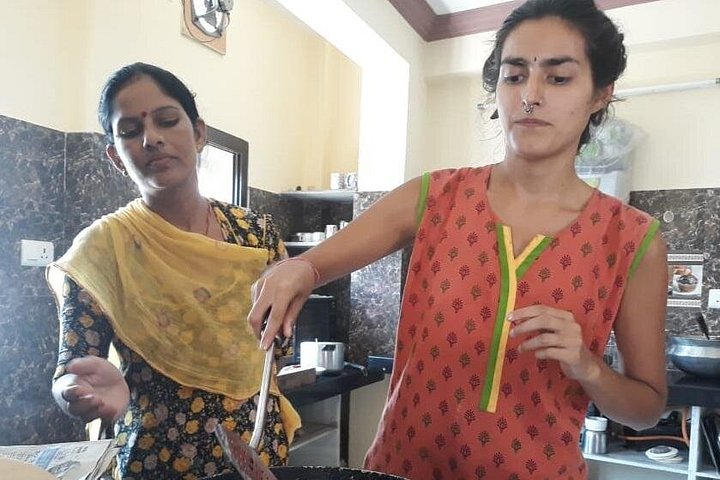
A thali is a platter or set of small bowls that lets you taste many dishes in one meal, and it is the easiest way to sample Mewari cooking. Waiters keep topping up dals, vegetables and breads, so pace yourself. Many restaurants offer a vegetarian thali and some a more elaborate royal version. If you want to learn how these dishes are made, a home cooking class is a good way to understand the spice blends and techniques, and you eat what you cook.
Where to eat
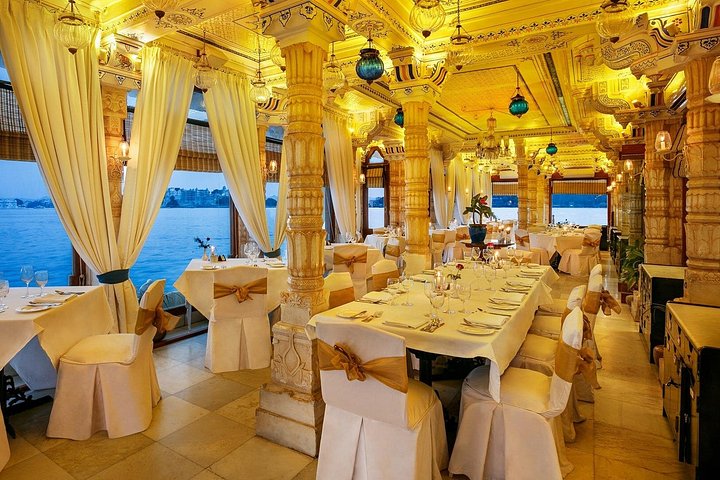
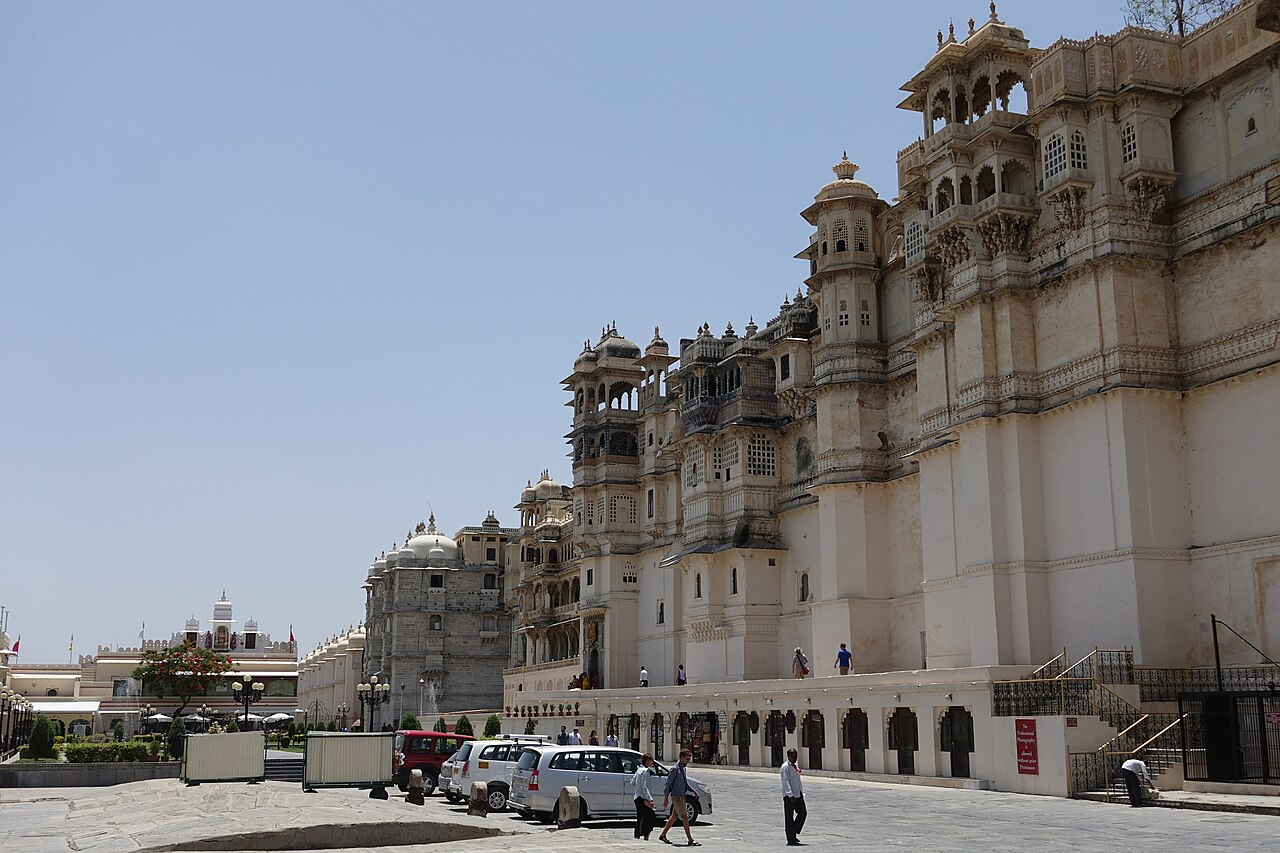
The lanes around Lal Ghat and Gangaur Ghat are packed with rooftop restaurants that look across Lake Pichola to the City Palace, and the best of them are worth timing for sunset. Quality varies and the view is sometimes better than the food, so look for places busy with local diners as well as visitors, and book a table in advance in the main season. Move away from the lake for cheaper, more local meals, and look at hotel dining rooms for a quiet, more formal evening. The palace hotels on the lake serve elaborate tasting menus and heritage Rajasthani dinners, ideal for a special occasion. An island dinner on Jag Mandir, reached by boat, is one of the more memorable ways to combine a meal and a view.
Drinks
Masala chai is everywhere, and a cup in a clay kulhad is a small pleasure. Restaurants serve beer, wine and spirits, though some stalls and old-city eateries keep to soft drinks and some temples and holy days are alcohol-free, so ask before you order. Drink bottled or properly filtered water, and be cautious with ice and salads away from reputable places.
Practical tips
Spice levels are often higher than visitors expect, so say you want things mild if you are cautious, and keep curd or raita on hand. Vegetarians and vegans will find a huge choice, and Jain diets, which skip onion and garlic, are well understood. If you have allergies, ask clearly and in detail. Tips of about ten percent are customary where no service charge is added, and small bills in rupees make street food easier. Eat the largest meal at lunch if the heat saps your appetite, and save the sweet dishes for the cooler evening.