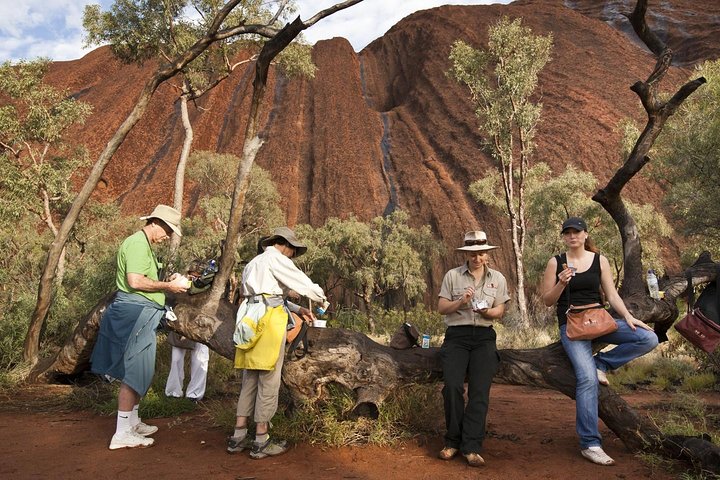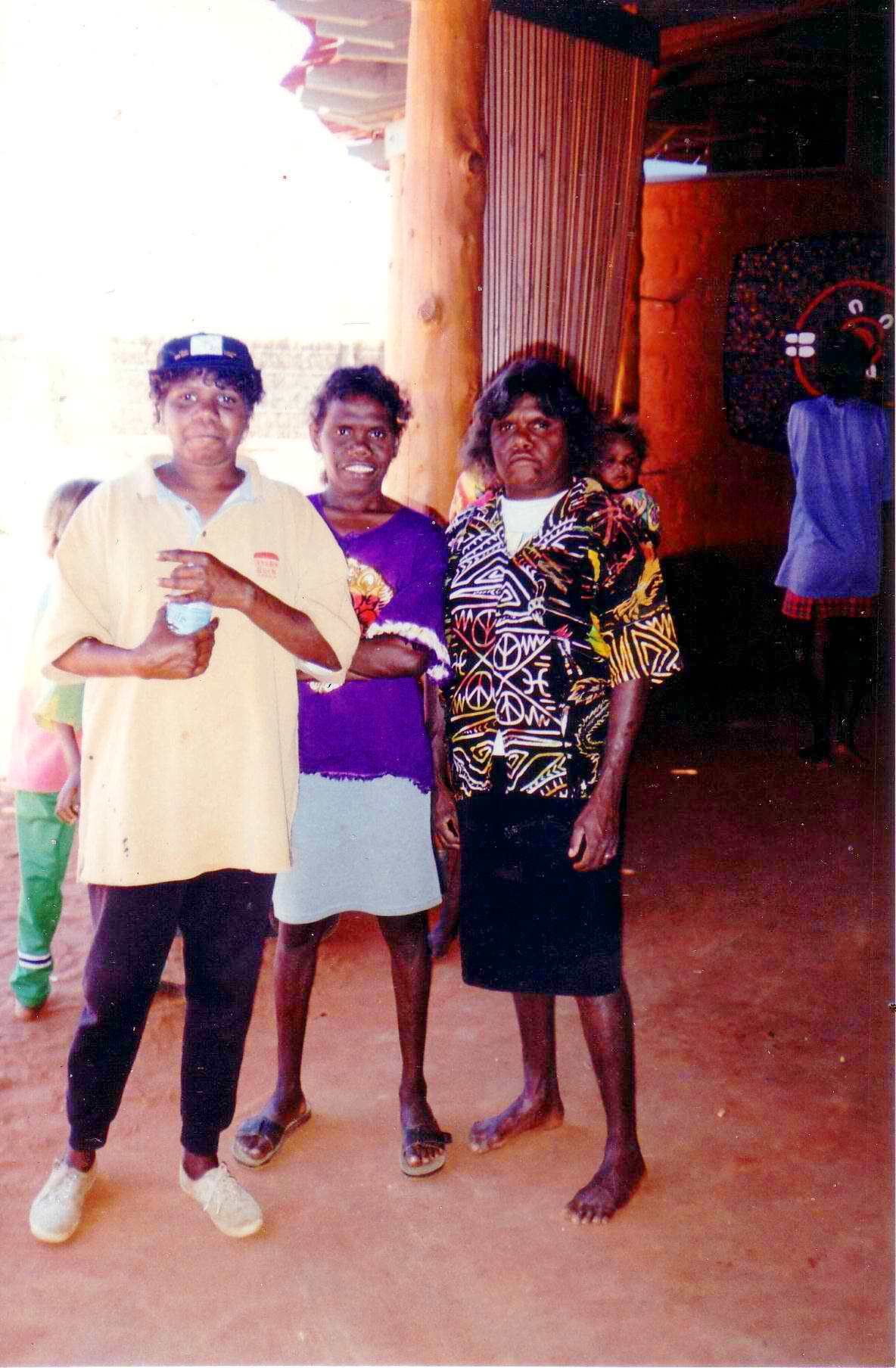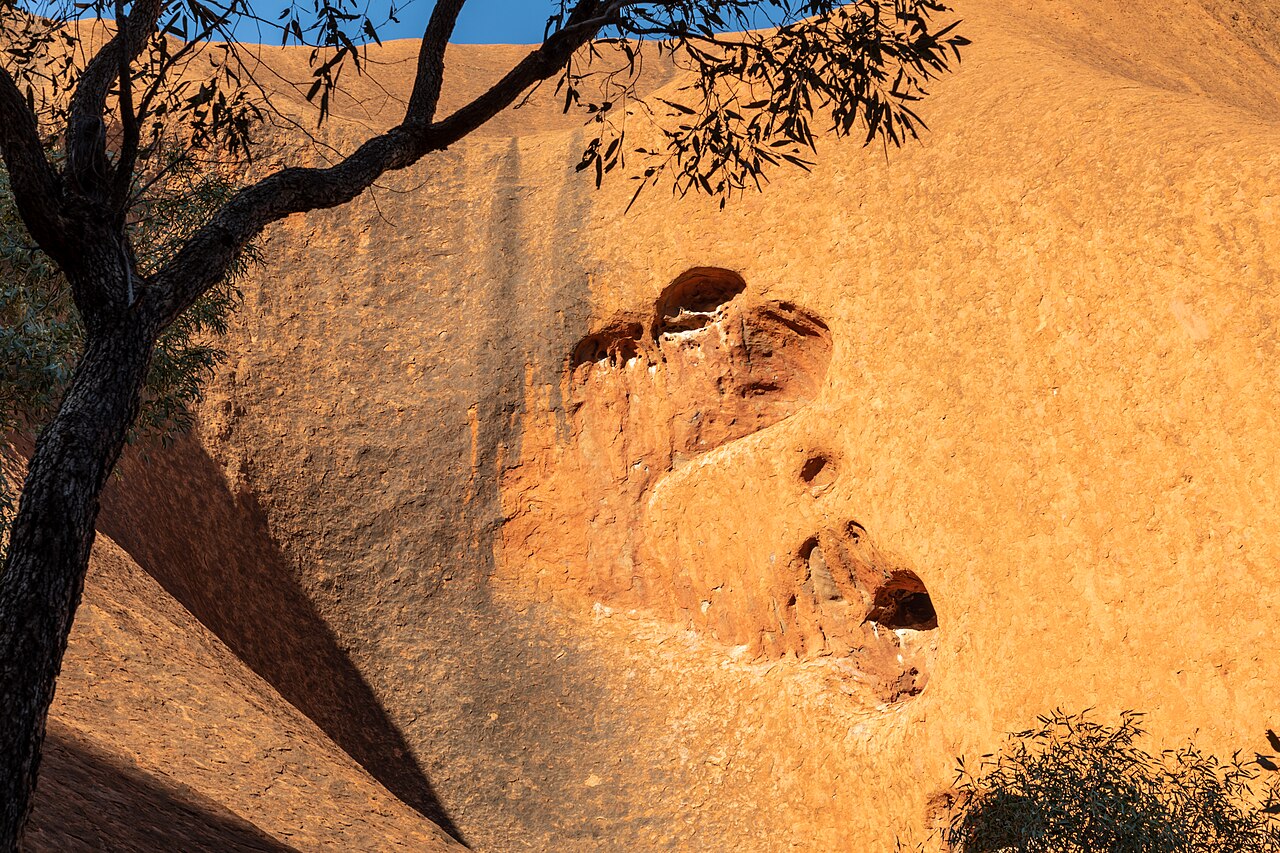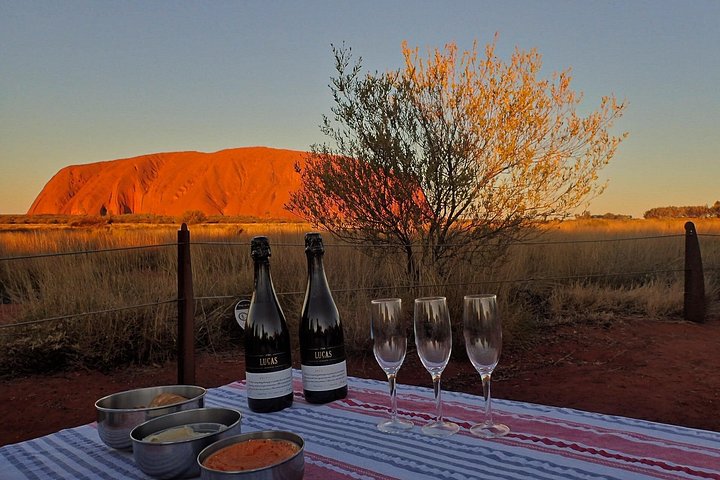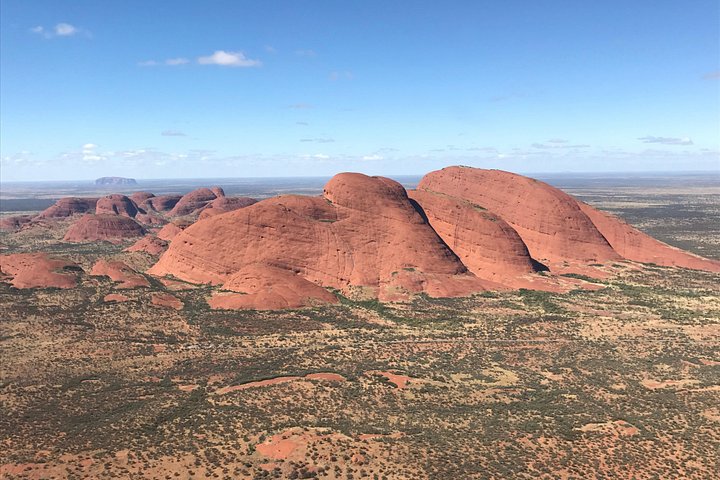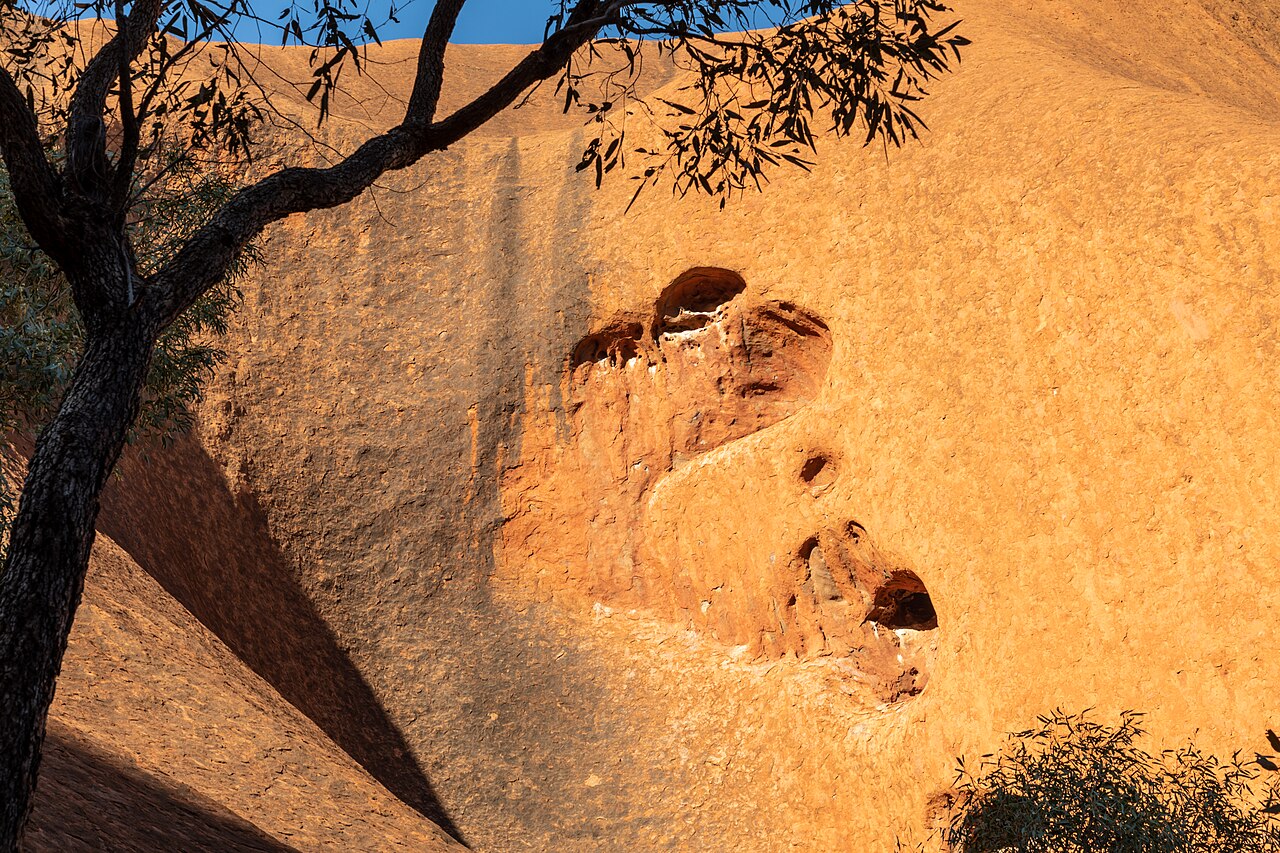
The Kuniya walk is the shortest way to understand that Uluru is not a lump of dry rock but a living landscape, because it leads to Mutitjulu Waterhole, a pool that holds water long after the surrounding country has dried out. The track starts at the Kuniya car park and runs for one kilometre return, taking thirty to forty-five minutes, and the park grades it as an easy Grade 2 walk. The reward is a lush and shady spot among river red gums and tall grasses, where the air feels cooler and wildlife gathers. Visitors may see wallabies among the grasses, and birdwatchers can look for finches, nankeen kestrels, black-breasted buzzards and tawny frogmouths. The waterhole is also the site of the Kuniya and Liru creation story, a Tjukurpa that tells of the python woman Kuniya and her battle with the poisonous snake Liru. The caves around the waterhole are still used by Anangu, and bush foods such as tjantu, ili and arnguli grow nearby. After heavy rain, waterfalls can pour down the rock face, one of the most striking sights in the park. There are no toilets on the walk, but an emergency call device is provided.
Reading the place
Take your time, and read the interpretive signs before you walk in. The waterhole is a sacred site as well as a pretty one, and the story of Kuniya is easier to feel once you know it. Keep voices low, stay on the track and follow any signs that ask you not to photograph certain places. Commercial photography or filming needs a media permit, and a wide-angle lens helps if you want the whole scene, since direct sunlight falls on the water around lunchtime.
Timing and crowds
The waterhole is at its busiest around midday, partly because tour groups arrive then, so sunrise, sunset or a quieter hour can be better for atmosphere. In summer, the shade and water make it a welcome break from the heat, though you should still carry water and wear a hat. After rain the scene changes completely, with streams and falls running over the rock, so if the weather has been wet it is worth a detour. Check the park conditions before you go, because heavy rain can affect tracks.
Fitting it in
It combines well with the Cultural Centre, which is close by, and with a base walk or the Mala walk, since all three sit on the same side of the rock. It suits almost everyone, including older visitors and children, although the track is uneven in places. If you have only a couple of hours and want to see something that feels different from the red-and-blue postcard, this is the place. A park pass is needed to enter the park, and the walk costs nothing extra.
What to expect
The experience
A one kilometre return walk from the Kuniya car park to Mutitjulu Waterhole, with interpretive signs on the Kuniya and Liru story.
Best time
Early morning or late afternoon, when the waterhole is quieter than at midday; after rain for the waterfalls.
How long
Thirty to forty-five minutes return.
Tips
Read the signs, keep voices low, carry water, follow any no-photography signs and bring a wide-angle lens if you want the whole pool.
Quick picks
- Best for
- Anyone who wants a short, easy and meaningful walk with shade and water.
- Families
- Excellent: short, easy and full of birds and stories.
- Couples
- A calm, cool break between the bigger walks.
- Pair with
- The Cultural Centre, the Mala walk and the base walk.
- Time needed
- Under an hour.
Good questions
How long is the Kuniya walk?+
It is one kilometre return and takes thirty to forty-five minutes. The park grades it as Grade 2, an easy walk.
What is the Kuniya and Liru story?+
It is a Tjukurpa, an Anangu creation story, about the python woman Kuniya and the poisonous snake Liru, and it belongs to the waterhole and caves at this place.
Are there toilets?+
No. There are no toilets on the walk, but an emergency call device is provided. The Cultural Centre is nearby.
Can I see waterfalls?+
After heavy rain, waterfalls can form on the rock above the waterhole. They are best seen during or soon after the rain.
Do I need a park pass?+
Yes. The walk is inside Uluru-Kata Tjuta National Park, so you need a park pass to enter, with no extra charge for the walk.