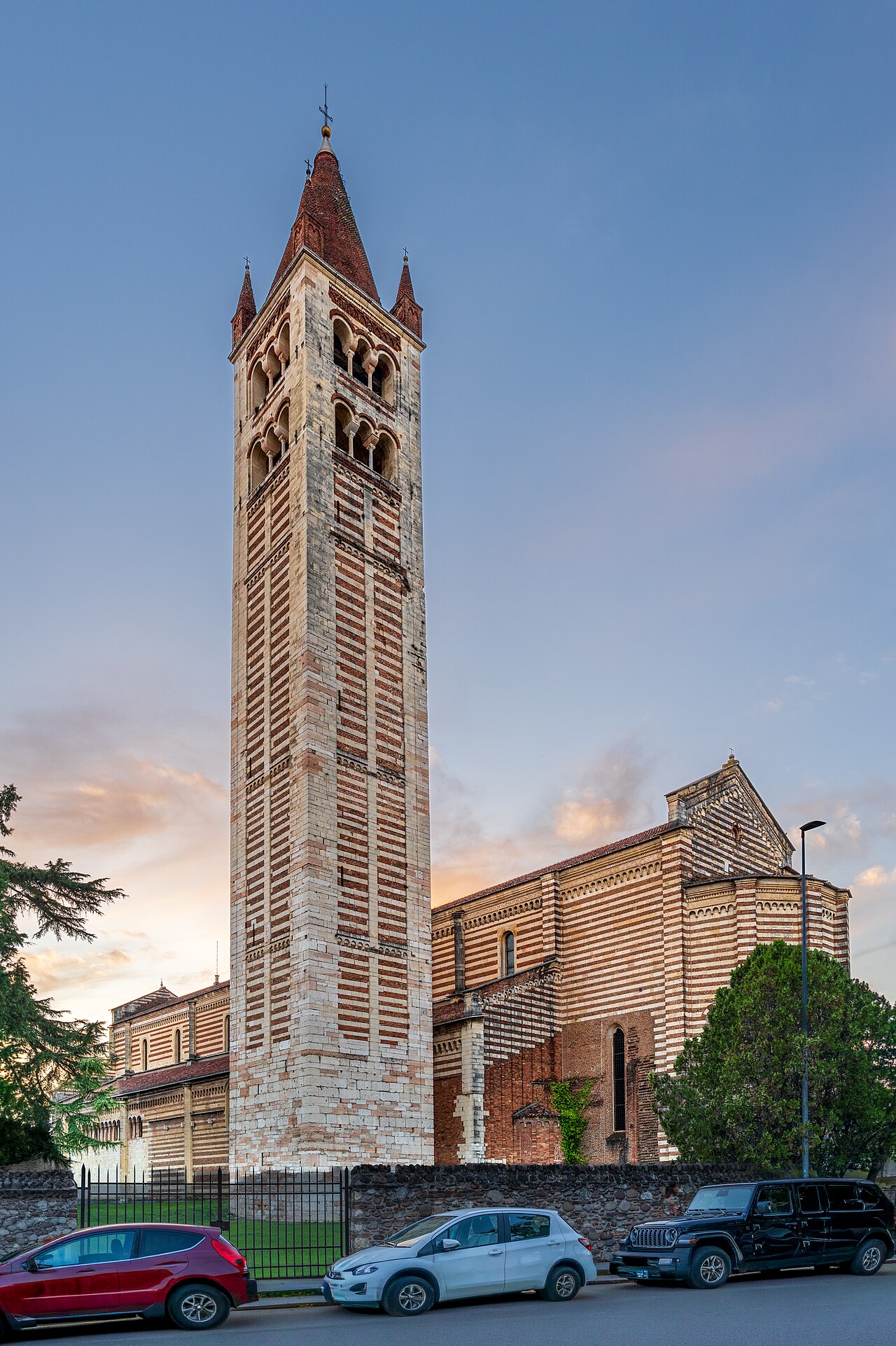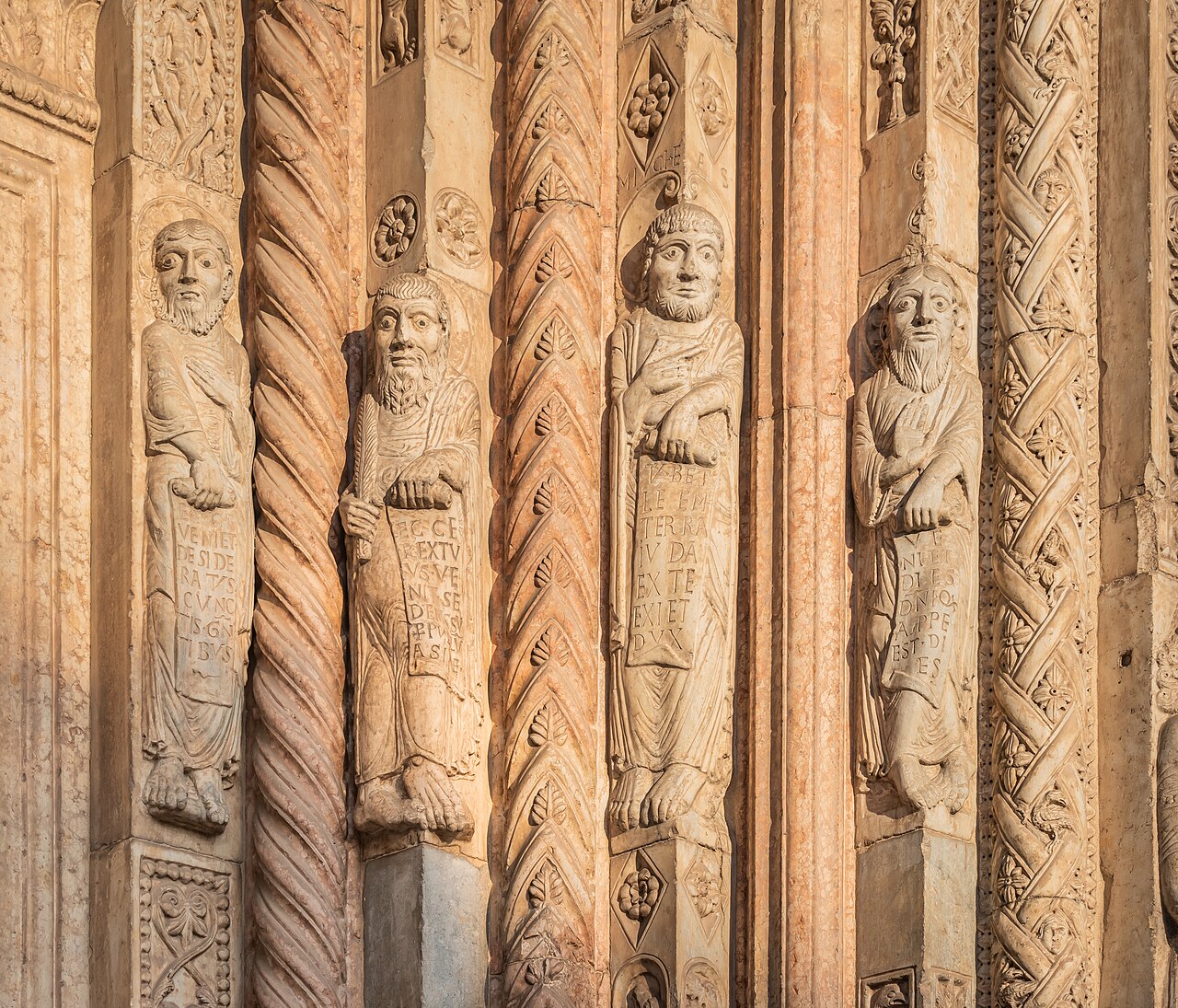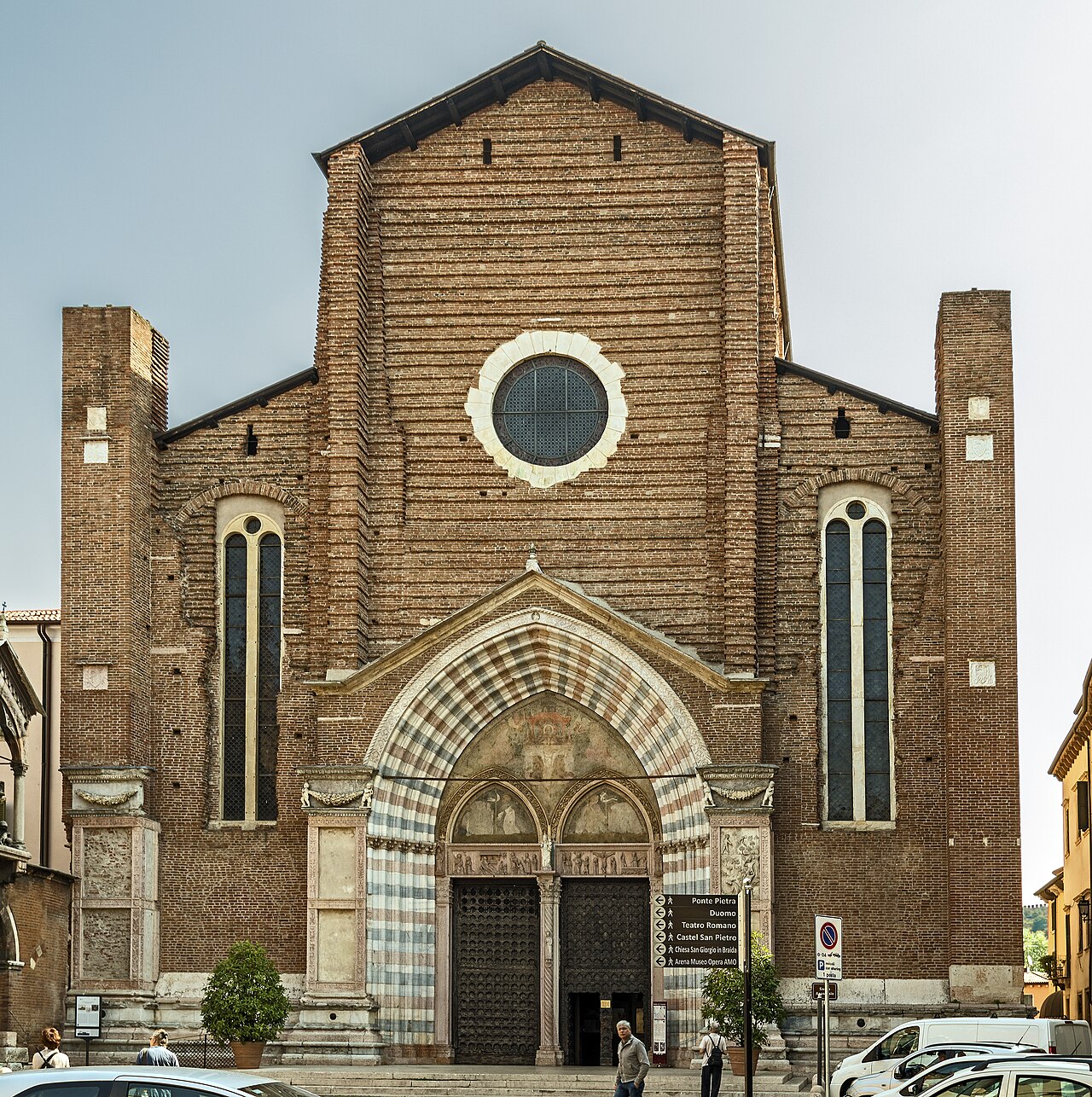
Santa Anastasia is the biggest church in Verona and one of the finest Gothic buildings in the Veneto. The Dominicans began it around 1290, and construction went on for generations. The brick façade was never finished, but the marble portal is richly decorated, and the interior is far larger than the exterior suggests. Tall columns carry a painted ceiling, side chapels hold frescoes and tombs of Verona’s noble families, and the floor is laid in a pattern of coloured marble. The best-known work is Pisanello’s fresco of Saint George and the Princess above the entrance to the Pellegrini Chapel, a masterpiece of the early Renaissance, full of fine detail. Near the entrance, two holy water stoups are supported by stone figures of hunched men, nicknamed the Gobbi, which children often find memorable. The church stands on Piazza Sant’Anastasia, in a quiet corner of the old town close to the river, and is easy to combine with a stroll to Ponte Pietra.
How it works
Santa Anastasia is an active church that welcomes visitors, usually on a ticket linked to the group of Verona churches, and the VeronaCard includes it. Check opening times before you go, as services affect visiting hours, especially on Sundays and religious holidays. Modest dress is expected: cover shoulders and knees.
What to see
Begin with the portal and nave, then walk around the side chapels to see the frescoes and funerary monuments. Allow time to find the Pisanello fresco and the Gobbi stoups. Looking up, the painted vaults give a sense of the original colour of Gothic Verona. A quiet half hour here is a good contrast to the busy monuments elsewhere in the city.
Who it suits
Art lovers, history fans and anyone who likes quiet architecture. Pair it with the Cathedral, Juliet’s House or a walk along the river, and stop for a coffee on the square afterwards. The Due Torri Hotel is on the same piazza.
What to expect
The experience
A self-guided visit through the nave and side chapels, with time to find Pisanello’s fresco and the Gobbi holy water stoups.
Best time
A weekday morning, outside service times, when the nave is quiet and the light is good.
How long
About 45 minutes.
Tips
Cover shoulders and knees, check visiting hours around services and look up to see the painted vaults.
Quick picks
- Best for
- Art and architecture lovers, and visitors who want a quiet, atmospheric church in the old town.
- Families
- Children usually enjoy spotting the hunched Gobbi figures at the entrance, though a long visit may test younger ones.
- Couples
- A calm, beautiful stop on a walk between Piazza delle Erbe and Ponte Pietra.
- Pair with
- Verona Cathedral, the Roman Theatre and the walk across Ponte Pietra.
- Time needed
- Forty-five minutes to an hour.
Good questions
What is Santa Anastasia best known for?+
Its Gothic architecture, the painted chapels and Pisanello’s fresco of Saint George and the Princess, one of the great works of the early Renaissance.
What are the Gobbi?+
Two holy water stoups near the entrance, each supported by a stone figure of a hunched man, a detail many visitors remember.
Is the church included in the VeronaCard?+
Yes, Santa Anastasia is one of the churches covered by the VeronaCard, so check the current terms when you buy.
Is there a dress code?+
Yes. Shoulders and knees should be covered, as this is an active place of worship.
Where is it?+
On Piazza Sant’Anastasia in the old town, a short walk from Piazza dei Signori and the Adige.