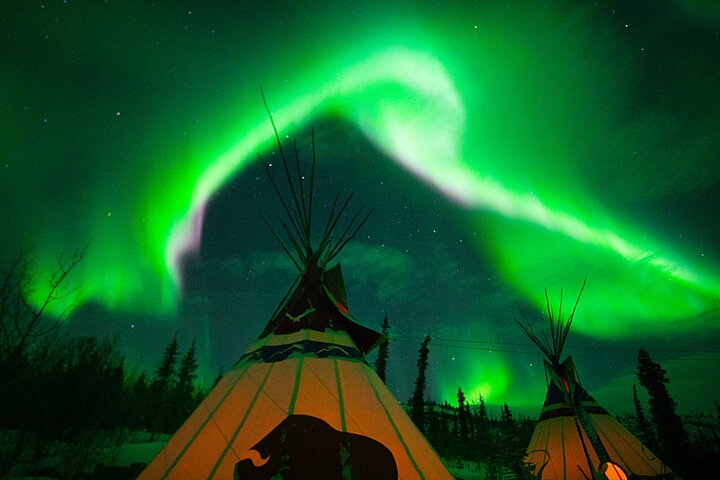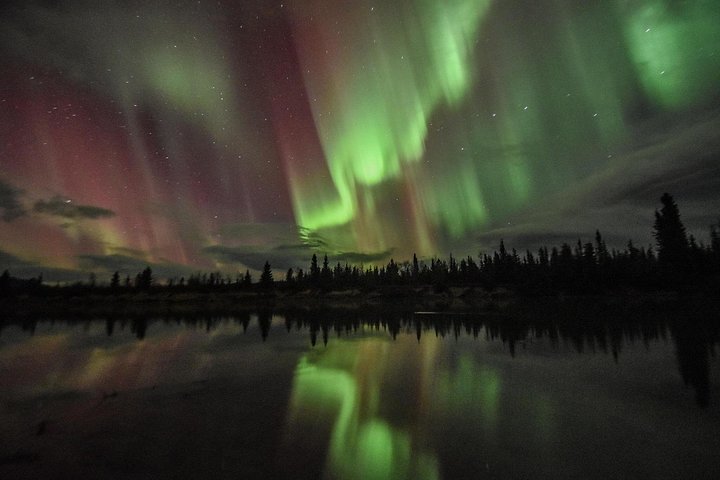
Most visitors meet the aurora on a single late-night outing and a husky team on a separate half-day trip. This experience combines the two into a two-day stay, which gives the sky more than one evening to cooperate and gives you time to get to know the dogs rather than just ride behind them. Huskies are the working heart of Yukon winter life: they are strong, social and visibly delighted to run, and a kennel visit usually includes meeting the dogs, learning how a team is organised and understanding how mushers train and care for them. Evenings are for the northern lights, away from the city glow, with the quiet of a boreal winter night around you. The trip is rated 5.0 from 29 reviews on the booking page, which is a solid base of feedback for a more expensive, multi-day product. It suits couples, photographers and active travellers who want a distinctive winter story and are willing to spend two nights of their trip on it.
What to check before you book
Multi-day packages differ in what they include, so read the itinerary carefully for where you sleep, which meals are covered, whether a sled ride is part of the programme and how pickup works. Use the half-day dog sledding tour at Sky High Wilderness Ranch as a comparison point if your priority is driving a team yourself, since a stay focused on aurora and kennel time is a different product from a hands-on sled day.
Odds and timing
Two evenings are meaningfully better than one, because cloud and solar activity decide the show and no operator can promise the lights. The aurora season runs from late August to roughly April, and the long dark nights of mid-winter give the most hours of sky, but mid-winter is also the coldest period, so dress for standing still in serious cold.
Bring insulated boots, a parka, layers, warm gloves with liners, a hat and spare phone batteries, and ask the operator what gear is supplied. If you want photographs, a tripod and a camera with manual controls help more than any phone.
Who it suits
Travellers with a few days to spare who want a standout winter experience rather than a checklist of sights. It is a poor fit for anyone who dislikes cold, dogs or being outdoors at night. Plan the rest of your stay around it: museum visits and a hot soak at the Eclipse Nordic Hot Springs work well on the days before or after, and a sleep-in is wise after a late night.
What to expect
The experience
A two-day winter programme that pairs time with a husky team and kennel with evenings of aurora viewing outside the city.
Best time
The cold, dark months, roughly November to March, give the most hours of night sky; the season runs from late August to about April.
How long
Two days, with the evenings reserved for the northern lights.
Tips
Read the itinerary for meals, lodging and whether a sled ride is included, dress for deep cold and allow a slow morning after the late nights.
Quick picks
- Best for
- Couples, photographers and active travellers who want sled dogs and aurora in a single immersive experience.
- Families
- Check age limits and the late nights; it suits older children who can handle the cold.
- Couples
- Two nights under the sky and a day with the dogs is a very memorable pairing.
- Pair with
- A soak at the Eclipse Nordic Hot Springs and a museum visit on the days around it.
- Time needed
- Two days.
Good questions
How long is the experience?+
It runs over two days, so plan your itinerary around it and keep the following morning free for sleeping in.
Is a northern lights sighting guaranteed?+
No. The aurora depends on solar activity and clear skies. Two evenings improve your odds compared with a single night, but nothing can guarantee a show.
Do I drive a dog sled?+
Check the itinerary. The focus is time with the dogs and aurora viewing; if driving your own team is your priority, the half-day sled tour at Sky High Wilderness Ranch is built for that.
What should I wear?+
Insulated boots, a parka, layers, warm gloves with liners and a hat. Ask the operator which items are supplied.
When is the best season?+
The aurora season runs from late August to about April, and the snowy months from roughly November to March suit the sled dogs best.