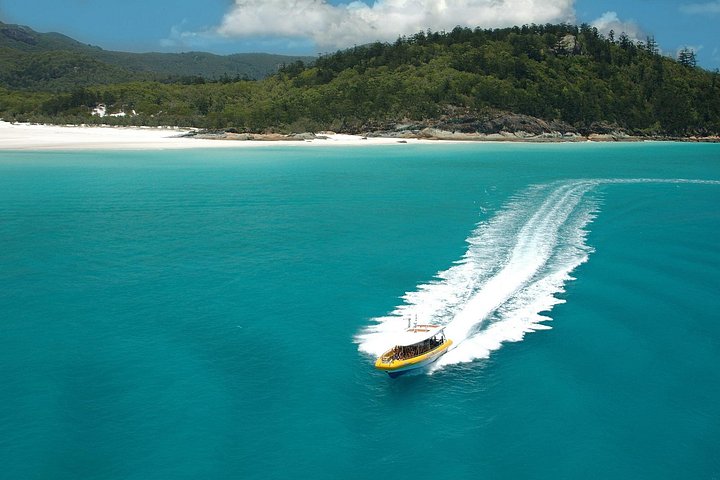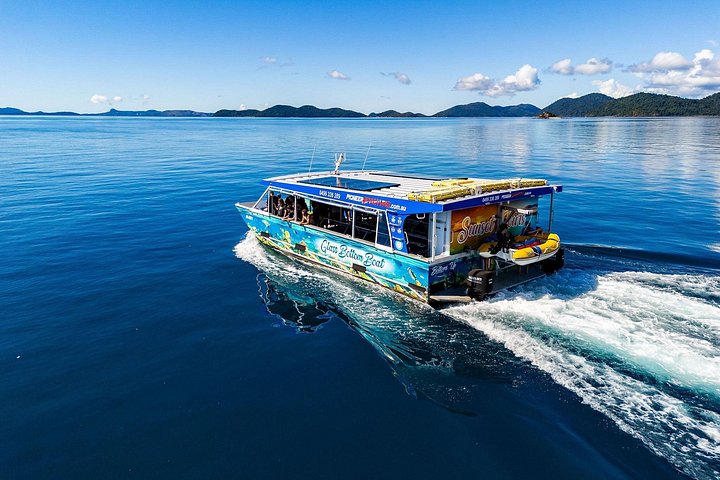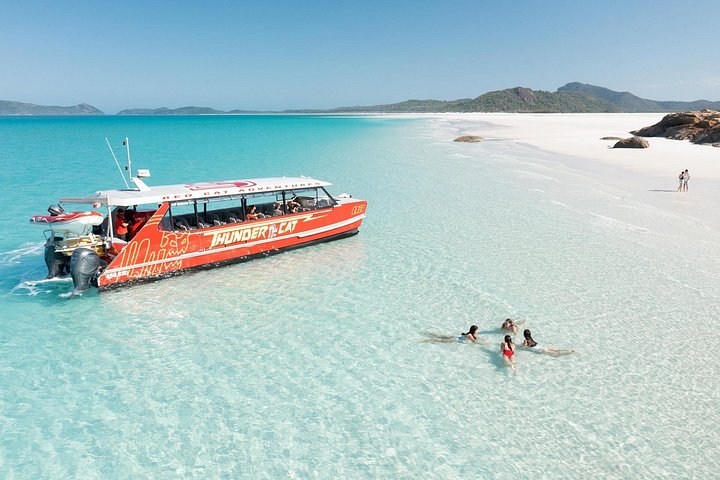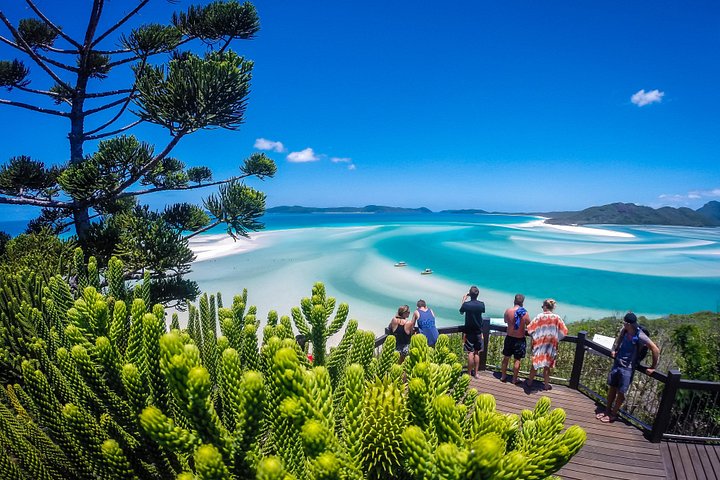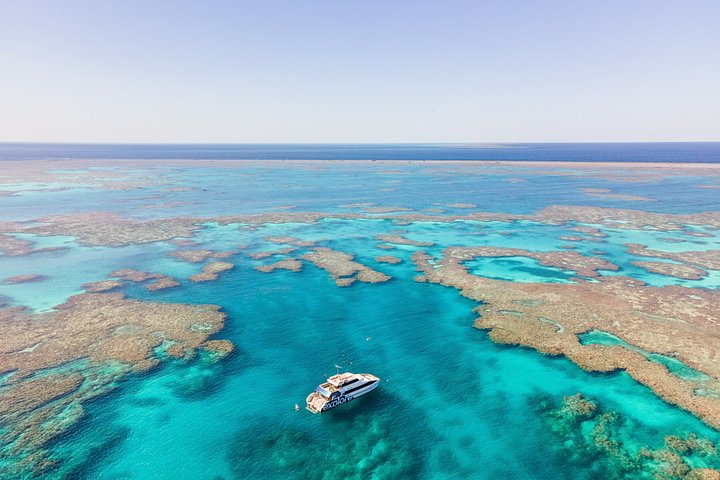
Shute Harbour is the working port at the eastern end of the Airlie Beach road, a few minutes from the town centre by car or shuttle, and it is the departure point for many island boats, ferries and reef cruises. This full-day snorkel cruise leaves from there and heads out to the Great Barrier Reef, spending most of the day in the water at one or more dive sites. The aim is to maximise time over coral rather than on the boat, which is why the day starts early and gives you a long window to swim, float and watch the reef. On the water, the crew provides masks, snorkels, fins and stinger suits, plus a safety briefing and flotation devices for those who want them. The boat anchors at reef sites that suit the day's wind and visibility, and passengers can snorkel at their own pace, with guides in the water to point out turtles, clams and unusual fish. Lunch and refreshments are included on board, and there is usually the option to join an introductory dive or a guided snorkel tour for an extra fee.
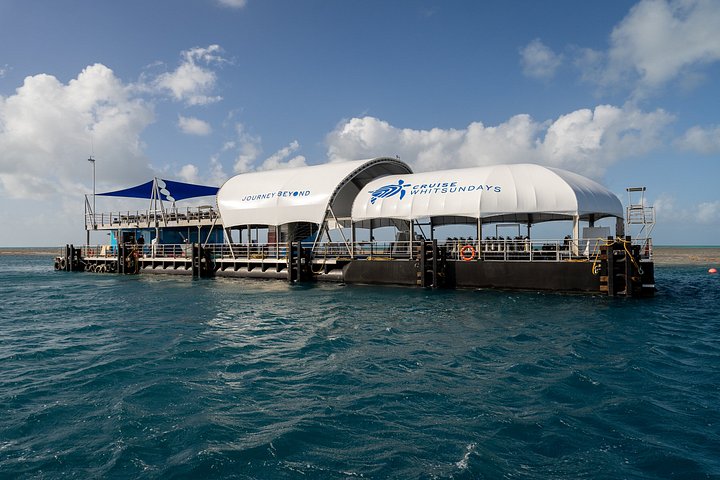
Choosing between a pontoon trip and a boat-based reef cruise comes down to taste. A pontoon has facilities and a social atmosphere, with plenty of activities and a lot of people. A smaller reef cruise from Shute Harbour feels more like a day at sea, with a simple routine of sailing, swimming, eating and relaxing. The boat moves between reef sites rather than staying at one, so you may see a more varied range of coral formations, and the group size is usually smaller, which can make the water less crowded.
Preparation helps. The crossing to the outer reef takes a couple of hours, so take seasickness tablets in advance, eat a light breakfast and spend the journey on the open rear deck if you feel unwell. Dress in layers, since the morning can be cool on the water, and wear a swimsuit under your clothes so you can slip into the water quickly when the boat stops. A rash vest protects against sun and jellyfish, and reef-safe sunscreen protects the coral, as chemical sunscreens can harm it.
Snorkelling technique makes a surprising difference to comfort. Practise breathing through the snorkel in shallow water before heading to deeper areas, relax your legs and move slowly, because splashing frightens fish and tires you out. If your mask leaks, ask the crew to help you adjust it, and if you are tired, hold onto a float. Look for the small wonders: clownfish nestled in anemones, parrotfish crunching coral, giant clams with iridescent lips, and the occasional green turtle gliding by.
This type of trip is good for confident swimmers and keen snorkellers, and it is a smart pick if you want the reef without the scale of a platform. It can also be cheaper than a premium pontoon day. If you want to learn more about the reef, ask whether a marine biologist is on board and whether the crew will give a short talk. Whatever you choose, follow the rule of the marine park: look but do not touch, never stand on coral and keep a respectful distance from turtles and other wildlife.
What to expect
The experience
A full-day boat cruise from Shute Harbour to outer reef snorkel sites, with equipment, lunch and guides in the water.
Best time
The dry months from June to October give the best visibility and the calmest crossings.
How long
About nine hours, with several hours snorkelling.
Tips
Take a seasickness remedy, wear a rash vest, practise with your mask first and ask the crew for a flotation aid if needed.
Quick picks
- Best for
- Confident swimmers who want maximum time on the reef.
- Families
- Good for older children who swim well; ask about flotation aids and age limits.
- Couples
- A relaxed day with space to snorkel together and share what you see.
- Pair with
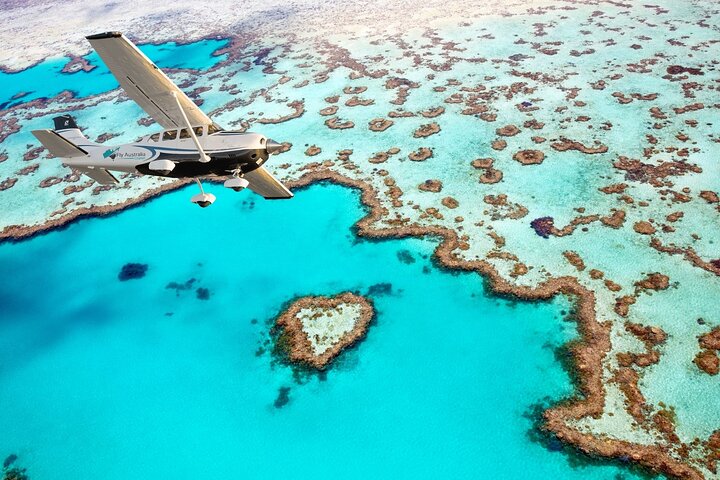
- A Whitehaven day, plus the Heart Reef flight for the aerial view.
- Time needed
- One full day.
Good questions
Where is Shute Harbour?+
It is a working port a short drive east of Airlie Beach town centre, used by many island ferries and reef cruises.
Is equipment provided?+
Operators of full-day reef cruises normally supply masks, snorkels, fins and stinger suits. Confirm the inclusions for your departure.
Can beginners join?+
Yes. Crews give a briefing and can provide flotation devices, but you should be comfortable in open water.
How is it different from a pontoon day?+
A boat cruise is usually smaller and more natural, with fewer facilities. A pontoon offers a fixed platform, more activities and a larger crowd.
What if I get seasick?+
Take a remedy before departure, eat lightly and stay on the rear open deck, where the motion is gentler.