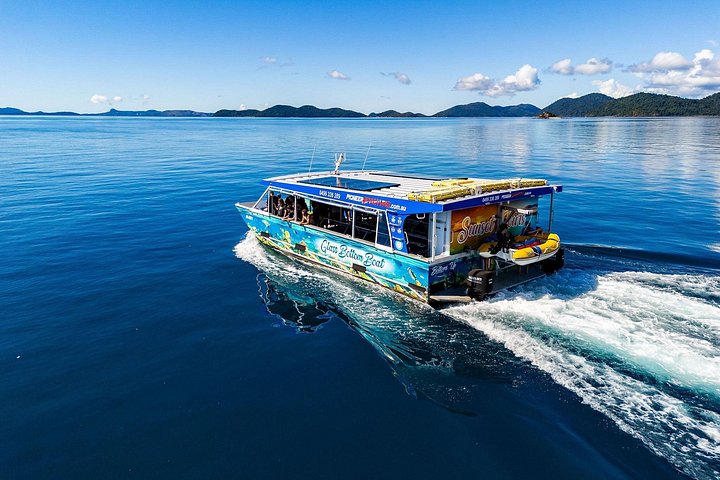
Not everyone wants to snorkel, and not everyone has the time or energy for a full-day reef trip. A glass bottom boat tour fills the gap with a short, easy outing that shows you the underwater world through windows in the hull. The boat departs from the Airlie Beach waterfront and cruises over the nearby fringing reef, where coral gardens, schools of tropical fish, sea cucumbers and occasionally turtles are visible through the glass. A guide explains what you are seeing, naming the species and describing how the reef works. Because the boat stays near the coast, the trip is short and gentle. There is no swimming, no sea sickness risk to speak of and no need for fitness, so it suits young children, older travellers, people with mobility limits and anyone who prefers to stay dry. The viewing windows are large, and the crew often lets passengers sit around them so everyone has a good look. There are also versions that run in the evening, using lights to reveal night-time marine life.
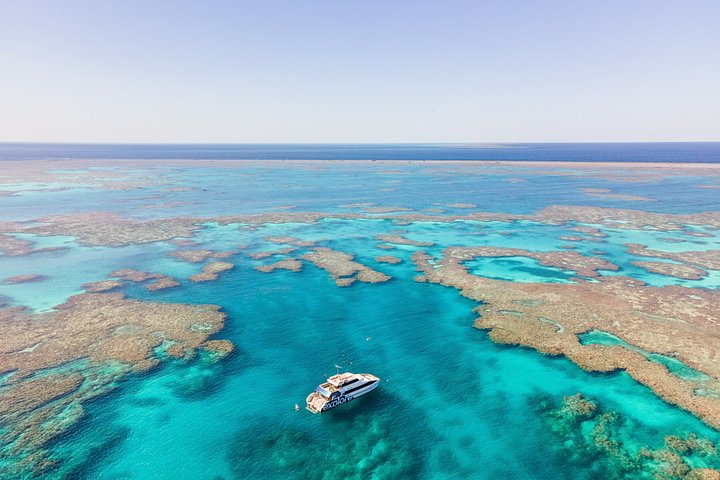
The fringing reefs close to Airlie Beach are smaller and more variable than the outer Great Barrier Reef, but they are alive and full of interest. Visibility depends on the weather and tide, with the clearest water usually in calm conditions and on days after a spell of light wind. In the wet season, run-off from rivers can reduce clarity. A good guide knows where to find the best coral, and may anchor or move slowly over patches where fish gather, giving time to photograph through the glass.
Plan the outing as a taster. If you are deciding whether to spend money on a full-day reef trip, a glass bottom boat is a cheap way to see what is beneath the surface. It is also a good choice for a day when your group has mixed abilities, since the boat can combine different levels of interest: keen children can press their faces against the glass, while adults relax on deck and take photographs. The commentary is aimed at general audiences, so you learn without needing any background.
Photography through glass has its quirks. Reflections are the main problem, so keep your camera or phone close to the pane, wear dark clothing to reduce glare, and avoid using flash. Try to shoot in bursts, since fish move quickly, and keep your hand steady against the frame. Keep realistic expectations: the water near the shore is not as clear as on the outer reef, and the coral may look muted compared with pictures of famous dive sites.
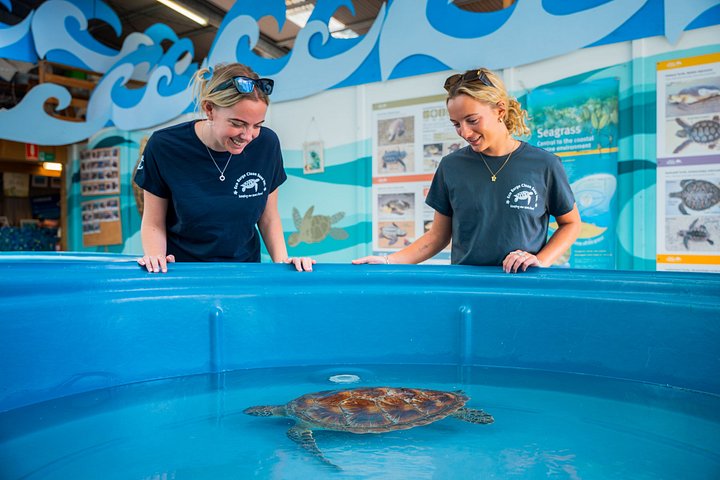
The tour also works as a wildlife outing. Turtles feed on seagrass and algae in the bays, and the crew may spot them from the wheelhouse and turn the boat to follow at a respectful distance. Rays, reef sharks and large schools of baitfish are sometimes visible. Night versions can show fascinating behaviour as crabs, sea slugs and other creatures become active after dark.
Whichever session you pick, ask about departure times, wear a light layer and arrive early to secure the best seat. Families often combine it with a stroll along the foreshore and an ice cream afterwards, which turns a short boat ride into an easy, memorable half day.
What to expect
The experience
A short boat cruise over the fringing reef near Airlie Beach with viewing windows in the hull and a commentary from the crew.
Best time
Calm, clear days give the best visibility. Evening versions show night-time marine life.
How long
About one to two hours.
Tips
Arrive early to choose a window seat, bring a camera with a strap and avoid using flash through the glass.
Quick picks
- Best for
- Families, older travellers and anyone who wants to see the reef without getting wet.
- Families
- One of the easiest reef experiences for young children.
- Couples
- Try the evening or sunset version for a quieter outing.
- Pair with
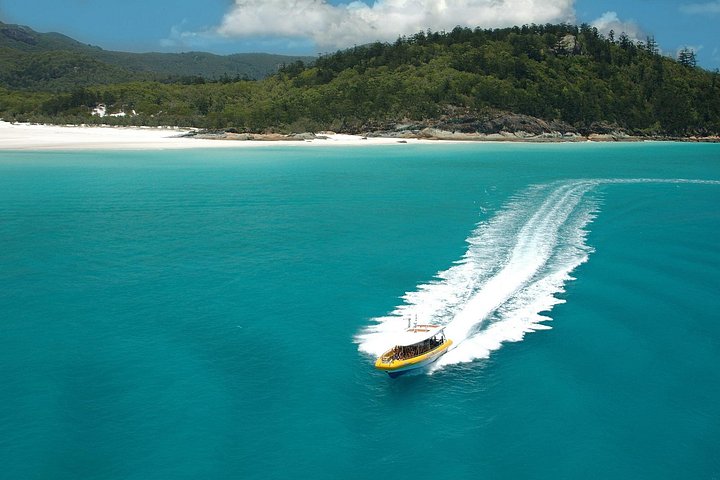
- A beach day at the lagoon or a Whitehaven cruise on another day.
- Time needed
- Two hours including boarding.
Good questions
Do I need to swim?+
No. You stay on the boat and look through the glass windows, so it suits non-swimmers and anyone who prefers to stay dry.
Is it suitable for young children?+
Yes. The trip is short, calm and engaging for children, though they should be supervised near the windows.
What will I see?+
Coral, fish, sea cucumbers and sometimes turtles and rays on the fringing reef near the coast. Visibility varies with the weather.
Is there a night version?+
Some operators run evening or night trips with lights to show nocturnal marine life. Check the schedule for your dates.
Can I take photos?+
Yes. Hold the camera close to the glass, avoid flash and wear dark clothing to cut reflections.