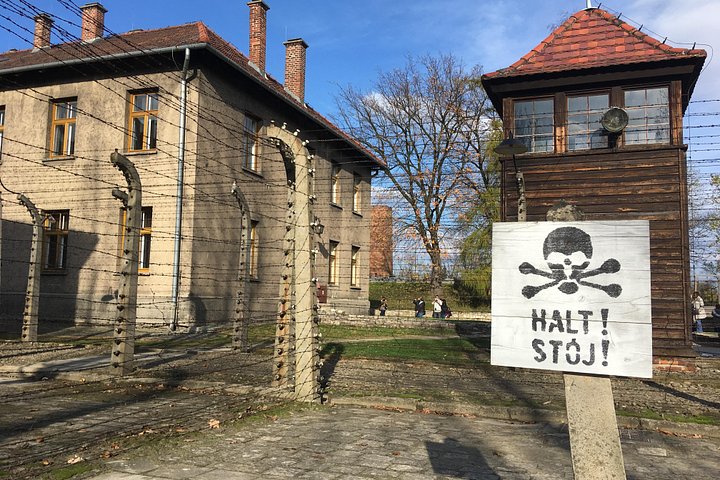
Auschwitz-Birkenau was the largest of the Nazi German concentration and extermination camps, and its memorial and museum at Oświęcim is among the most significant historical sites in the world. It is a UNESCO World Heritage Site and a place of remembrance, and visits are conducted with a licensed guide in timed groups. From Wrocław the site lies roughly three hours each way by road, so the trip is a very long day, but a guided day tour handles the transport, the timed entry and the logistics. A visit has two parts: the original camp known as Auschwitz I, with its preserved blocks and exhibitions, and Birkenau, the vast extermination site a few kilometres away. The experience is demanding and serious, and it is not an attraction in any ordinary sense.
The tour typically starts early in the morning from Wrocław and returns in the evening, with time at the site spent on the guided route and a shorter break for lunch. At Auschwitz I, you walk through the preserved brick blocks, which hold exhibitions of documents, photographs and personal belongings.
At Birkenau, you see the extent of the site, the railway ramp and the ruins of the gas chambers, accompanied by the guide. The memorial asks visitors to behave with respect, to avoid inappropriate photography and to follow instructions. Allow time afterwards to process what you have seen.
Practical advice
Entry to the memorial is arranged in timed slots with a guide for much of the year, which is the main reason a day tour with tickets and transport is helpful. The museum recommends that visitors under fourteen do not attend, because of the content, so do not plan this for young children.
Wear comfortable shoes and weatherproof clothing, as a good deal of the visit is outdoors and on foot, and bring ID, water and a light snack. Bags are restricted, so travel light, and check the museum guidance on what is permitted before you go.
If you are weighing this against a closer option, Gross-Rosen near Wrocław is shorter and quieter, while Auschwitz-Birkenau is the central site for understanding the Holocaust and the one most visitors have in mind. Some operators offer a combined day with Kraków or the Wieliczka Salt Mine, which makes the day longer still, so decide whether you prefer a focused visit or a mixed itinerary. Travel in the evening is tiring, so avoid scheduling anything demanding the next morning, and treat the trip as a day of remembrance rather than a sightseeing outing.
What to expect
The experience
A guided full-day trip by road to the memorial and museum at Oświęcim, covering Auschwitz I and Birkenau in a timed group.
Best time
Any day the memorial is open, with an early start to give time at both parts of the site.
How long
A full day, with roughly three hours of driving each way.
Tips
Bring ID, water and a snack, wear comfortable weatherproof clothing, travel light and follow the memorial rules on photography and conduct.
Quick picks
- Best for
- Visitors with a serious interest in the Holocaust and twentieth-century history.
- Families
- Not suitable for young children, because the museum recommends against visits for those under fourteen.
- Couples
- A solemn day of remembrance rather than a leisure outing.
- Pair with
- A quiet evening back in Wrocław, with nothing demanding planned for the next morning.
- Time needed
- A full day.
Good questions
How far is Auschwitz from Wrocław?+
The memorial at Oświęcim is roughly three hours each way by road, so a day trip is long, and a guided tour handles the transport and timing.
Is it suitable for children?+
The museum recommends that children under fourteen do not visit, because of the content. Plan accordingly.
Do I need to book in advance?+
Entry is organised in timed slots, often with a guide, which is why a day tour that includes tickets is the simplest option. Choose your date at checkout to see availability.
What parts of the site are visited?+
A visit usually covers Auschwitz I, the original camp with its preserved blocks and exhibitions, and Birkenau, the vast extermination site a few kilometres away.
How should I behave at the memorial?+
Treat it as a place of remembrance: be quiet, follow the guide, avoid inappropriate photography and check the museum rules on bags and conduct before you go.