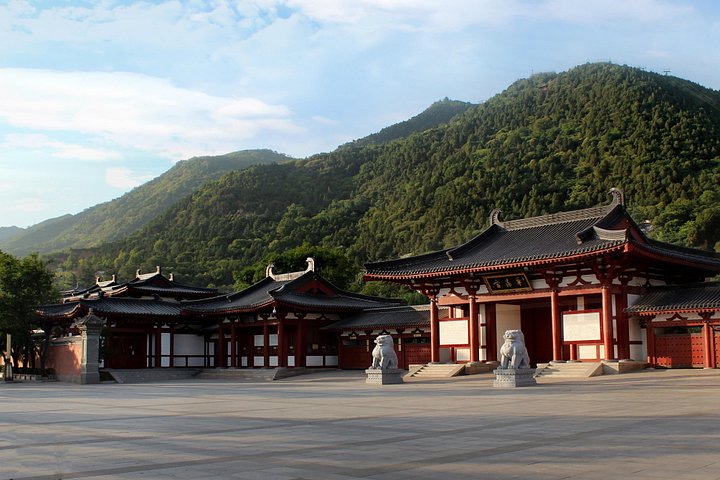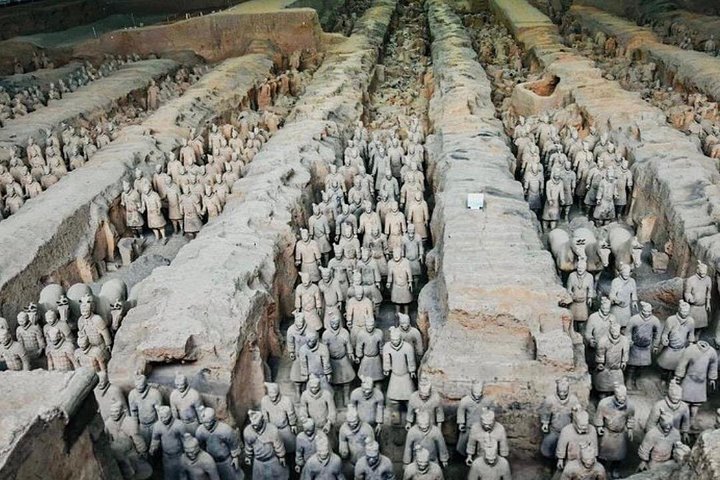
The Shaanxi History Museum is the best place to understand why Xi’an matters. Opened to the public in 1991 and housed in a Tang-style complex, it holds about 370,000 objects spanning prehistoric times to about 1840, and the collection is especially rich for the Zhou, Qin, Han and Tang dynasties when this region was the heart of China. Highlights include bronzes, tomb figures, tri-colour glazed pottery, and the Tang gold and silver hoard found at Hejia Village. A separate hall displays Tang tomb murals, which are fragile and shown in limited numbers. The main exhibition halls are free but require ID or a passport, and the museum issues a limited number of free tickets each day, so a plan is worth making. It makes a rich counterpart to the Terracotta Army, putting the first emperor in the longer story of Chinese civilisation.
How to visit
The museum is in the Yanta district in the south of the city, not far from the Giant Wild Goose Pagoda, and is reached by metro, bus or taxi. The main halls are free, but you must show a passport or ID and the number of daily tickets is limited, so reserving in advance is strongly advised, especially in busy seasons. The museum is closed on Mondays except for holidays.
What to expect
The permanent exhibitions follow Chinese history in order, from early humans through the Zhou, Qin, Han and Tang dynasties. Extra tickets are needed for the separate Treasures of the Great Tang hall and the hall of Tang murals, and the murals hall is more expensive and shows only a small number of paintings at a time. Allow two to three hours, or longer if you join a guide.
Making the most of it
Go on a weekday, arrive at opening and bring your passport. Opening hours change around the middle of November, when the museum moves to winter hours, so check the closing and last-entry times for your date. A guide or an audio guide helps because labels can be sparse and the collection is huge. Pick a few galleries rather than trying to see everything.
November is a quieter month, though holidays still bring crowds. If tickets have run out, the Xi’an Beilin Museum, with its forest of stone steles, is a good alternative close to the South Gate.
What to expect
The experience
A large museum of Chinese history, with free main halls, separate paid halls for Tang treasures and murals, and limited daily entry.
Best time
A weekday at opening, with a reservation made ahead.
How long
Two to three hours for the main halls.
Tips
Bring your passport, reserve in advance, remember it is closed on Mondays, and pick a few galleries.
Quick picks
- Best for
- History fans who want context for the Terracotta Army and the Tang dynasty.
- Families
- Older children enjoy the tomb figures and the gold and silver; younger ones may tire in the long galleries.
- Couples
- Spend a quiet morning in the Tang galleries, then walk to the Giant Wild Goose Pagoda.
- Pair with
- The Giant Wild Goose Pagoda and the Tang-themed streets nearby.
- Time needed
- Two to three hours.
Good questions
Is the Shaanxi History Museum free?+
The main halls are free, but you must show a passport or ID and the number of free tickets each day is limited. Two special halls charge a separate fee.
Do I need to reserve?+
Reserving ahead is strongly advised, especially on weekends and in holiday periods. Check the museum’s current booking method before you go.
When is it closed?+
The museum is closed on Mondays, except during holidays. Opening hours also change in the middle of November, when winter hours begin.
What are the highlights?+
Look for the Tang gold and silver from Hejia Village, the tri-colour glazed pottery and the Tang tomb murals. The bronzes of the Zhou dynasty are also impressive.
How long should I allow?+
Two to three hours covers the main halls comfortably. Add time if you plan to visit the paid Tang halls.