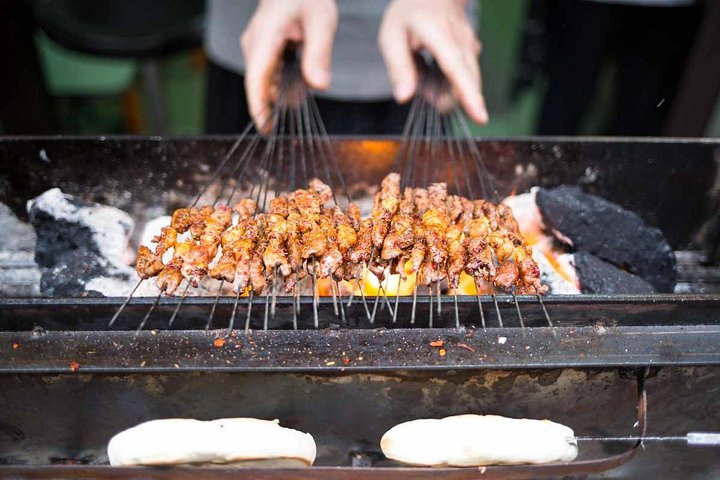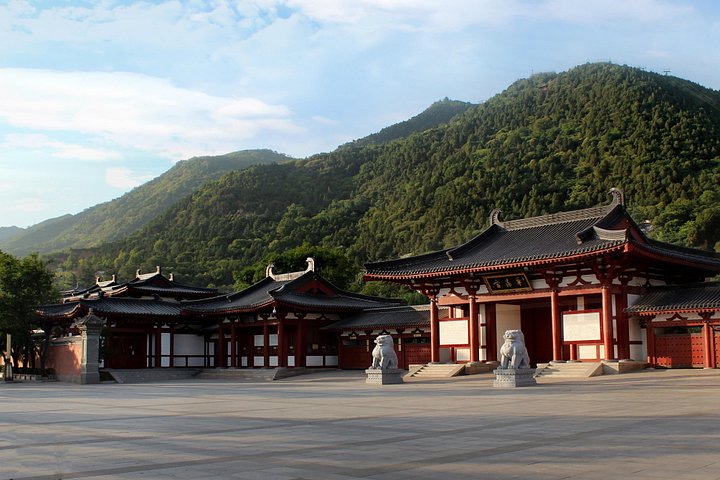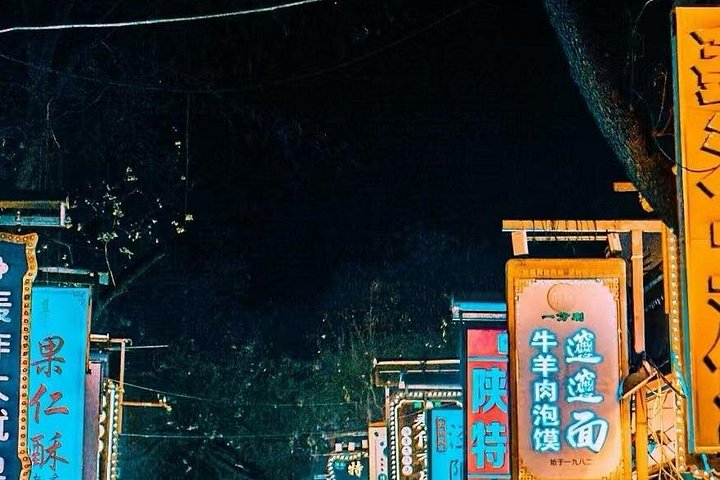
The Muslim Quarter is the beating heart of Xi’an’s street food, a maze of lanes behind the Drum Tower where the Hui community has lived for centuries. The main street fills with stalls selling lamb skewers, flatbreads, sweet persimmon cakes, cold noodles and bowls of the famous mutton and bread soup, and the smells and sounds are part of the visit. Tucked into the lanes is the Great Mosque, which according to a stone tablet inside was founded in 742 in the Tang dynasty. Its present buildings are mostly Ming and Qing, and the architecture is a fascinating blend of Chinese and Islamic styles: the prayer hall faces west toward Mecca, and the minaret looks like a pagoda. The mosque is a working place of worship, so visitors are asked to be quiet and respectful. A walk through the courtyards makes a calm break from the busy streets outside.
How to visit
The quarter begins just behind the Drum Tower and is easy to reach on foot from the Bell and Drum Towers or by Metro Line 2 to the Bell Tower station. The Great Mosque entrance is on Huajue Lane, northwest of the Drum Tower, and is open for most of the day. A modest entry fee applies to the mosque, and its Ming-era prayer hall is closed to non-Muslim visitors.
What to expect
The main food street is crowded, noisy and delicious, especially in the late afternoon and evening. Try small portions from several stalls rather than a full meal at one. Prices are often posted, but check before ordering, and carry small notes or use a mobile payment app. The mosque courtyards are peaceful, with carved stone tablets, calligraphy and a series of gateways that lead you slowly to the prayer hall.
Making the most of it
Visit the mosque earlier in the day and the food street after, so that you are not carrying snacks into a place of worship. Dress modestly, cover your shoulders and knees, and keep your voice low in the courtyards. Avoid photographing worshippers. The lanes are narrow and crowded in the evening, so keep a hand on your bag.
November evenings are cool, which makes the hot food and steaming stalls especially welcome. If you want guidance on what to order, a local food tour is a useful first night.
What to expect
The experience
A walk through crowded food lanes and the courtyards of a working mosque, with plenty of street food along the way.
Best time
The mosque in the morning, and the food street in the late afternoon and evening.
How long
Two to three hours, longer if you eat your way through the lanes.
Tips
Dress modestly for the mosque, try small portions, carry small notes or a payment app, and watch your bag.
Quick picks
- Best for
- Food lovers and anyone curious about the Hui community and Silk Road culture.
- Families
- Children like the snacks, but the lanes are crowded and noisy at peak times.
- Couples
- Share small plates from several stalls and finish with a walk to the lit Drum Tower.
- Pair with
- The Bell and Drum Towers, next door.
- Time needed
- Two to three hours.
Good questions
What should I eat in the Muslim Quarter?+
Try lamb skewers, flatbread soaked in mutton soup, cold noodles and sweet persimmon cakes. Sharing small portions lets you taste more.
Can non-Muslims visit the Great Mosque?+
Yes, visitors are welcome in the courtyards, though the main prayer hall is not open to them. Dress modestly and keep your voice down.
When was the Great Mosque founded?+
A stone tablet inside records its foundation in 742 during the Tang dynasty. Most of the present buildings date from the Ming and Qing dynasties.
Why does the mosque look like a Chinese temple?+
Its design blends Chinese and Islamic styles, with pagoda-like towers, tiled roofs and spirit walls. The prayer hall faces west toward Mecca rather than south.
Is it crowded?+
Yes, the food street is busiest in the evenings and at weekends. Go earlier in the afternoon for a calmer visit.