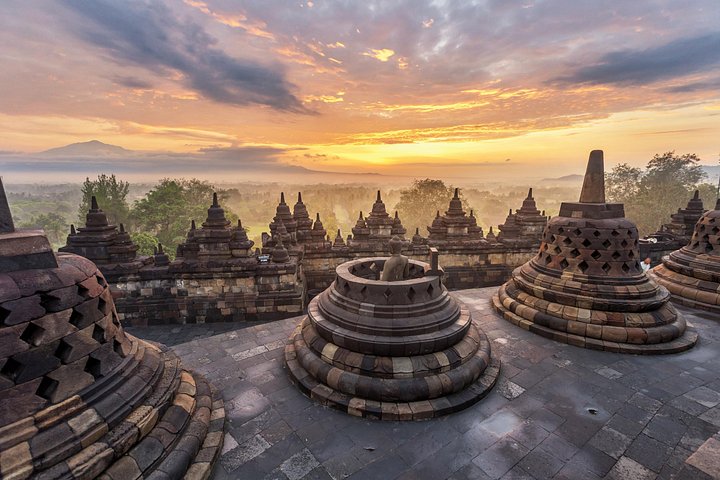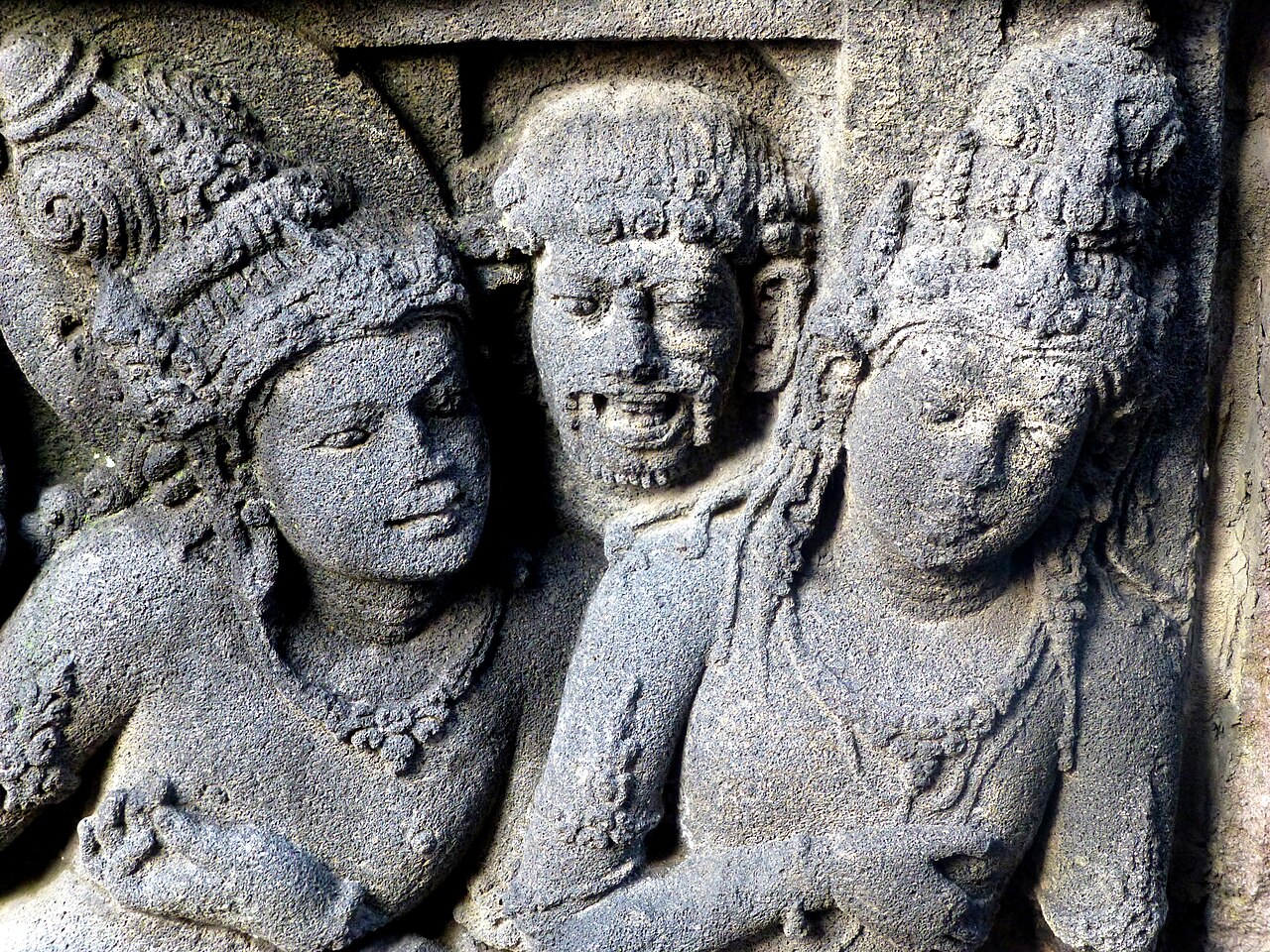
Borobudur rises about 40 kilometres northwest of Yogyakarta, built by the Sailendra dynasty around the 9th century and abandoned for centuries before being cleared from jungle and ash in the 19th century. It is a UNESCO World Heritage Site, and its design is a teaching in stone: a square base, then five square terraces and three circular platforms, with kilometres of carved relief panels telling Buddhist stories as you walk upward. At the top, seventy-two perforated stupas surround one great central stupa, each once holding a seated Buddha. The monument sits between the Menoreh hills and the cone of Merapi, and on clear mornings the setting is as memorable as the stone. Modern visiting is managed carefully because of wear. Entry to the grounds and access to the temple structure itself are treated as different things, the structure has a daily limit with timed slots, and visitors on the stonework wear provided woven upanat sandals and go with a local guide.
How access works
There are two broad levels of access. A grounds ticket lets you walk the park and view the monument from the base. A structure ticket lets you climb onto the terraces in a timed group, with a local guide and the upanat sandals included. Reports describe a limit of roughly twelve hundred climbers a day, in slots through the day with around one hundred and fifty people per hour.
Foreign visitor fees are in the hundreds of thousands of rupiah and they change, so check the ticket description before you pay, and book ahead for weekends, school holidays and the dry season. A separate, limited sunrise-on-the-monument ticket is also offered; see the sunrise entry for that.
Walking the monument
Start at the base and go clockwise, as pilgrims do, so the reliefs unfold in order. The lower galleries are the most densely carved; the upper circular platforms are plain and quiet, with the stupas and the view. Bring water, a hat and a light layer, because stone radiates heat by late morning. Shoulders and knees covered is the respectful standard, and photographing monks or worshippers without asking is poor form.
Getting there and combining
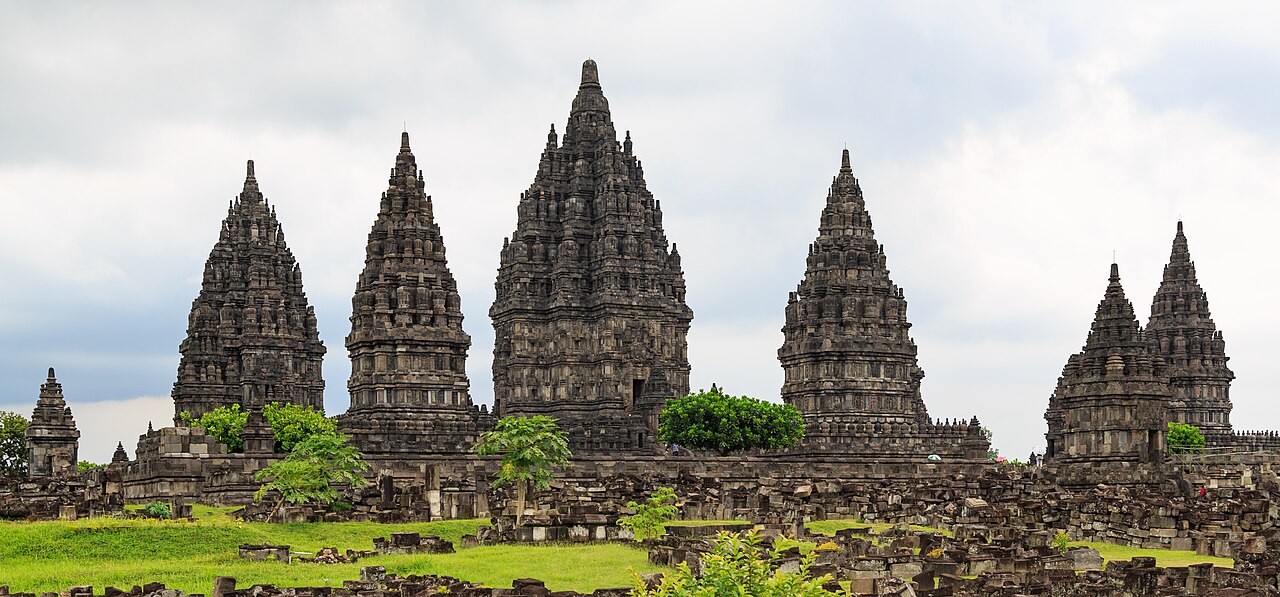
Most visitors drive from Yogyakarta in an hour to ninety minutes, usually on a private driver or a tour. Arrival and parking are organised through the Kujon art village, with a short walk or shuttle to the entrance. Pair Borobudur with the small temples of Mendut and Pawon, the village and pottery tours around the base, or a Prambanan afternoon. In the wet season, November to March, go early: mornings are cooler and drier, and afternoon storms can close the climbing slots.
What to expect
The experience
A self-paced walk around and, with a structure ticket, up through nine platforms of carved stone, in a timed group with a local guide, wearing the sandals provided at the entrance.
Best time
Early morning, when the stone is cool and the light is soft; the first climbing slots of the day are the most comfortable and least crowded.
How long
Plan two hours on site, three to four with the drive from Yogyakarta and the walk from the car park.
Tips
Check whether your ticket is grounds-only or includes the climb before you buy. Bring ID, water and a hat, wear modest clothes, and leave large bags in the locker area.
Quick picks
- Best for
- First-timers, history lovers and anyone who wants the single most important sight in Central Java.
- Families
- Older children enjoy the climb and the carvings; strollers are not practical on the stairs, and little ones tire in the heat.
- Couples
- Book the earliest slot, then continue to a village lunch near the temple.
- Pair with
- Mendut and Pawon temples, a village cycling tour, or the Prambanan temples later in the day.
- Time needed
- Half a day, or a full day with Prambanan.
Good questions
Can I still climb to the top of Borobudur?+
Yes, but only with a structure ticket in a timed slot, with a local guide and the provided upanat sandals. Daily numbers are limited, so book early.
What are upanat sandals?+
They are woven sandals made from natural materials, supplied at the entrance to protect the ancient stone from the wear of regular shoes. You must wear them on the monument.
What time does Borobudur open?+
The grounds open at half past six in the morning, and last entry is shortly before closing. Check the closing time for your date on the ticket page.
How far is Borobudur from Yogyakarta?+
About 40 kilometres, which usually takes an hour to ninety minutes by car depending on traffic. Most visitors use a driver or an organised tour.
Is Borobudur worth visiting in the rainy season?+
Yes, if you go early. The hills are green and crowds are thinner, but plan for afternoon rain and slippery stone.