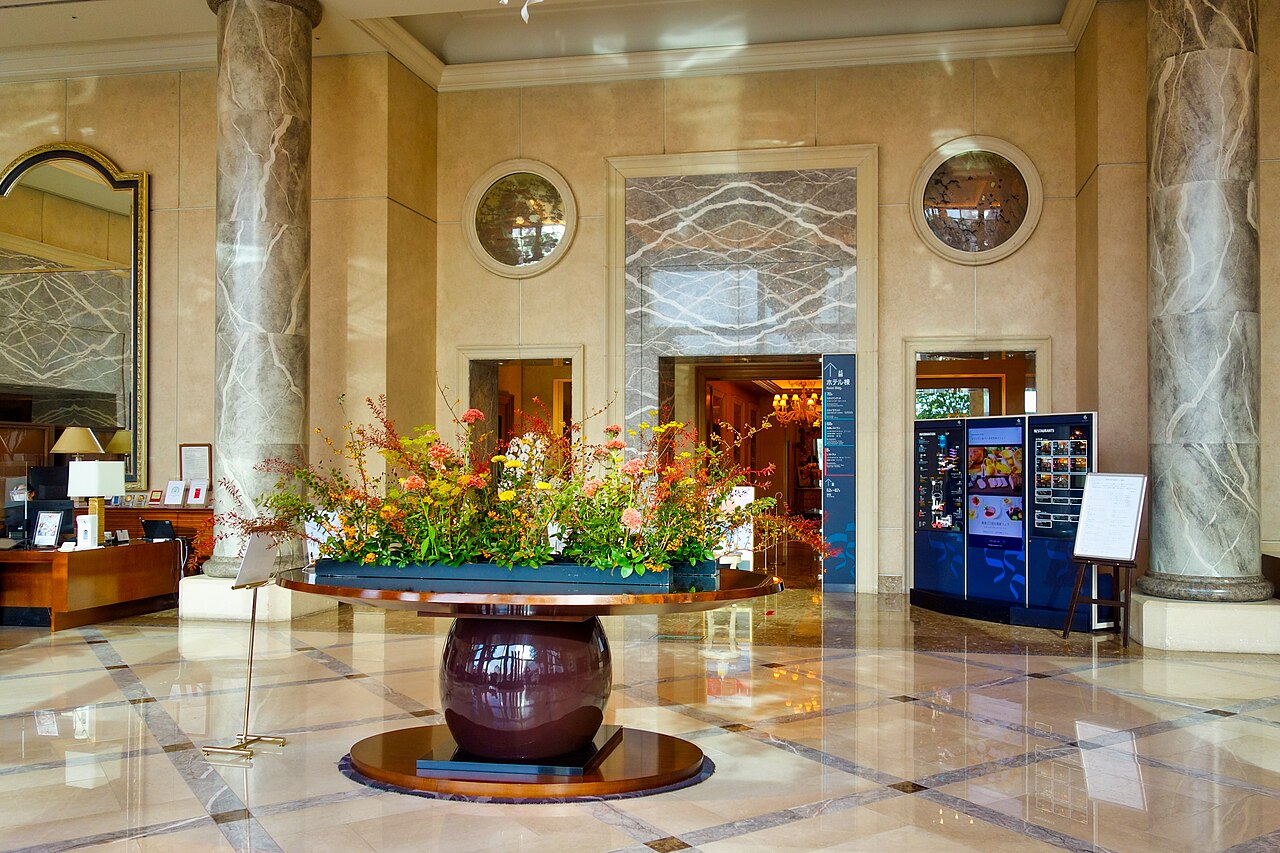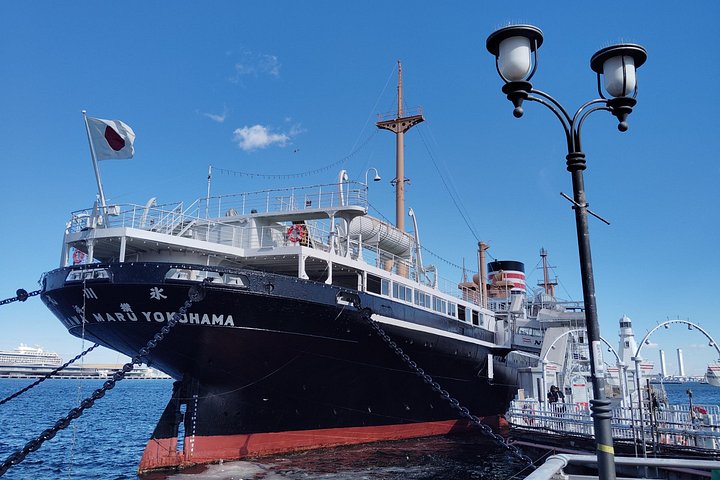
The Hikawa Maru is a passenger ship built in 1930 for the Japanese line that ran trans-Pacific services to the American west coast. She is moored permanently beside Yamashita Park and is open to visitors as a museum ship. The Hikawa Maru survived war service as a hospital ship and was later returned to passenger service before she was retired and brought to Yokohama as a memorial. She is a designated cultural property, and the interior preserves much of its original art deco styling, including a grand staircase, dining rooms, and a smoking lounge. A visit lets you walk the decks, see the bridge, and picture what a long Pacific crossing felt like in an age before air travel.
A typical visit follows the passenger route through the ship. You board by a gangway from the park, pass through the first-class areas with their wood panelling and period furniture, and then go on to a promenade deck with views across the bay. Cabins have been preserved in different classes so you can compare what a luxury suite and a modest berth looked like.
Further down, the engine room and mechanical spaces show the engineering side of the voyage. A guide or an audio explanation helps tie the details together, and a guided visit such as a short tour focused on the ship gives context about her wartime role and later years.
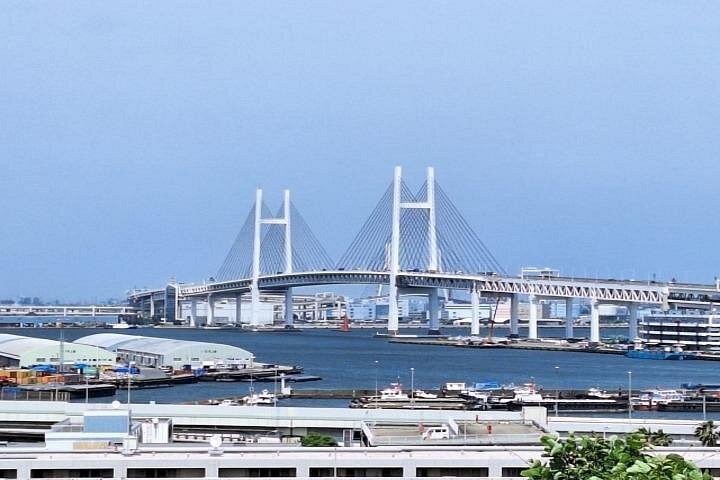
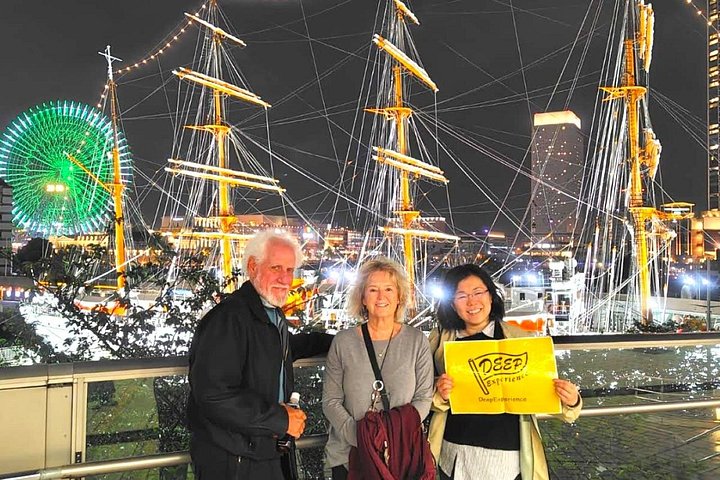
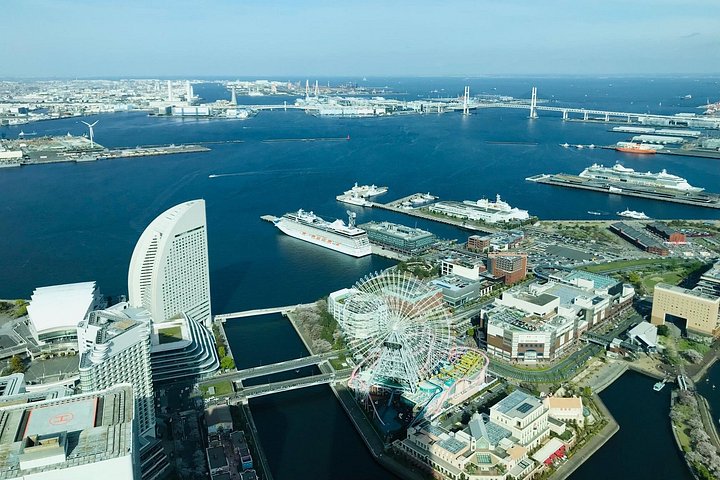
The ship is also a fine vantage point on the harbor. From the decks you can see the Bay Bridge, the towers of Minato Mirai, and the Marine Tower on the park side. Evening lighting makes the bow and funnel glow, which is spectacular from the park. Combine the ship with a stroll through Yamashita Park and a walk to Chinatown for a relaxed half day. The museum shop sells model ships and maritime souvenirs, and there is usually a small cafe or event space on board during busy seasons.
Good to know before you go
Opening hours and closing days vary through the year, and the ship sometimes closes for maintenance or special events, so check the current schedule. Entry fees are modest. Some decks involve steep stairs and narrow doorways, which can be difficult for strollers or limited mobility.
The ship is a 5-minute walk from Motomachi-Chukagai or Kannai stations and close to the Yamashita Park entrance. Visiting in the early morning gives the best light for photographs of the hull from the park. Allow about an hour for the visit itself, and longer if you attend a themed event.
Interested visitors can look for details that reward a slow pace: the wood inlay in the dining rooms, the brass fittings on the bridge, the old telegraph equipment and the exhibits that explain the ship's voyages and her role as a hospital ship. Photos from the stern show the shape of the hull against the Bay Bridge, and the benches on deck are a calm place to rest. Combine the ship with a coffee in the park afterwards, and you will have a satisfying maritime half day.
Audio guides and printed notes are often available at the entrance, so ask the staff what is offered that day.
What to expect
The experience
A self-guided or guided walk through the decks, lounges, cabins and engine spaces of a preserved ocean liner moored at the park.
Best time
Morning for photos of the hull from Yamashita Park, or late afternoon before closing for soft light on the bay.
How long
About an hour for the ship, plus time for the park and photos.
Tips
Wear flat shoes for steep stairs, check closing days and combine with Yamashita Park and Chinatown.
Quick picks
- Best for
- History lovers, ship fans and anyone who enjoys period interiors.
- Families
- Children like exploring the decks and cabins, but stairs are steep and doorways narrow.
- Couples
- Pair the ship with an evening stroll through Yamashita Park.
- Pair with
- Yamashita Park, Chinatown and the harbor cruise.
- Time needed
- One to one and a half hours.
Good questions
When was the Hikawa Maru built?+
She was built in 1930 as a passenger liner for trans-Pacific service and later served as a hospital ship in wartime.
Is the ship accessible?+
Some areas are accessible, but narrow stairs and thresholds limit access to many decks, so plan a partial visit if mobility is limited.
How long does a visit take?+
About an hour, though history fans may stay longer.
Is it open every day?+
Opening days and hours vary by season and maintenance, so check the current schedule before you go.
Where is it?+
She is moored beside Yamashita Park, a short walk from Motomachi-Chukagai and Kannai stations and from Chinatown.