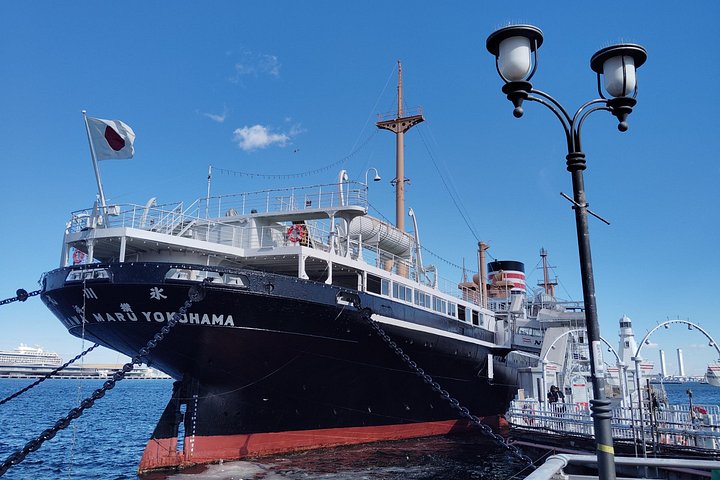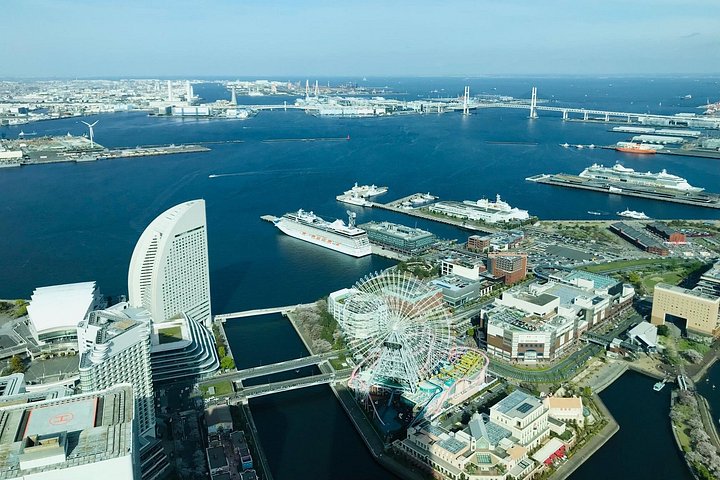
Minato Mirai 21, usually shortened to Minato Mirai, is the district most people picture when they think of modern Yokohama. It was built on reclaimed land and former shipyards beginning in the 1980s, and its name means port of the future. The skyline is dominated by the Landmark Tower, which at about 296 metres was Japan's tallest building for two decades and still holds a high place among the country's skyscrapers. Around it sit shopping malls, hotels, the Pacifico Yokohama convention centre, the Yokohama Museum of Art, the Cosmo Clock 21 Ferris wheel and the historic sail-training ship Nippon Maru. What makes the district pleasant rather than merely tall is the waterfront: broad promenades, elevated walkways and landscaped parks run beside the bay, and the whole area is flat, walkable and easy to understand within an hour.
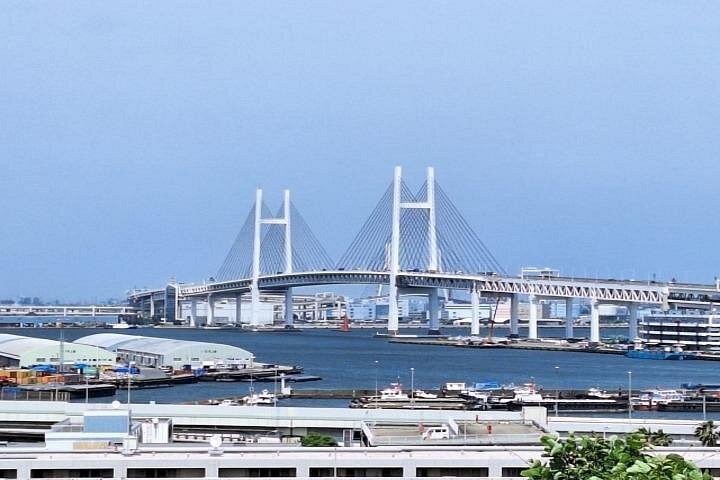
A good first visit is a loop on foot. Start at Sakuragicho Station and take the moving walkway toward Landmark Plaza, a shopping and dining complex at the base of the tower. From there, an observation deck near the top of the tower gives wide views over the bay, the Bay Bridge and, on clear days, Mount Fuji far to the west.
Come down and cross to the Nippon Maru memorial park, then follow the waterfront promenade past the red brick warehouses toward the amusement piers. If you prefer to see it with a guide, a private walking tour that links Minato Mirai with Chinatown and Sankeien is a convenient way to fit three very different Yokohama scenes into one day.
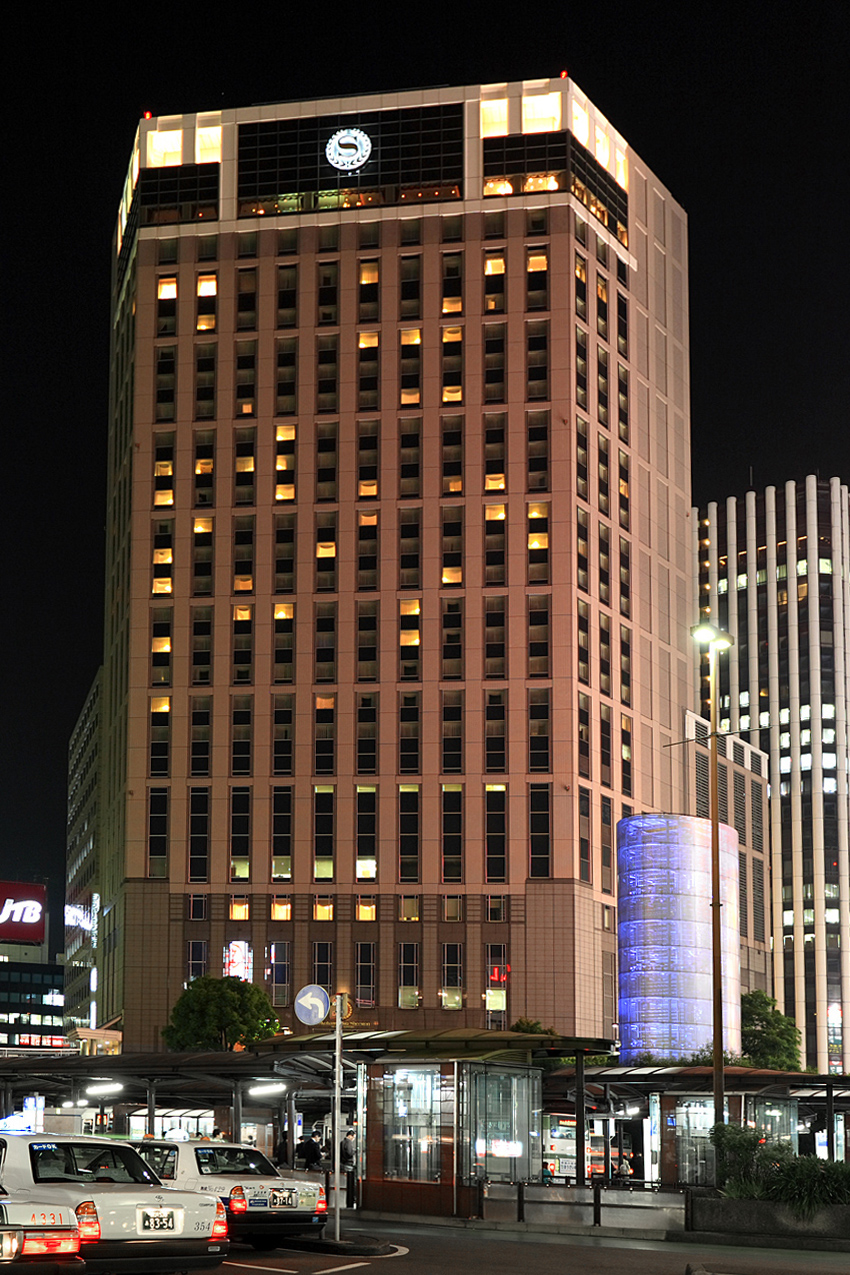
Minato Mirai rewards a second visit after dark. The towers and the Ferris wheel are lit in changing colours, the promenades fill with couples and families, and the reflections on the bay are the best free show in town. Shops and malls generally stay open into the evening, which makes the district a practical place to eat after a day at Chinatown or the Red Brick Warehouse.
The Minatomirai Line subway runs directly beneath the district, and a short walk along the waterfront connects it to Kannai, so it works equally well as a first stop or a closing one.
Practical details help. Weekends and public holidays bring crowds to the malls and to the observation deck, so weekdays and early mornings are quieter. The observation deck usually keeps late hours on weekends and in summer, but hours change, so check the current schedule before you go. Summer is humid and spring and autumn are the most comfortable seasons for walking the promenades.
Wind off the bay can make winter evenings cold, so bring a layer. Wheelchair and stroller access is excellent because the district was planned with wide, step-free routes and plentiful lifts, which makes it one of the easiest places in the Tokyo region for travellers with limited mobility.
Photographers should note a few reliable viewpoints. The pedestrian bridge near Sakuragicho gives a clean frame of the Ferris wheel and towers, the waterfront steps by the Red Brick Warehouse look back at the skyline, and the passenger terminal on Osanbashi Pier offers an open rooftop deck with harbor views and a wide sky. Each is free and easy to reach on foot, so you can build a sunset route without a tour.
What to expect
The experience
A free, self-guided walk through a planned waterfront district of towers, malls, parks and promenades, with optional paid extras such as the observation deck.
Best time
Late afternoon into the evening, so you see the bay in daylight and then the lit-up skyline after dark.
How long
Two hours for a brisk loop, half a day if you add the observation deck, a mall lunch and the waterfront parks.
Tips
Check the current observation deck hours, use the elevated walkways to stay out of rain, and bring a layer for wind off the bay.
Quick picks
- Best for
- Anyone who wants Yokohama's signature skyline and an easy, flat first walk.
- Families
- Wide pavements, parks, a Ferris wheel and plenty of toilets and baby-change rooms make it simple with children.
- Couples
- Walk the promenade at dusk and watch the towers light up across the water.
- Pair with
- The Red Brick Warehouse, Cosmo Clock 21 and a harbor cruise.
- Time needed
- Two to four hours.
Good questions
Is Minato Mirai free to visit?+
Walking the district, its parks and its promenades is free. You pay only for extras such as the observation deck, the Ferris wheel, museums and boat trips.
How do I get to Minato Mirai from Tokyo?+
Take a JR or private line train to Yokohama or Sakuragicho Station, which takes roughly half an hour from central Tokyo, then walk or ride the Minatomirai Line one stop.
When is the best time to go?+
Late afternoon into evening is ideal, because you get daylight views and then the illuminated skyline. Spring and autumn are the most comfortable seasons.
Is it good in the rain?+
Yes, better than most waterfronts. Many routes between the malls, the station and the tower are covered or indoors, and the museums and shops are close together.
Can I see Mount Fuji from here?+
On clear days, especially in the cooler months, Mount Fuji can be seen from the higher observation levels, though haze often hides it in summer.