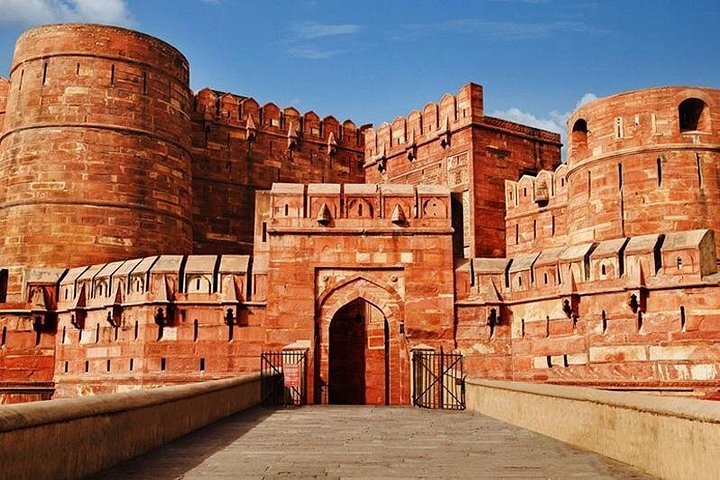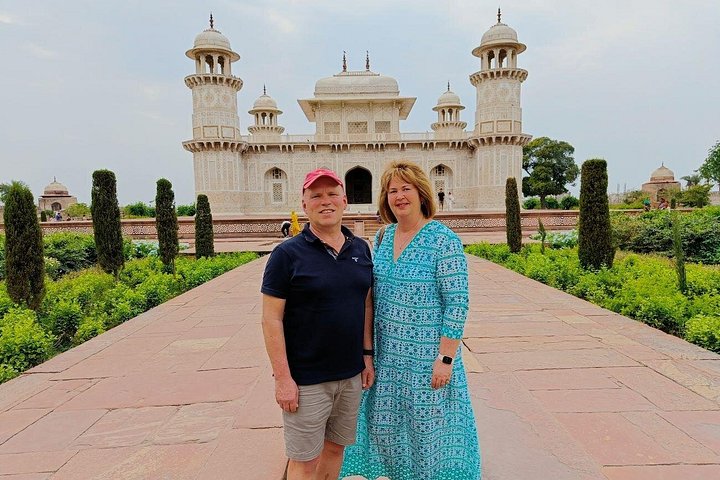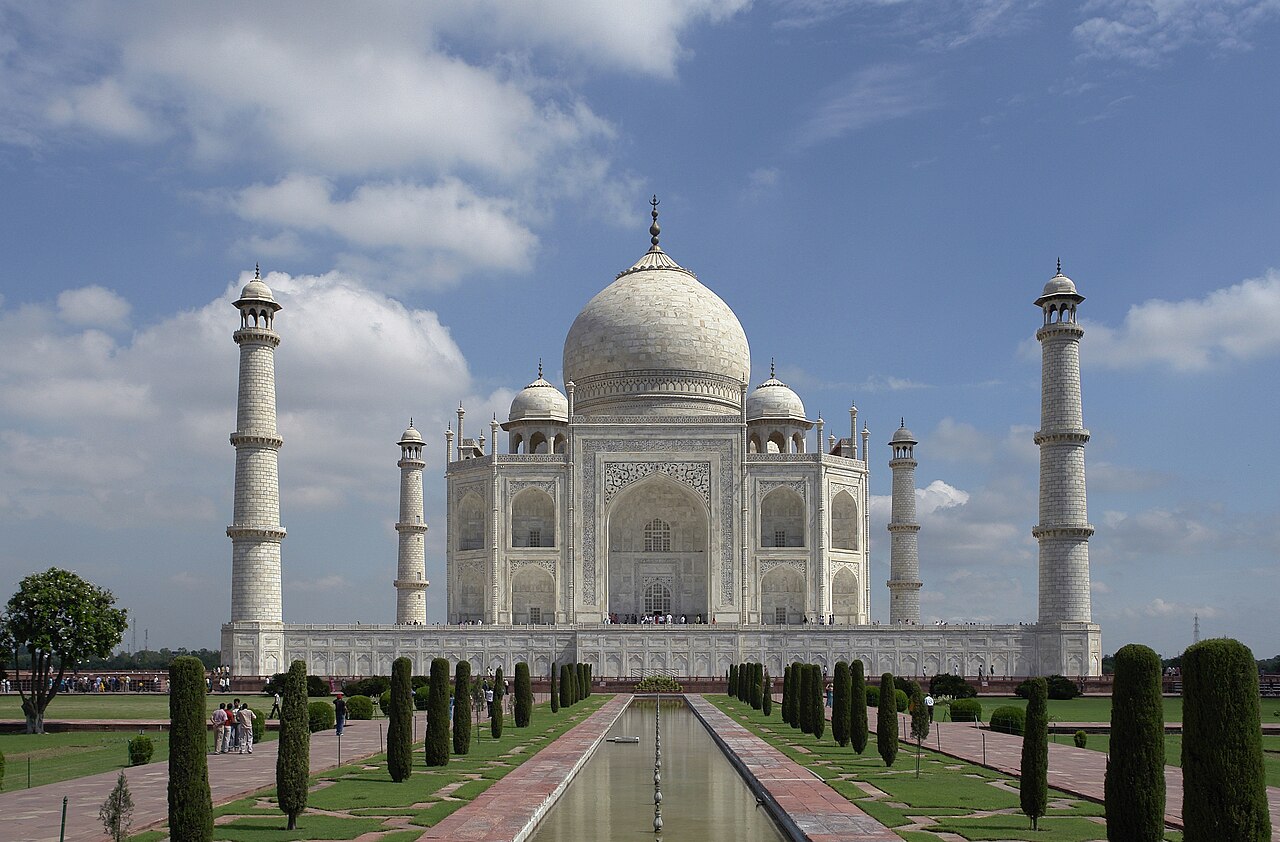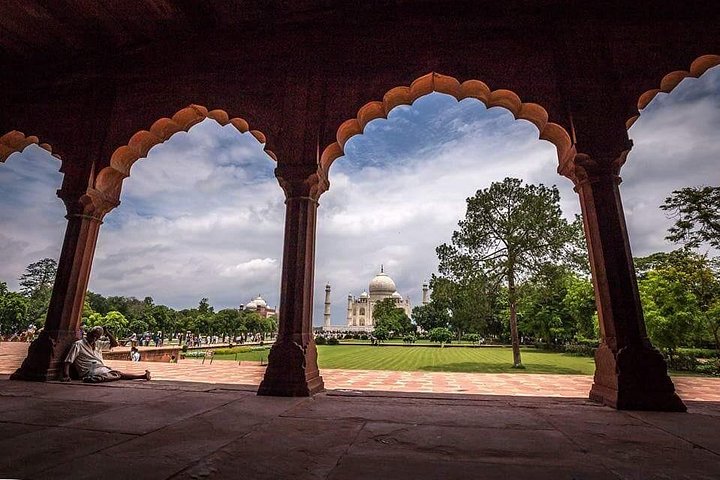
Agra is compact, hot for much of the year, and built around one unforgettable building. Most visitors come for the Taj Mahal, but the city rewards a second day with Agra Fort, a quiet Baby Taj, a sunset at Mehtab Bagh and an old-city food walk, and Fatehpur Sikri makes an easy half-day trip. This guide covers what to book, how to move around and how to shape your time.
Know the Friday rule first
The Taj Mahal is closed every Friday. Agra Fort, Itmad-ud-Daulah, Akbar's Tomb, Fatehpur Sikri and Mehtab Bagh stay open, with slightly lower ticket prices, so Friday becomes your fort-and-garden day. Build the rest of your trip around that, and avoid arriving by train on a Friday with a plan to see the Taj the same day.
What to book ahead
Tickets for the Taj Mahal are sold online through the Archaeological Survey of India system, and you need government-issued photo ID. Going inside the main mausoleum needs an extra ticket. A guided entry with a licensed guide, such as the [Taj Mahal guided entry, handles tickets, the right gate and the explanation in one go. If you want the quiet first hour, add the sunrise visit. Book your hotel early for October to March, when Agra is busiest.
Choose the right light
Sunrise is the classic Taj experience, with softer colours and thinner crowds, but winter fog can hide the monument. Plan a spare morning if you can. For the view across the river, Mehtab Bagh at sunset is the best choice, and it is open on Fridays. Midday is hot in summer and crowded in winter, so use it for indoor rests or the old city.
How many days
One day is possible if you arrive early from Delhi or Jaipur, but you will rush. Two days is the sweet spot: day one for the Taj at sunrise, the Agra Fort and the Baby Taj; day two for Fatehpur Sikri, Akbar's Tomb and an evening food walk. A third day lets you visit the Wildlife SOS elephant centre or spend time with marble inlay artisans.
Getting around
Agra is spread out, and the most comfortable way to cover it is a car with a driver or a guided tour from your hotel. Tuk-tuks are cheap for short hops, but agree on a price before you get in. Ride-hailing apps work in the city. Walking is possible within the Taj area, and many hotels near the East Gate offer buggy rides. The Taj has restricted vehicle access, so you walk or take an electric vehicle for the last stretch.
Staying safe and sensible
Touts are persistent around the Taj and the fort. A firm, polite no works, and pre-booked guides avoid most of it. Be cautious about shopping stops arranged by drivers, who often get commission. Drink bottled water, eat at busy places, and carry hand sanitiser. Dress modestly at mosques and shrines, covering shoulders and knees, and carry small notes for tips and shoe-minding.
What to pack
Light layers for winter mornings, sun protection and a hat for summer, comfortable shoes that slip off easily, a small bag because security is strict, and photo ID. Leave tripods and large bags at the hotel, as restrictions are tight, and check the current rules before you go. Carry a little cash in small notes, since not every driver, shoe-minder or small shop takes cards, and keep your phone charged for maps and e-tickets.
Where to stay
If the Taj view is your priority, choose The Oberoi Amarvilas. For a garden resort, try ITC Mughal. Taj Agra and Trident Agra are strong upscale-to-mid choices, and Zostel Agra covers the budget end. Our separate where-to-stay guide explains the areas.