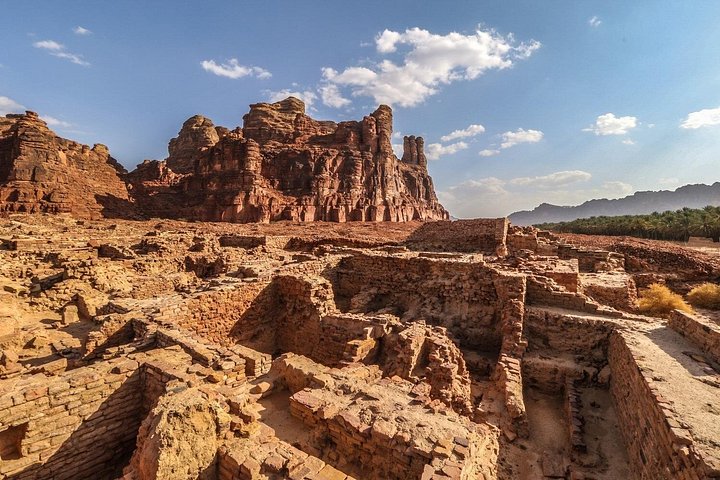
Hegra, also called Madâin Sâlih, is the southern twin of Petra and the headline reason most people fly to AlUla. The Nabataeans, the desert traders who built Petra, cut more than 110 monumental tombs into free-standing sandstone outcrops here around two thousand years ago, along with wells, water channels and the remains of a walled town. The facades are carved with eagles, sphinxes and inscriptions naming the families who owned them, and the lone tomb of Qasr al-Farid stands by itself in the sand like a stage set. UNESCO inscribed the site in 2008 and it was Saudi Arabia’s first World Heritage Site. Visitors do not drive in: the site is entered on an organised tour, usually a coach tour with a guide, and the experience is paced around the light on the rock.
Why it matters
Hegra was the Nabataean kingdom’s second city and a stop on the incense and spice routes that linked southern Arabia with the Mediterranean. Unlike Petra, it is quiet, spread across open desert and still being excavated, so the sense of discovery is real. The tombs are closed to entry and the paths are marked, which protects the carvings but means the tour is about looking and listening rather than climbing in.
How to visit
The destination’s own website says pre-booking is strongly recommended because only a limited number of tours run each day, and tickets can sometimes be bought at the visitor centre depending on availability. Self-driving is not allowed, so you join a coach tour or pay for a private vehicle. The half-day tour linked here includes the entrance fee, starts from Winter Park in AlUla and offers hotel pickup as an option; check its cancellation terms, because the booking page describes it as non-refundable.
Plan around the light
The rock glows orange in the late afternoon, and winter, from roughly November to March, is the comfortable season. Wear closed shoes, bring a hat and sun cream even in winter, and carry water. A guide adds a great deal, because most of the meaning is in the inscriptions and the details of the carved facades.
What to expect
The experience
A guided tour by coach or private 4x4 through the tomb fields, with stops at the best facades and the lone tomb of Qasr al-Farid.
Best time
Late afternoon, when the sandstone turns orange and the heat has eased.
How long
About two hours on site, plus transfer time from AlUla.
Tips
Book ahead, wear closed shoes, bring water and a hat, and keep to the marked paths.
Quick picks
- Best for
- First-time visitors who want the one sight that justifies the journey.
- Families
- Children who like ruins will enjoy it, but the walking and sun make it best for ages six and up.
- Couples
- A late-afternoon tour with the rock turning gold is the romantic choice.
- Pair with
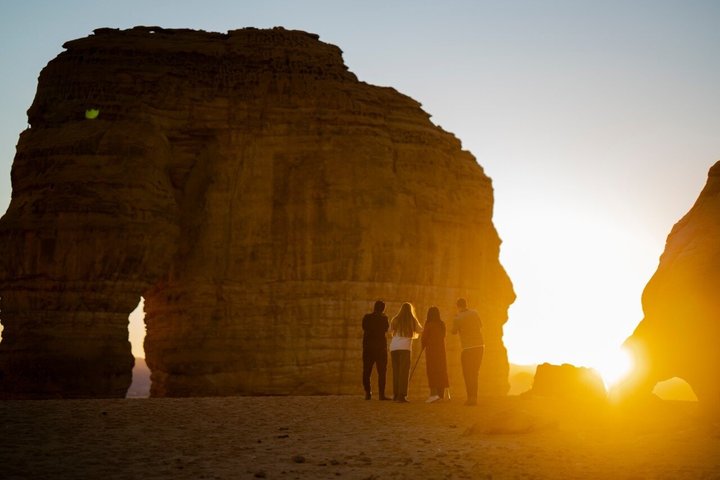
- Maraya in the evening, or Elephant Rock at sunset.
- Time needed
- Allow half a day including transfers.
Good questions
Do I need to book Hegra in advance?+
Yes, it is strongly recommended, because only a limited number of tours run each day and winter is busy. Tickets can sometimes be bought at the visitor centre, but you should not count on it.
Can I drive into Hegra myself?+
No. Self-driving is not allowed, and visitors join an organised tour by coach or private vehicle. The tour starts from a meeting point and a visitor centre rather than the tombs themselves.
How long does a Hegra tour take?+
The standard tour is about two hours on site. Add time for the transfer and any waiting at the meeting point.
Can I go inside the tombs?+
No, the tombs are closed to entry and the paths are marked, which protects the carvings. You see the facades, inscriptions and surroundings from outside with a guide.
When is the best time of year to go?+
Winter, roughly November to March, has comfortable daytime temperatures and cool evenings. Summers are very hot, and tours are best taken late in the day.