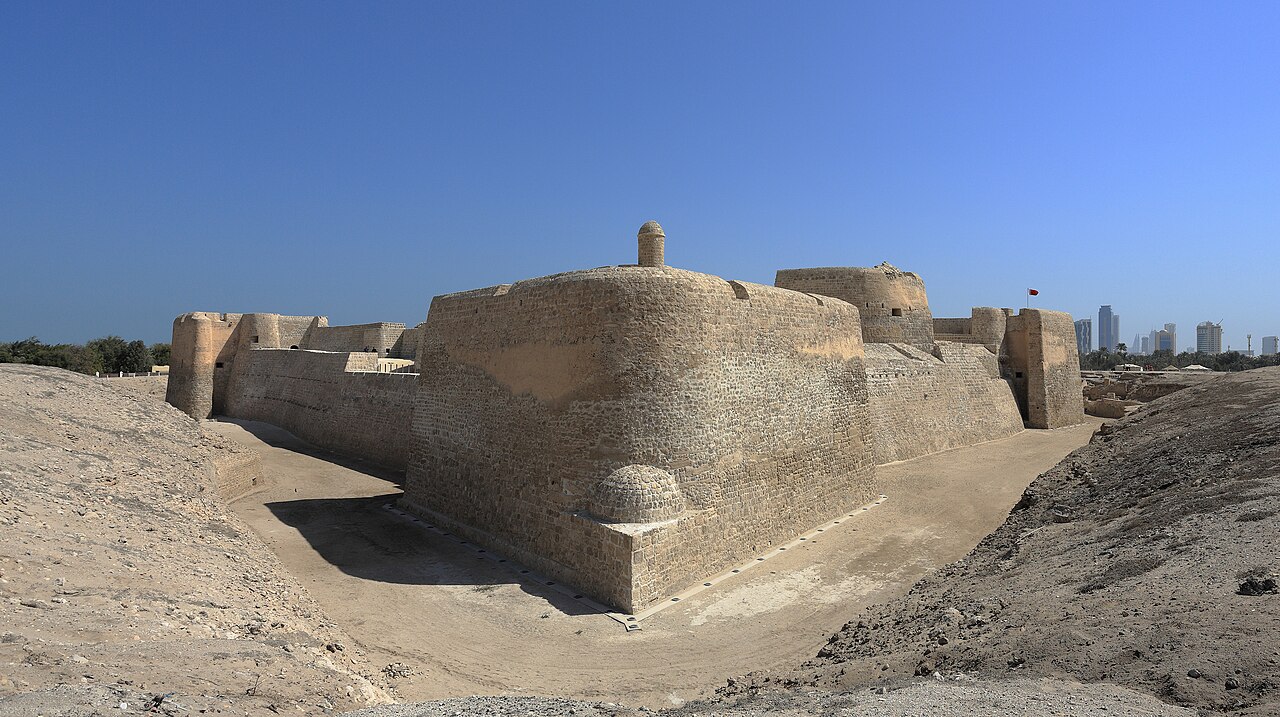
The Barbar Temples are the best place in Bahrain to see Dilmun religion at ground level. The site sits in the village of Barbar on the north-west of the island, and it holds the remains of a sequence of temples built on top of one another over roughly a thousand years from around the third millennium BC. The earliest structure is an oval-shaped temple built around a freshwater spring, a gift of immense value on a dry island, and later temples were raised on a platform of carefully shaped stone on the same spot. A Danish archaeological expedition working in the middle of the twentieth century uncovered the complex, and finds from the site, including statuettes, copper objects and ritual vessels, are among the treasures of the Bahrain National Museum. At the temples themselves you see the stone foundations, the altars and a sunken well, and the layout shows how the Dilmun people built sacred space around water. It is a compact, low-key site, closer to a quiet archaeological garden than a major attraction, but that is part of its charm and it is rarely crowded. Allow yourself a few minutes simply to stand by the spring and imagine the pilgrims who once arrived here, because it is the atmosphere, more than any single wall, that makes the visit worthwhile.
Reading the ruins
The temples are not tall, so a little imagination is needed. Information boards help you pick out the oval enclosure, the steps, the altars and the well, and a covered area protects the most fragile remains. The spring is the key to the meaning of the place. In a land with little surface water, a source of fresh water bubbling up from the ground was a sacred thing, and later cultures in the Gulf associated the island with the idea of a paradise of sweet water.
Knowing that helps explain why the temples were rebuilt on the same spot for centuries. Pair the visit with the museum displays of the temple finds to get the full story.
Practical tips
Barbar is roughly twenty minutes by car from central Manama, off the coastal road to the west, and it is easy to reach by taxi or ride-hailing. Visit times are broadly morning to late afternoon, but opening days and admission arrangements can change, so check with the tourism board before you set out.
There is very little shade, so go early or late in the day, carry water and wear a hat and stable shoes. The visit takes about thirty to forty-five minutes, which is why it is best combined with other places nearby.
Making a circuit
The temples work well on a western heritage loop that includes the nearby Saar Settlement, the Dilmun Burial Mounds at A'ali, Riffa Fort and the National Museum. History lovers will enjoy the way the temples and the burial mounds tell two halves of the same story, one about worship and one about death.
A driver or guide can link the stops efficiently, and the day tours in this guide pass many of the same areas. If you only have time for one Dilmun site outside Muharraq, choose either the temples for the religious story or the mounds for the sheer scale.
What to expect
The experience
A short self-guided walk around excavated temple platforms, an altar area and a sunken spring, with information boards.
Best time
Early morning or late afternoon, to avoid the sun on an exposed site.
How long
Thirty to forty-five minutes.
Tips
Bring water and a hat, wear stable shoes, read the boards for context and confirm opening hours with the tourism board before you travel.
Quick picks
- Best for
- History lovers who want to see how the Dilmun people built sacred space around a freshwater spring.
- Families
- Short and quiet; older children who enjoy ruins will like it, but there is little shade.
- Couples
- A peaceful early-morning stop on a heritage drive.
- Pair with
- The Dilmun Burial Mounds, the Bahrain National Museum and Riffa Fort.
- Time needed
- Under an hour on site; add travel time from Manama.
Good questions
What are the Barbar Temples?+
They are the remains of several Dilmun temples built on top of one another, starting around the third millennium BC and centred on a freshwater spring.
Why was the spring important?+
On a dry island, fresh water was precious and sacred, which is why the temples were built and rebuilt on this spot.
Where are the finds from the site?+
Many are displayed in the Bahrain National Museum, so visit the museum as well for the full story.
How long does a visit take?+
About thirty to forty-five minutes. The site is small, so it works best combined with other southern and western sights.
Is there an entry fee?+
Entry has generally been free or very low, but confirm with the tourism board before you go.