Bahrain is one of the great burial grounds of the ancient world. Across the island, in desert and in suburbs, there are tens of thousands of grave mounds built during the Dilmun period, roughly between 2200 and 1750 BC, and later, and a selection of the best preserved fields has been inscribed as the Dilmun Burial Mounds, Bahrain's third UNESCO World Heritage Site. The most visited and most dramatic is the group at A'ali, a village in the centre of the island a short drive south of Manama. There the so-called royal mounds rise as huge earthen hills, some taller than a house, the biggest with a stone-built chamber inside, which suggests they were built for rulers or very important families. Seen from a distance the mounds look like a landscape of low green and brown domes. Up close you see the stone-lined chambers, the careful construction and the way modern housing has crept to the edge of a cemetery that is more than four thousand years old. The sheer number of mounds is part of the story: it suggests a densely settled island, a rich trading society and a deep concern for the afterlife, and the mounds are the reason the island is sometimes described as an enormous ancient necropolis.
What you see
The A'ali royal mounds stand in a fenced archaeological area with paths, information boards and in places a modest visitor facility. Some mounds have an entrance you can look into, and one or two have been opened for visitors to peer into the burial chamber. The experience is quiet and open-air, rather than a museum, so much of its power comes from scale and silence.
The best preparation is to start at the Bahrain National Museum, where a hall explains the mounds and shows a reconstructed tomb, then come out here to see the real thing. Smaller mound fields and individual tumuli appear along many roads, so you will keep spotting them as you travel.
Getting there and timing
A'ali is roughly twenty minutes by car from central Manama and is easy to reach by taxi or ride-hailing, but it is not on a public bus route that suits visitors, so most people either hire a driver, rent a car or take a half-day tour that includes it. Confirm opening days and hours with the Bahrain Authority for Culture and Antiquities before you go, as the area is a managed archaeological zone.
There is almost no shade, so visit early in the morning or late in the afternoon, bring water, wear a hat and sturdy shoes and stay on the paths. Please do not climb on the mounds.
Adding the village
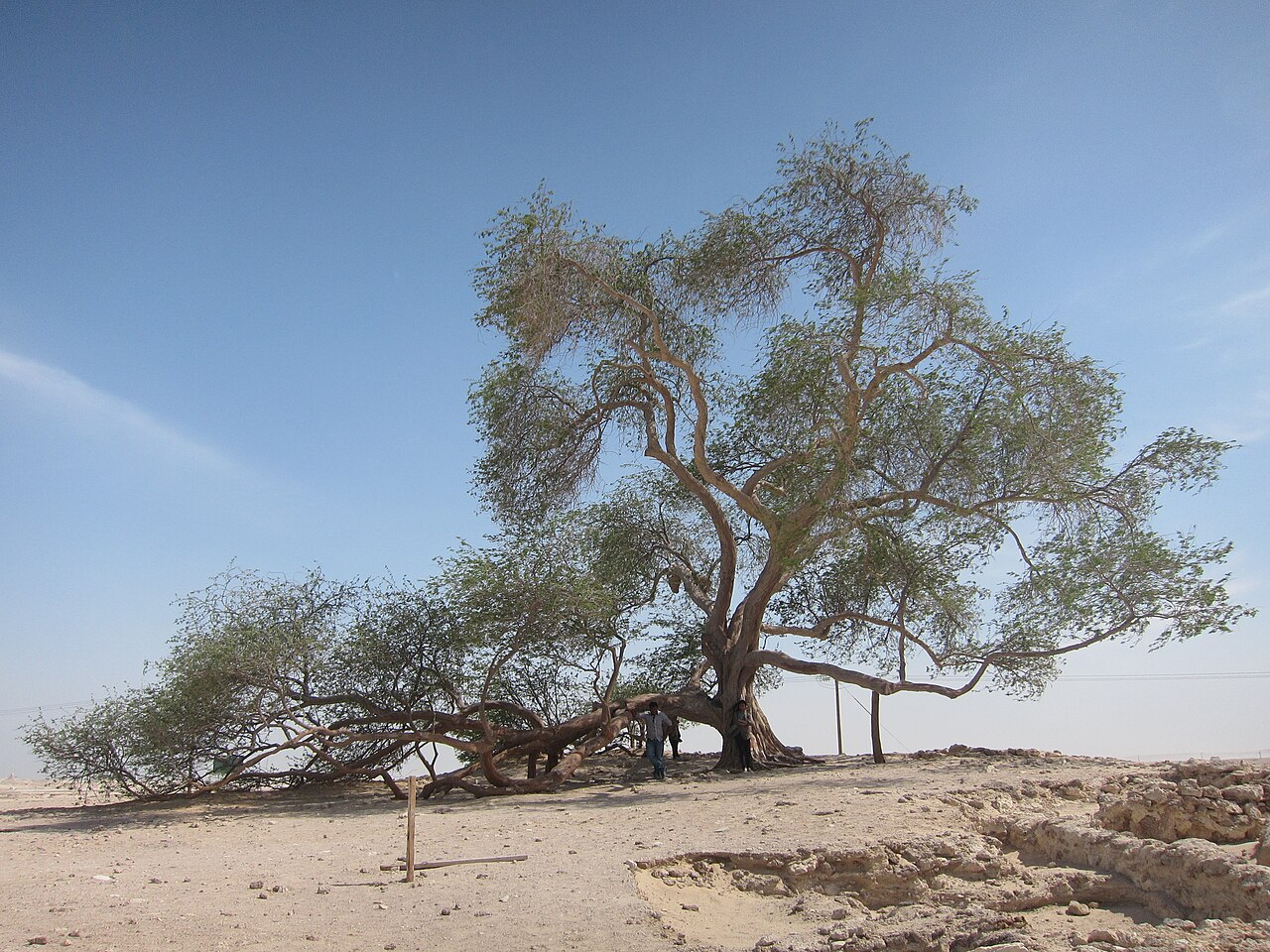
A'ali is also known as a pottery village. Small workshops make traditional clay wares, and you can often watch potters at work and buy pieces straight from the kiln, which makes a good souvenir and a gentle contrast to the stark cemetery. Combine the mounds with the Tree of Life and the desert drive, the nearby Riffa Fort and Barbar Temples, or with a half-day circuit of the south. The mounds also suit photographers at sunrise or sunset, when low light picks out the curve of the earth.
What to expect
The experience
A self-guided walk along paths among large earth mounds, with information boards and a few openings you can look into.
Best time
Early morning or late afternoon; there is almost no shade.
How long
About an hour for the royal mounds, longer with the pottery workshops.
Tips
Bring water, a hat and sturdy shoes, stay on the paths, do not climb on the mounds and see the National Museum hall first for context.
Quick picks
- Best for
- Archaeology fans who want to stand among the tombs that make Bahrain a UNESCO treasure.
- Families
- Plenty of space to roam; go in the cooler hours and combine it with a stop at the pottery workshops.
- Couples
- A quiet, atmospheric sunset visit followed by dinner back in Manama.
- Pair with
- The Bahrain National Museum burial-mound hall, Riffa Fort, Barbar Temples or the Tree of Life.
- Time needed
- One hour at the mounds; half a day with the south of the island.
Good questions
What are the Dilmun Burial Mounds?+
They are thousands of ancient grave mounds built during and after the Dilmun period. A selection of the best preserved areas is a UNESCO World Heritage Site, and the royal mounds at A'ali are the most impressive.
Where are they?+
The best-known group is at A'ali in central Bahrain, roughly twenty minutes by car from Manama. Smaller mound fields appear in other parts of the island.
How much time do I need?+
About an hour at the mounds, or half a day if you add the pottery workshops and other southern sights.
Is there an entry fee?+
Entry has generally been free or low-cost, but confirm with the Bahrain Authority for Culture and Antiquities before you go.
Can I go inside a mound?+
Some chambers can be seen or entered at A'ali, but access can change. Follow the signs and the guidance on site, and do not climb on the mounds.