Beijing is a capital built by migrants, imperial cooks and hungry civil servants, and its food shows it. The local cooking is hearty, salty and wheat-based, with noodles, dumplings, flatbreads and steamed buns at the centre, while the imperial kitchens left a tradition of refined banquet dishes. Add cooks from every province who came to feed the government and you get a city where almost any regional Chinese cuisine can be found, often at its best. This guide covers the dishes to look for, how a day of eating works, and how to order without speaking Chinese.
Peking duck
The dish the city is known for is roast duck with thin, glossy, crisp skin, carved at the table and eaten with small pancakes, sliced spring onion, cucumber and a sweet bean sauce. Two roasting styles exist: hung ovens fuelled by fruitwood, and closed ovens. Both have devoted fans, and the difference is mostly about the colour of the skin and how much of the fat has rendered out. Order a whole duck for three or more people, or a half for two; ask whether the leftover meat can be stir-fried or the bones turned into soup. Restaurants serving it range from famous old houses to modest neighbourhood places, and the dish is reliably good in most of them, so reserve a table ahead of any weekend meal and treat the evening as the main event of the day.
Noodles
The signature local bowl is zhajiangmian: wheat noodles topped with a thick, salty sauce of fried soybean paste and minced pork, then crowned with shredded cucumber, bean sprouts and other crunchy vegetables that you stir through at the table. It is cheap, filling and quite different from the Italian-style versions served abroad. Look for cold sesame-sauce noodles in warm weather, and for lamb noodle soups, a legacy of the city’s Muslim communities, in winter.
Dumplings and buns
Jiaozi, the half-moon dumplings, are eaten boiled, with vinegar, garlic and a little chilli oil on the side; fried guotie and steamed baozi are the breakfast and snack versions. A dumpling restaurant often lists dozens of fillings, from pork and chive to egg, shrimp and seasonal vegetables. Order a mix of two or three fillings per person and share.
Breakfast on the street
Jianbing is the classic: a thin batter crepe cooked on a griddle, brushed with egg, sauce and chilli, filled with a crisp cracker and folded into a hot parcel. Add soy milk, a fried dough stick, a steamed bun or a bowl of porridge and you have breakfast for very little. Street vendors are most active before the working day starts and again in the late afternoon.
Hotpot and Mongolian-style mutton
Beijing’s original hotpot is the copper-pot version, in which paper-thin lamb is swished through plain boiling broth and eaten with a thick sesame dip. It is milder and more elegant than the fiery Sichuan style, which is also widely available in the city. Hotpot is a social meal, best for groups of three or more, and a good choice on cold evenings.
Where to eat
The hutongs around the Drum Tower, Houhai and the Lama Temple have dense clusters of small restaurants, cafés and bars, many in converted courtyards. Wangfujing has a large food street and malls with floors of restaurants, which suits families wanting predictable menus. Sanlitun, in the east, has the city’s international restaurants and cocktail bars. In the south, the lanes around Qianmen and the Temple of Heaven are good for traditional snacks and old brands.
Drinks
Tea is the everyday drink, served free or cheaply with most meals. Beijing’s craft-beer scene has grown quickly in the hutongs, and a stop at a small brewery is a standard part of the evening. Baijiu, the strong grain spirit, is the toast drink at banquets; sip it in small amounts when invited and do not be shy about declining.
How to order and pay
Many menus have photos and English, and pointing is perfectly acceptable. Dishes arrive as they are cooked and are shared, so order roughly one dish per person plus a staple such as rice or noodles. Tipping is not expected. Most restaurants accept mobile payment, and visitors can now pay with international cards in many places, but carry some cash for small vendors and set up a payment app before you arrive. Say clearly if you have allergies or need vegetarian food, because meat stock and pork lard are common even in vegetable dishes.
A guided start
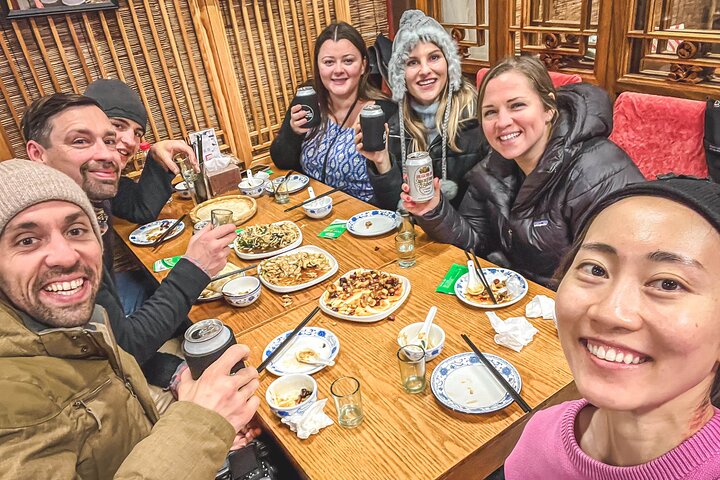
If the menus feel daunting, the shared hutong food and beer tour is the easiest way to taste a range of dishes with a local who can explain them, and the private hutong walk with dim sum shows how neighbourhood life and food fit together. Do one early in your stay, then use what you have learned for the rest of the trip.
Practical tips
Eat early: restaurants are busy from about six in the evening, and many kitchens slow down after nine. Drink bottled or boiled water, and carry tissues, because napkins are often not provided. Avoid the tourist restaurants closest to the major sights, walk two or three streets away and follow the queues of office workers at lunchtime.