Anjar is the best surviving example in Lebanon of an Umayyad city, laid out in the early eighth century on a strict grid with two broad colonnaded avenues crossing at a four-columned monument. A wall about two metres thick and studded with towers encloses roughly a square kilometre of ground, and within it you can walk past the ruins of a palace, a mosque, public baths, shops and residential quarters. The mix of reused Roman and Byzantine columns with Umayyad brickwork and carving is what makes it special, since the builders clearly borrowed from the centuries before them. The city was occupied only briefly before being abandoned, which is partly why its plan is so clear today. It is a World Heritage property. The modern town of Anjar next door has its own story. It was founded in the late 1930s by Armenian families who had fled the Musa Dagh region, and it keeps a distinctive Armenian character in its street names, churches, bakeries and cafes. A visit often ends with lunch in one of the roadside restaurants serving grilled trout caught from a nearby spring, with salads and warm bread, a tradition that tour groups happily follow.
The ruins are spread across open ground, so Anjar feels spacious and unhurried compared with busier monuments. A tall central arch of columns marks the crossing of the two streets, and from there you can look down both axes toward gateways at each end. The palace ruins retain stretches of arcaded wall that show how the large rooms were framed, while the mosque and baths illustrate daily life in a city intended for administration and trade.
Stone fragments carved with floral and geometric patterns lie around the grounds, and bees and birds make the place feel peaceful. In spring, wildflowers cover the open areas between the walls.
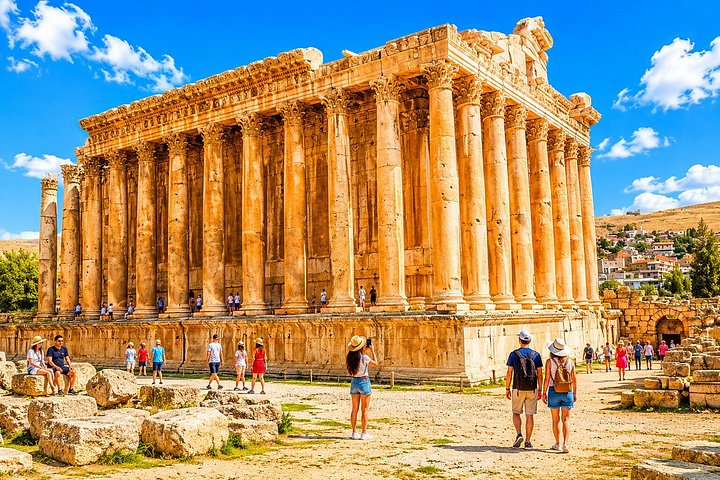
Most visitors reach Anjar on a Bekaa Valley day trip. The small-group tour linked from this page visits Baalbek, then Anjar and the Ksara winery, with lunch included in many versions of the itinerary. Because Anjar sits on the main road between Beirut and Damascus at the foot of the Anti-Lebanon range, it is a natural lunch stop between the temples and the cellars. Plan on about an hour at the ruins and a leisurely lunch afterwards.
The site is open air with little shade, so a hat and water are sensible from late spring to early autumn, and the paths can be dusty. Admission is modest and the site is well kept, with a small ticket office and basic facilities. As with all Bekaa itineraries, check current travel advice and confirm with your operator that the route is running.
If you have limited time and must choose between Anjar and Baalbek, choose Baalbek for scale, but if you have a day to spare, Anjar adds a very different chapter of history and some of the best food of the trip. It is also an easy, flat site that suits most visitors, including older travellers.
Bring a small amount of cash for the restaurants and bakeries in town, as many are family run and prefer it. Armenian specialities worth looking for include spiced sausage, pastries filled with cheese or nuts, and strong coffee, all of which make a nice contrast to the Lebanese mezze served elsewhere in the valley.
What to expect
The experience
A guided stroll through the arcaded ruins of an eighth-century city, followed by a trout lunch in the Armenian town, as part of a Bekaa day trip.
Best time
Spring for wildflowers; early morning or late afternoon in summer.
How long
About an hour at the ruins, plus a leisurely lunch.
Tips
Bring a hat and water, wear flat shoes, and try the grilled trout or Armenian pastries in town.
Quick picks
- Best for
- Travellers who want a quieter, spacious archaeological site with a good lunch.
- Families
- Flat and open, with room for children to run. Shade is limited.
- Couples
- A calm, photogenic stop with excellent food nearby.
- Pair with
- Baalbek temples and the Ksara winery.
- Time needed
- One to two hours including lunch.
Good questions
Who built Anjar?+
The city was founded by the Umayyad dynasty in the early eighth century and abandoned soon afterwards, which preserved its clear grid plan.
Why is there an Armenian town here?+
The modern town was settled in the late 1930s by Armenian families from the Musa Dagh region, and it keeps a strong Armenian culture.
Is it worth visiting if I see Baalbek?+
Yes. It is a different era and a different style, and it breaks up the day with a relaxed meal.
How long should I allow?+
About an hour at the ruins and another hour for lunch.
Is there shade?+
Very little, so carry water and sun protection in summer.