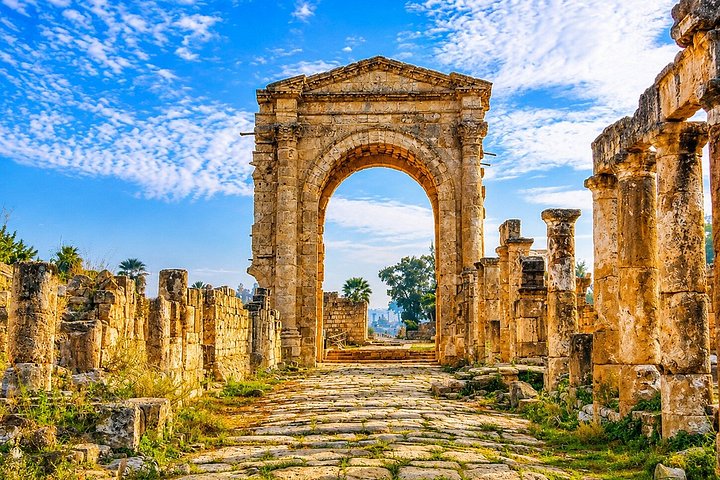
South of Beirut, the coast road passes two of the most important cities of the ancient Mediterranean. Sidon, about forty kilometres from the capital, was a prosperous Phoenician port famous for glass and purple dye, and its old town still bustles with life. The centrepiece is the Sidon Sea Castle, a thirteenth-century Crusader fortress on a small island linked to the shore by a causeway. Nearby, the covered souks, the Khan al-Franj caravanserai and workshops selling soap, sweets and crafts make for a rich wander. A soap museum in a restored old factory tells the story of the local industry. Further south, Tyre is a World Heritage site with some of the largest Roman remains in Lebanon. Its Al-Mina site includes colonnaded streets and baths, while the Al-Bass area boasts a vast Roman hippodrome, a triumphal arch and a necropolis. The fishing harbour and sandy beaches add a relaxed seaside note.
The tour linked from this page is a guided excursion to Sidon, Tyre and the nearby sanctuary at Magdouche, with a driver and guide from Beirut. It is a long day, but the road is mostly flat and runs along the sea, so the journey is easy. Typical stops include the sea castle, the old souk, the ruins at Tyre and lunch of fresh fish in a harbour restaurant.
The south of Lebanon is a region where conditions can change, and some areas near the border are restricted. Check your government's travel advice and speak to the operator before booking, and follow the guide's directions on routes. When the itinerary is running, the experience gives you a more relaxed, small-town side of Lebanon, with warm hospitality and good food.
Spring and autumn are the best seasons, while summer is hot and bright, ideal for combining ruins with a swim at one of the nearby beaches. Sites have limited shade, so carry water and a hat. Allow about an hour at each major monument. Entry fees are modest and may be paid on site or included in the tour. For history lovers, Tyre in particular is a highlight, a place where Roman engineering and Phoenician heritage are both visible, and the hippodrome is surprisingly grand.
Sidon pairs the history with lively daily life and a chance to try regional sweets, including the local specialty of crunchy sesame confections. Combine this with a visit to Beiteddine on another day, and you will have seen the main historic sites around Beirut. Photographers will enjoy the harbour light and the castle silhouettes.
Remember sun protection and plenty of water, since much of the sightseeing is outdoors on exposed ground. Fish restaurants on the harbours serve the day's catch simply grilled with lemon, which is often the highlight of the day, and local pastry shops sell sesame sweets and nut pastries that travel well.
What to expect
The experience
A guided coastal day trip to Sidon's sea castle and souks and Tyre's Roman ruins, with a fish lunch.
Best time
Spring and autumn; summer for combining ruins with a swim.
How long
A full day, about an hour each way by road.
Tips
Carry water and a hat, check travel advice for the south, and follow your guide on routes.
Quick picks
- Best for
- History lovers and seafood fans.
- Families
- The flat coastal road and open sites suit most ages.
- Couples
- Harbour lunches and castle views.
- Pair with
- Beiteddine and Deir el Qamar on another day.
- Time needed
- A full day.
Good questions
What is the Sidon Sea Castle?+
A Crusader fortress built in the thirteenth century on a small island joined to the shore by a causeway.
Why is Tyre important?+
It was a major Phoenician port and has large Roman remains, including a hippodrome. It is a World Heritage site.
Is the south safe to visit?+
Conditions can change. Check your government's travel advice and confirm the itinerary with the operator.
How long does it take?+
A full day including the drive.
Can I swim?+
Yes, there are beaches near Tyre in the warm months.