Northern Botswana has a reputation as an expensive destination, and for the high-end lodges it is deserved. But you can see the Okavango Delta and Chobe on a modest budget if you choose carefully. The key is to spend where it matters, avoid costs that do not add much, and be flexible about dates. This guide pulls together the most useful ways to save, with honest notes on what you give up.
Travel in the green season
Prices are lowest from roughly November to March, when many lodges and operators offer reduced rates and there are fewer visitors. The trade-off is heat, humidity, storms and more dispersed wildlife, but the birding is excellent and the landscape is lush. The shoulder months of April and May can also be good value, with clear weather and lighter crowds before the peak. The most expensive period is the dry season from about June to October.
Choose day trips over lodge safaris
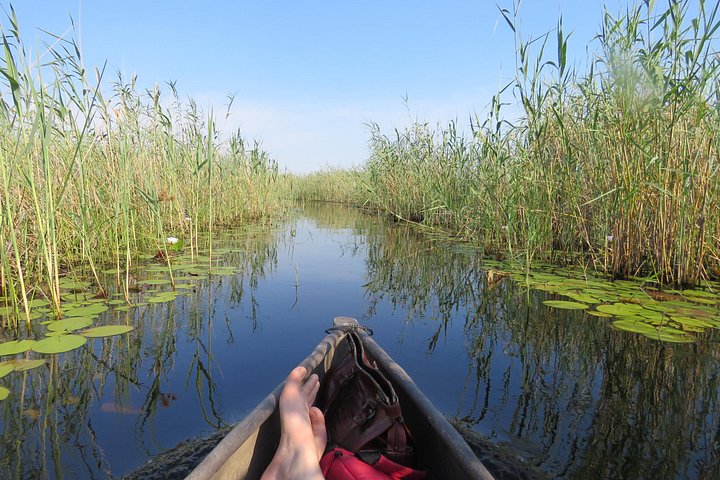
The biggest saving is to base yourself in Maun and Kasane and do day trips, rather than staying in remote camps where rates usually bundle accommodation, meals and activities. A mokoro day trip from Maun, a Moremi day, a Chobe game drive and a river cruise can fill several days at a fraction of the cost of a lodge stay. Shared small-group trips are cheaper per person than private ones, and shorter outings such as a sunset cruise or a three-hour game drive give strong value.
Camping safaris are the budget option for the wild places
If you want to sleep in the Delta or the parks, a mokoro camping trip from Maun, with two or three days of poled canoes and bush camps, is far cheaper than a lodge. Operators who run mobile camping trips to Moremi, Khwai and Savuti can also offer good value for groups. Ask exactly what is included, such as park fees, food, water and equipment, so that the headline price is not a surprise. Camping is basic, so be honest about your comfort level.
Stay simply in town
In Maun, Maun Lodge is a straightforward lower-cost base, and cottages with kitchenettes such as Rivernest let you cook some meals. Mid-range options such as Thamalakane River Lodge and Sedia Riverside Hotel offer more comfort at moderate prices. In Kasane, Thebe River Safaris and Chobe Safari Lodge are practical mid-range choices, while Cresta Mowana and Chobe Game Lodge sit at the top end. If you are staying only a night or two, a simple room near your pickup point is enough. Supermarkets in both towns let you stock up on snacks, water and breakfast items.
Costs to watch
Park fees, conservation fees and vehicle fees can be significant and are sometimes charged separately from the tour price, so always ask whether they are included. Airport transfers, breakfast, Wi-Fi and laundry are often extra. Distances are long, and a single transfer between Maun and Kasane can cost more than a night's accommodation, so plan the route to avoid backtracking. Tipping guides and polers is customary and worth budgeting for. Cash can be useful in smaller places, although many operators accept cards.
Free and low-cost experiences
Some of the best things cost little: watching elephants from the riverbank, birdwatching around your lodge, strolling Maun's riverside and visiting free-to-explore cultural and natural sights. The Botswana Tourism Organisation and UNESCO sites describe places such as Tsodilo Hills, the Makgadikgadi Pans and the Central Kalahari, which reward independent travellers who can organise their own transport, although these require planning and a capable vehicle.
Get the safety and health basics right
Saving money should not mean skipping travel insurance that covers medical evacuation, malaria advice or sensible vehicle choices. Choose reputable operators with solid recent reviews, and avoid tiny price differences that hide cut corners. A cheaper trip that is cancelled, delayed or poorly run costs more in the end.
A sample budget route
Fly into Maun, spend two nights in a simple lodge, do a mokoro day trip and a Moremi day, then move to Kasane for two nights, with a sunset cruise and a shorter game drive. This captures the two big experiences with minimal outlay. If you have more time, add an overnight mokoro trip. Book early where you can, travel in the shoulder or green season, and keep your plans flexible. Northern Botswana will never be a budget destination in the way that some parts of Africa are, but with careful choices it can be surprisingly affordable.