Busan eats like a port city that never stopped being one. The fish arrives every morning, the dishes were shaped by refugees, sailors and dockworkers, and the best meals are often the simplest. You do not need reservations or a long list of restaurants. You need to know a handful of dishes, which districts to wander and how ordering works, and the rest comes from pointing and smiling. This guide covers the essentials.
Start at Jagalchi
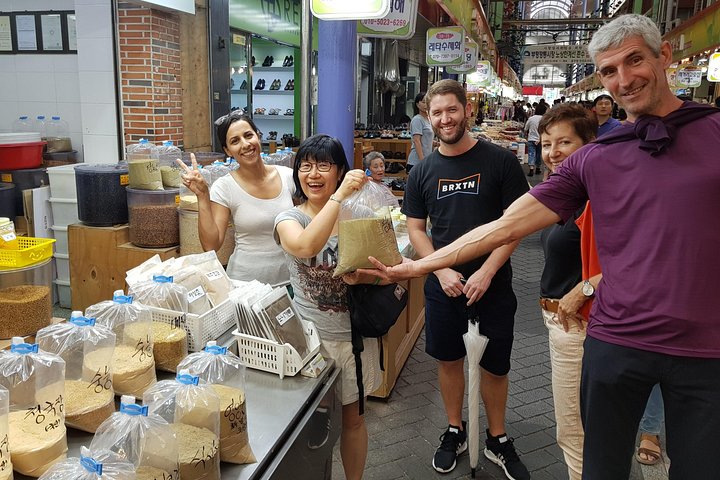
Jagalchi Market is the heart of Busan's seafood scene. Vendors on the ground level sell live fish, shellfish, squid and sea cucumber from tanks and trays, while the upper floors hold small restaurants. The usual routine is to pick your fish downstairs, have it weighed and priced, and carry it up to a restaurant that prepares it as sashimi, grilled or in a spicy stew, with side dishes and rice. Ask the price before you agree, compare a couple of stalls and expect to share, since portions are generous. If choosing feels daunting, a guided food tour through Jagalchi, Nampo and BIFF Square handles the ordering and explains the unfamiliar items.
The dishes that define Busan
Dwaeji gukbap is pork and rice in a milky, long-simmered broth, served with salted shrimp, chives and kimchi that you add to your own taste. It is the city's comfort food and is eaten at any hour. Milmyeon is Busan's cold wheat noodle dish, usually served in a chilled broth or in a spicy version, and it grew out of the wheat flour that was plentiful in the city in the early 1950s. Eomuk, the fish cake that Busan is famous for, comes on skewers in a hot savoury broth and is an easy, cheap street snack, especially on a cold day. Ssiat hotteok, a fried pancake stuffed with seeds and nuts rather than the usual sweet syrup, is the signature treat around BIFF Square. Add dongnae pajeon, a thick scallion and seafood pancake named for the Dongnae district, and you have the core of a Busan menu.
Where to wander
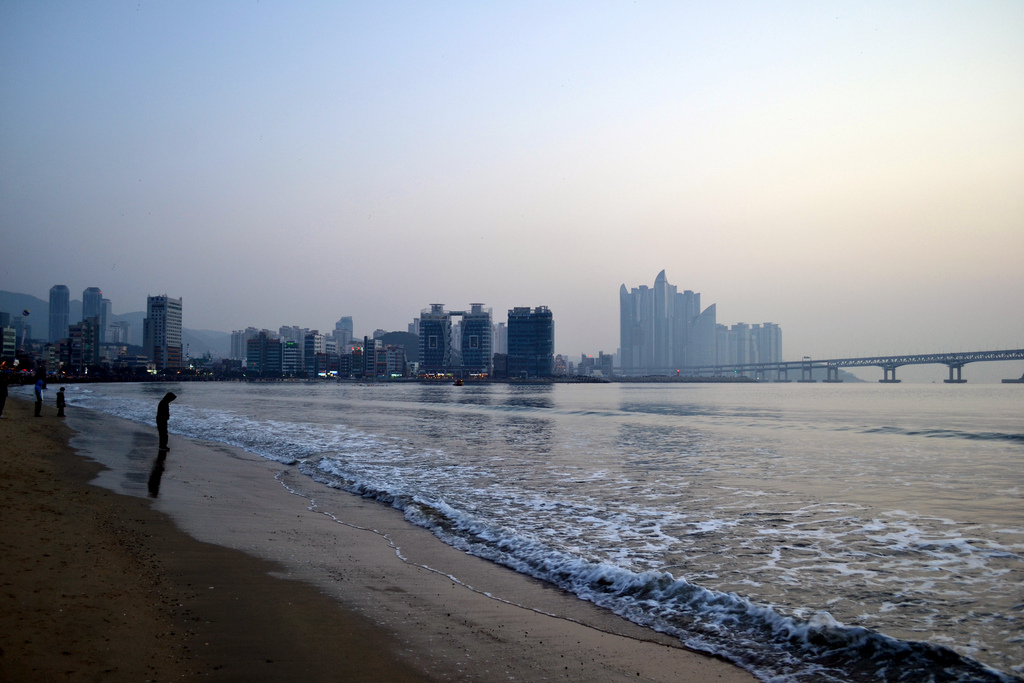
The old downtown is the best food district. Nampo-dong and BIFF Square have snack stalls, Gukje Market has noodle stands and fish cake sellers in its lanes, and Bupyeong Kkangtong Market, a few steps away, is a busy night food market. Haeundae Market, near the beach, serves inexpensive local meals and street food and is a convenient first stop if you are based on the east coast. Along Gwangalli Beach, the cafes and bars face the lit bridge, which makes it a pleasant place for a slower dinner, and a raw fish centre near the beach serves sashimi in a more relaxed setting than the old harbour.
Grilled meat and shellfish
Korean barbecue is everywhere in Busan, with pork belly the usual favourite, cooked at the table on a grill set into it. Grilled clams, scallops and other shellfish are a coastal speciality, often cooked over charcoal and served in big shared portions, with soju or beer. Beef and pork intestines grilled over charcoal, called gopchang, are another local passion, though they are an acquired taste.
Drinking
Soju is the everyday spirit, and Busan is closely associated with its own local brand. Beer is often poured with soju, and makgeolli, a lightly sparkling rice wine, pairs well with pancakes. Pour for others rather than yourself, receive a glass with both hands from an older person, and turn slightly away to drink. Convenience stores are a feature of Busan evenings, and groups often sit outside them with simple snacks. Cafes are everywhere, and hillside and beachfront cafes with sea views are a good break from the walking.
Ordering and etiquette
Menus in busy tourist areas are often in English with photographs, and menus elsewhere may be in Korean only, so a translation app helps. Many restaurants serve a dish for two people and may refuse a single portion, so go with a friend or ask. Side dishes are free and refillable. Water is usually self-serve. Tipping is not expected. Cards are accepted in most restaurants, while small stalls and some market counters prefer cash. Shoes come off at restaurants with raised floor seating.
A simple eating plan
Have gukbap or milmyeon for a first meal, take a market walk through Jagalchi and Nampo for lunch, snack on eomuk and hotteok in the afternoon and finish with grilled shellfish or sashimi in the evening. Pair a heavy meal with a beach walk, and let hunger, not a list, decide the next stop.