Cadiz is a city that fits on a spit of land poking into the Atlantic, and that geography explains almost everything about it. The old town is a tight grid of narrow streets, tall merchant houses and sudden plazas, ringed by sea walls, with water visible at the end of nearly every lane. It claims to be one of the oldest continuously inhabited cities in western Europe, founded by Phoenician traders as Gadir around three thousand years ago, then Roman Gades, then a Moorish town, then the treasure port of the Spanish empire when the silver fleets from the Americas were unloaded here. A guided walking tour is the sensible way to connect those layers, because on foot the city looks like a pleasant, slightly faded maze, and with a local guide it turns into a story of traders, pirates, sieges and one very famous constitution.
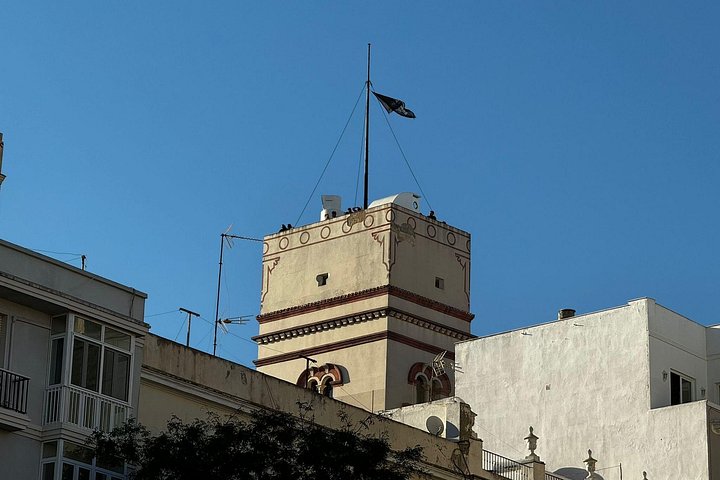
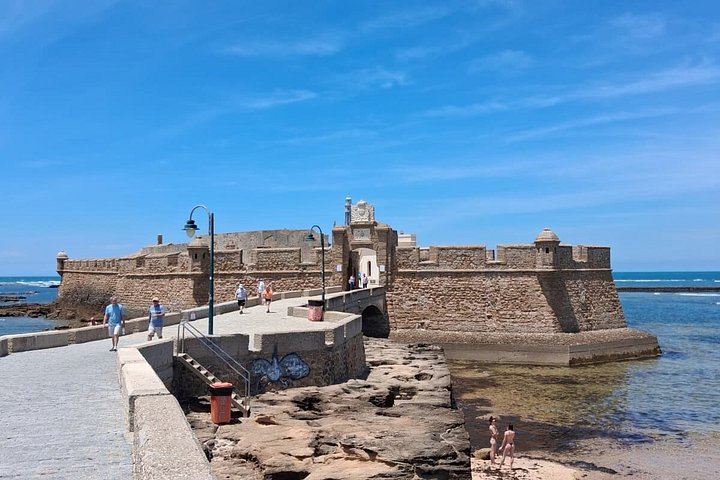
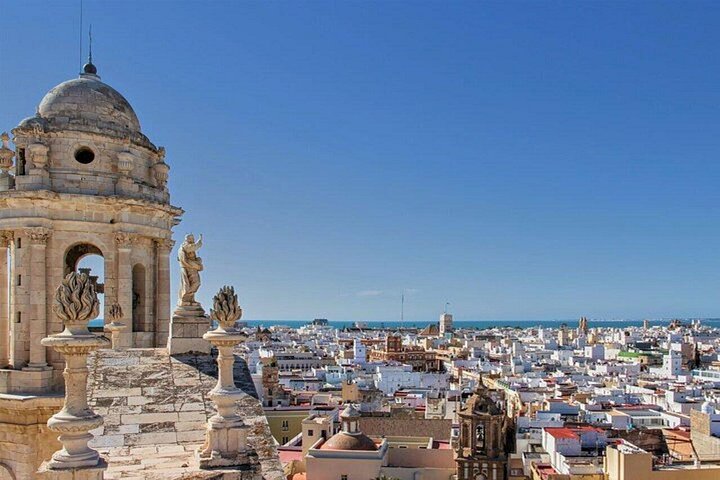
A typical guided route starts around the Plaza de San Juan de Dios, the lively square beside the port and the town hall, then threads through the Pópulo quarter, the oldest district, with its medieval gates and the Roman theatre nearby. It moves on to the cathedral square, the sea-facing walls, the Mercado Central and the Plaza de España with its monument to the Cortes of 1812, when Spain's first liberal constitution was drafted in this besieged city. Guides tend to explain the tower houses with their rooftop lookouts, built by merchants to watch for incoming ships, and the way fortunes made from the Americas trade shaped the elegant stone mansions.
Details of what a given operator includes can vary, so treat the route above as typical rather than fixed. The tour in question is a general must-see highlights walk with a guide, so it focuses on the main squares and landmarks rather than museum interiors. Buying any entry tickets for the cathedral tower, Torre Tavira or the Roman theatre is a separate step and usually worth planning around the walk. Wear flat comfortable shoes: the streets are paved with uneven stone and the sun on the sea walls is strong in summer.
Planning the walk well makes it more useful. Cadiz is quietest in the early morning, when shopkeepers are lifting shutters and the streets still hold the cool of the night, and a morning tour lets you finish in time for a long lunch, the main meal of the day in Spain. Afternoons in summer can be fierce, so if you only have a hot-weather slot, ask about shaded routes.
The city rewards looking up
Balconies of wrought iron, glassed-in galleries that give the streets their distinctive look, and the lookout towers on the roofs. It also rewards looking down the side streets, where a glimpse of the sea often appears.
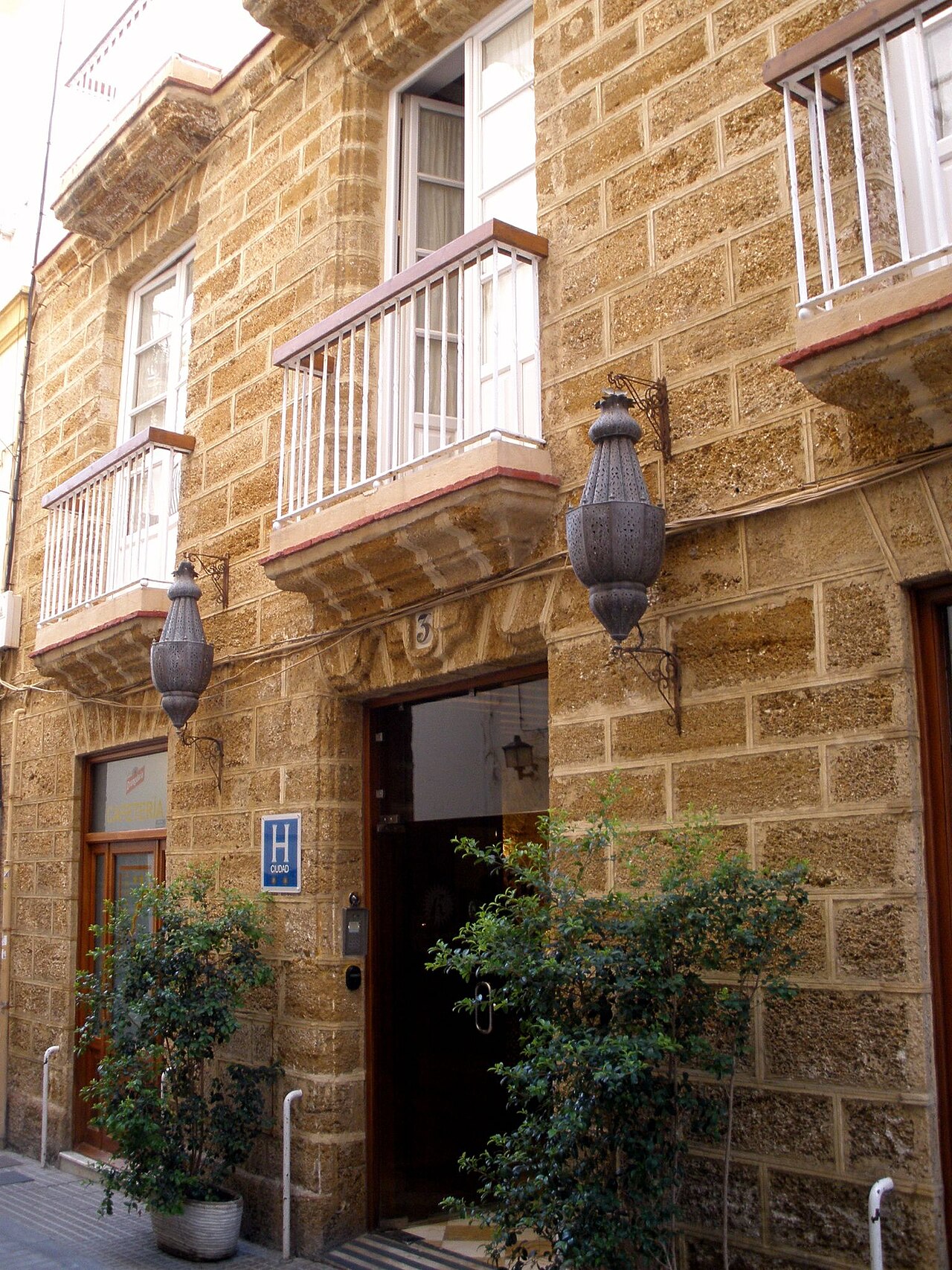
A guide will point out small details you would otherwise miss, such as the old merchant doorways, the tiny shrines on corners and the way different quarters keep their own character. Do not try to see everything on the first day. Treat the walk as a map for later wandering, and note the places that call you back, perhaps a bar for dinner or a plaza for evening drinks.
If you travel in February, the Carnival season fills the streets with music, costumes and satirical song groups, which adds a completely different energy; ask your guide how the festival shapes the old town.
What to expect
The experience
A small-group or shared guided walk of the old town, covering the main squares, sea walls and the stories behind the merchant houses, with pauses for photos.
Best time
Morning for cooler air and soft light on the whitewashed streets; late afternoon is good for golden light on the walls. Midday summer is hot.
How long
Around two hours on foot at an easy pace, mostly flat.
Tips
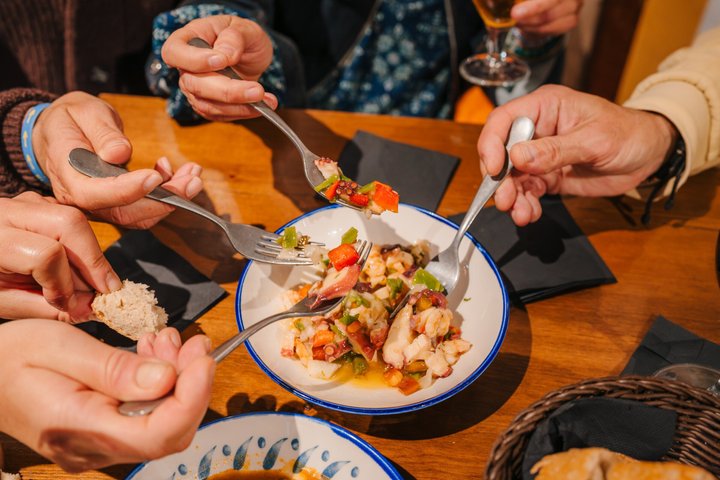
Carry water and a hat in warm months, and book the walk early in your stay so the rest of your plans make sense. Ask the guide for tapas bar recommendations near the end.
Quick picks
- Best for
- First-timers who want to understand the city before they start picking sights.
- Families
- Fine for children who like stories; the distances are short and the lanes are traffic-light.
- Couples
- A relaxed introduction, finishing near the bars and plazas for a drink afterwards.
- Pair with
- Torre Tavira and the cathedral are the natural next stops; the tapas tour fits the evening.
- Time needed
- Allow two to two and a half hours including a coffee stop.
Good questions
How big is the old town?+
Small enough to cross on foot in about 20 minutes at a brisk pace. The compact layout is why a two-hour guided walk can cover most of the major landmarks without a bus.
Why is the city so important in Spanish history?+
It was the home port for much of the trade with the Americas, the site of the 1812 constitution drafted by the Cortes while the rest of Spain was occupied, and one of the oldest settled places in western Europe.
Are the streets accessible for strollers or wheelchairs?+
The pavements are mostly flat but narrow, with uneven stone in places. Strollers manage fine; wheelchair users should ask the operator in advance about the planned route.
Is this tour in English?+
Many departures run in English, but language options can vary by date. Check the language shown when you book.
What should I wear?+
Comfortable flat shoes, sun protection in summer, and a light jacket from late autumn to early spring, when the Atlantic wind can be sharp on the walls.