Beneath the narrow lanes of the Pópulo quarter lies one of the great surprises of Cadiz: the Roman theatre of Gades, built in the first century BC and for many centuries entirely forgotten. Roman Gades was a rich port city, famous across the empire for its fish sauce, its dancers and its merchants, and the theatre was a sign of that wealth. It was among the largest theatres in Roman Spain, with a horseshoe of seating that could hold thousands. After the empire fell the structure was built over by houses, and it was only found by accident in 1980, when excavation work revealed the curved stones under a former tobacco warehouse. Restoration has since opened parts of the gallery, the seating and the passageways to visitors.
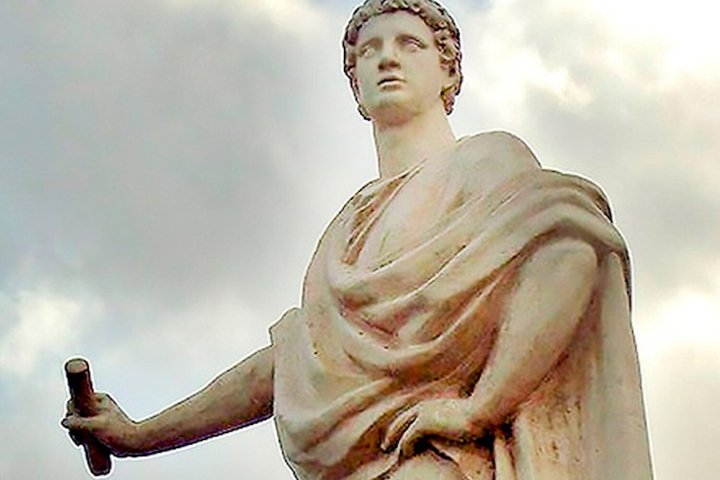
The Roman route, as the product title describes it, is a journey through ancient Gades, so it is designed to connect the theatre with other traces of the Roman and Phoenician past around the old town. That might include the archaeology museum, the Gadir Phoenician finds, the layout of the old harbour and the remains of the Roman canal system, with a guide setting the context. Cadiz was once a trading hub of the western Mediterranean, and seeing the theatre in that context makes it much more than a pile of old stones.
The interpretation centre at the theatre offers models and panels explaining how the building would have looked. The best views are from the tiers themselves, where you can imagine the stage and the audience in front of the sea. The site is compact, quiet and usually uncrowded, a good counterpoint to the busier cathedral area. Tour content and ticket inclusions vary, so confirm what is covered when you book, and check opening days, since small heritage sites often close on Mondays or during local holidays.
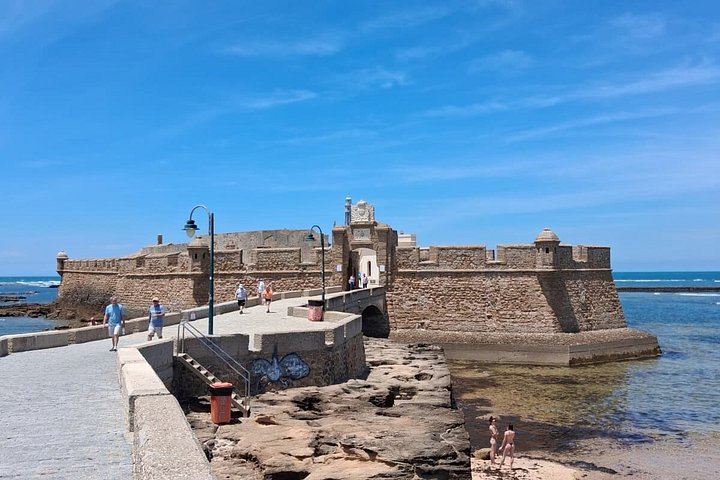
To enjoy the Roman Cadiz story fully, it helps to know how much the city has changed. In antiquity Gades was spread over several small islands separated by channels, and the sea has since reshaped the coastline, which is why some traces appear in unexpected places. The Phoenician and Roman layers are explained in the archaeological museum, which holds sculpted sarcophagi, jewellery and pottery, and which is usually worth a short visit if you are interested in the deeper past.
At the theatre, the interpretation centre displays models, and the open tiers invite you to sit and imagine plays and music in the setting. The surrounding Pópulo quarter is itself a delight, with medieval gates, small plazas, and bars where locals gather in the evening.
A well-planned half day might begin with the theatre in the morning light, continue to the museum, and end with lunch at a tavern nearby. Check whether guided visits are available in your language, as signage can be limited. Because the site can be uneven, take care with children and pay attention to barriers. In Carnival season some of the group song performances are held in this quarter, so it is a great place to feel the living culture as well as the ancient one. Ask at the entrance about guided visits.
What to expect
The experience
A guided route through the Roman and Phoenician past of the old town, including a visit to the theatre of Gades and its interpretation centre.
Best time
Morning or late afternoon; the courtyards and tiers are shaded earlier in the day and quieter overall.
How long
Around 90 minutes, longer if you add the archaeological museum.
Tips
Check opening days before you go, wear shoes with good grip for the stone steps, and combine it with a coffee in the Pópulo quarter.
Quick picks
- Best for
- History enthusiasts who want more than the standard postcard sights.
- Families
- Older children who enjoy ruins and stories will like it; the steps are uneven for toddlers.
- Couples
- A quiet, atmospheric stop that pairs well with a sunset walk to La Caleta.
- Pair with
- The cathedral and Torre Tavira are both short walks away, as is the Mercado Central for lunch.
- Time needed
- Plan 60 to 90 minutes.
Good questions
How old is the theatre?+
It dates from the first century BC, making it one of the oldest and largest Roman theatres in Spain, and was rediscovered in the twentieth century.
Why was it forgotten?+
After Roman times the area was built over by medieval and later houses, which hid the structure for centuries until excavations in the 1980s.
Is the site accessible?+
Parts of the site are on uneven stone with steps, so mobility can be limited. Ask the operator about the best access routes.
Does the tour include entry?+
It depends on the specific product, so read the inclusions when you book and confirm that the theatre entry is covered if that matters to you.
Is it worth a visit if I have only a day in Cadiz?+
If you like history, yes, since it is compact and close to the cathedral. Otherwise the cathedral, Torre Tavira and a tapas stop are the better use of a short day.