Few visitors expect to find a major collection of Australian Aboriginal art in central Virginia, which is exactly what makes the Kluge-Ruhe collection such a rewarding surprise. Owned by the University of Virginia, the collection grew from a gift by businessman John Kluge, who had assembled work with the help of Edward Ruhe, and it has since become one of the most significant holdings of its kind outside Australia. It is free to visit, small enough to see in an hour and genuinely distinctive.
The art ranges from bark paintings and carved figures to contemporary acrylics on canvas, and it represents many communities and artistic traditions from across Australia. The works are rich in meaning, tied to place, ancestors and ceremony, and the labels explain these connections without reducing them. Exhibitions rotate, so the display changes through the year, and the museum often hosts artists, talks and events with Aboriginal communities.
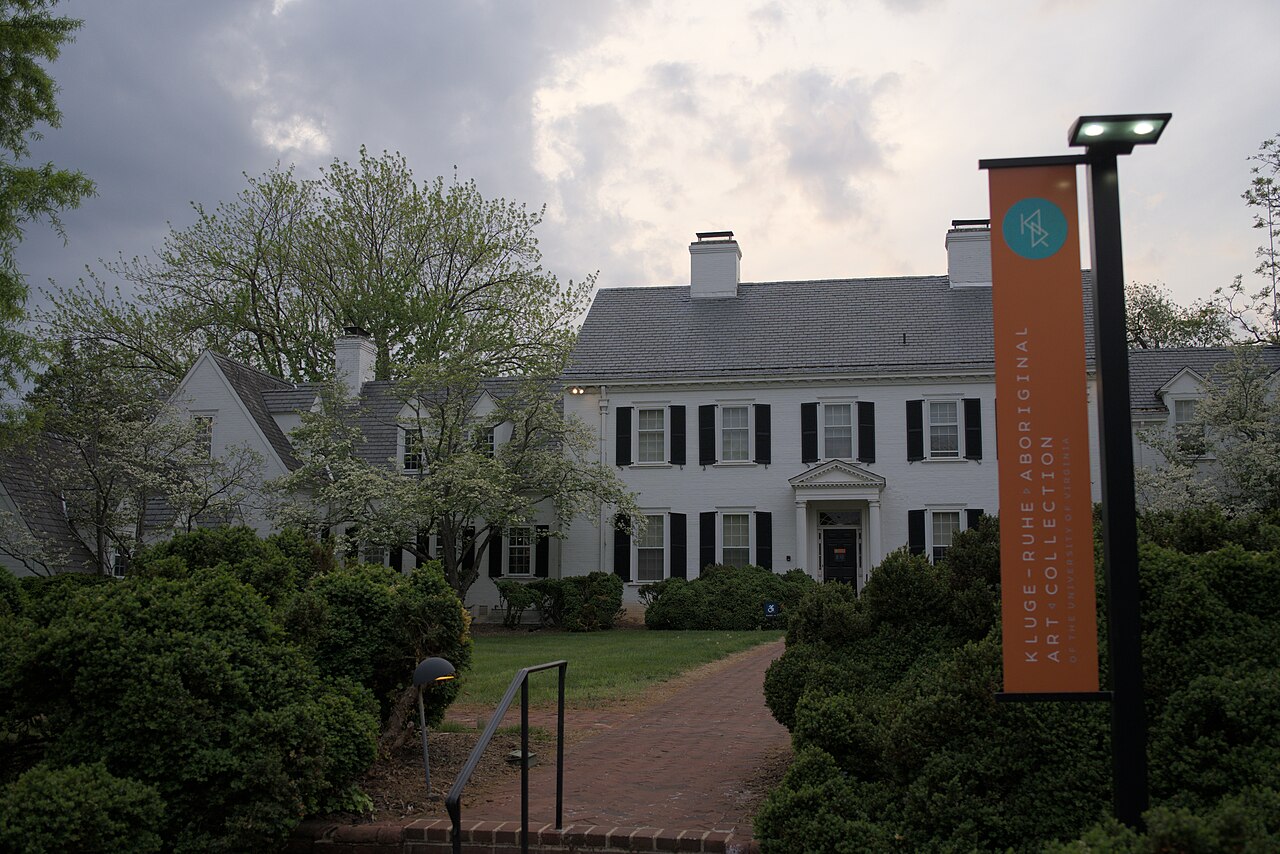
The setting adds to the experience. The museum occupies a house on a quiet hillside, with galleries arranged in a human scale rather than a monumental one. It is easy to spend time with individual works, and the staff are generous with explanations. The scale suits visitors who find large museums tiring, and the intimacy makes the art feel personal.
The collection also connects to the University's teaching and research, and the museum partners with scholars and Indigenous artists. If you are interested in the history of the collection, ask about it at the front desk, and look for programs that bring artists to Charlottesville. Many visitors pair the museum with the Fralin Museum of Art on the main grounds for a free culture morning.
Practical points
The museum is a short drive from downtown, parking is on site and hours are limited, so confirm them before you go. Admission is free, and photography rules vary by exhibition, so ask staff. It is an excellent rainy-day option and a thoughtful addition to a trip focused on the area's more famous history.
A little background makes the galleries richer. Aboriginal art in Australia spans an enormous range of regions, languages and traditions, from the bark paintings of Arnhem Land in the north to the dot and line paintings that emerged from desert communities in the 1970s. Works often carry layered meanings tied to country, kinship and law, and some details are deliberately veiled from outsiders.
Read the wall labels and the artist statements carefully, look for the connections between a painting and the place it describes, and do not be afraid to ask the gallery staff what they would show a first-time visitor. Even a short visit changes how many people think about contemporary art and about Indigenous cultures that remain living and active.
What to expect
The experience
A small gallery visit with rotating exhibitions of Australian Aboriginal art.
Best time
Weekday afternoons; check opening hours.
How long
About an hour.
Tips
Ask about artist talks and events, and confirm hours first.
Quick picks
- Best for
- Art lovers and curious travelers.
- Families
- Children can enjoy the colors and patterns.
- Couples
- A calm free stop before dinner.
- Pair with
- The Fralin Museum and UVA grounds.
- Time needed
- One hour.
Good questions
Is admission free?+
Yes, the museum is free to visit.
Where is it?+
On a hillside south of the University grounds, a short drive from downtown.
Do exhibitions change?+
Yes, they rotate regularly.
Can I take photos?+
Rules vary by exhibition, so ask staff.
How long should I allow?+
About an hour.