The Grand Mosque stands on the edge of Plaza Uta el-Hammam, directly opposite the kasbah, and it is the religious heart of the old town. Guides usually date it to the late 15th century, soon after the town was founded as a mountain fortress, and later work has altered it more than once. What most visitors notice first is the tower. Where much of Morocco has square minarets, this one is octagonal, a shape often linked to Andalusian and Spanish building traditions and a reminder of the refugees who settled in the Rif. The mosque is an active place of worship, so the interior is closed to non-Muslims, but you lose little by staying outside. From the square you can see the tower, the carved doors and the weathered walls, and you can watch worshippers arrive for the five daily prayers. The call to prayer drifts across the roofs and up the hillside, and in the early evening it blends with the sound of the square filling up with families, students and tea drinkers.
Treat the mosque as a landmark you enjoy while doing something else. A good way to see it is to take a table at a cafe on the plaza in the late afternoon, order mint tea and let the scene unfold: the tower catching the last sun, older men heading to prayer, children chasing each other across the cobbles.
The kasbah is only a few steps away, so a visit to the fortress and its small museum combines naturally with a pause here. If you want a photograph, the best angle for the tower is from the far side of the square, and the light is kindest an hour before sunset.
Respect matters more here than anywhere else in town. Dress modestly, keep your voice low near the doors, and do not photograph worshippers or try to look inside through an open door. During prayer times the area immediately around the entrance can be busy, so step aside and let people pass. Friday is the main congregational day, and the square can feel especially full around midday.
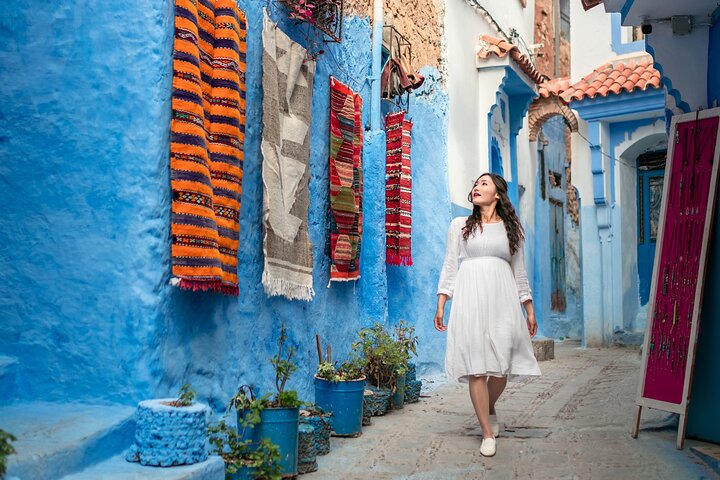
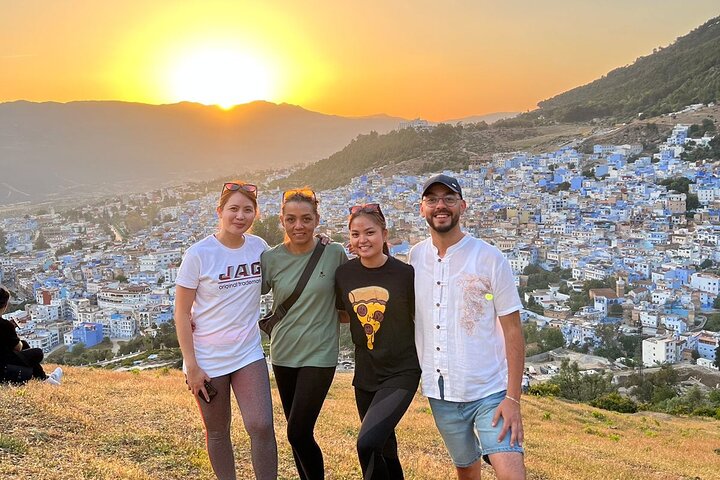
Plan on about half an hour for the exterior, longer if you add tea. There is no entry fee because there is nothing to enter, and the tourism board names the Grand Mosque among the must-see sights of the town. Pair it with the kasbah, the Ras el-Maa spring and an evening wander through the surrounding lanes, where the buildings are painted in the same soft blue that gives the town its fame.
A little background helps the visit. The Rif has long been a meeting point of Berber mountain communities and Andalusian newcomers, and the mosque, the kasbah and the surrounding lanes grew up together as the heart of that mixed culture. Even without going inside, you can read the layers of the town in what surrounds the building: the cobbled square built for gatherings, the cafes that fill after prayer, the crafts shops that spill into nearby lanes and the fountains that serve the neighbourhood.
If you have a guide, ask about the history of the tower and how daily prayer shapes the rhythm of the old town. If you are on your own, simply sit, observe and let the square explain itself.
What to expect
The experience
A free, self-guided look at the exterior and octagonal tower of the main mosque from Plaza Uta el-Hammam. The interior is closed to non-Muslims.
Best time
Late afternoon, when the tower catches the low sun and the plaza begins to fill.
How long
About half an hour, or longer if you take tea on the square.
Tips
Dress modestly, keep your voice low, do not photograph worshippers, and expect the area to be busy around prayer times and on Fridays.
Quick picks
- Best for
- Anyone who wants a quick, free dose of local culture right in the middle of town.
- Families
- Easy and flat, but explain beforehand that it is a place of worship and children should stay quiet near the doors.
- Couples
- Take a table on the plaza at sunset, order mint tea and watch the tower glow.
- Pair with
- The kasbah and museum are a few steps away, and the souks start just beyond the square.
- Time needed
- Thirty minutes for the exterior, plus time for tea.
Good questions
Can non-Muslims go inside the Grand Mosque?+
No. The mosque is an active place of worship and the interior is closed to non-Muslim visitors. You can admire the tower, doors and walls from Plaza Uta el-Hammam.
What makes the tower unusual?+
It is octagonal, whereas many Moroccan minarets are square. The shape is often linked to Andalusian and Spanish influence in the Rif.
Is there an entry fee?+
No, viewing the exterior from the plaza is free at any time. Your only cost is whatever you order at a nearby cafe.
When is it busiest?+
Around the five daily prayers, and especially on Friday around midday. Step aside near the entrance and let worshippers pass.
What should I wear nearby?+
Cover shoulders and knees and keep your voice low. This is respectful around any mosque and helps you blend in on the plaza.