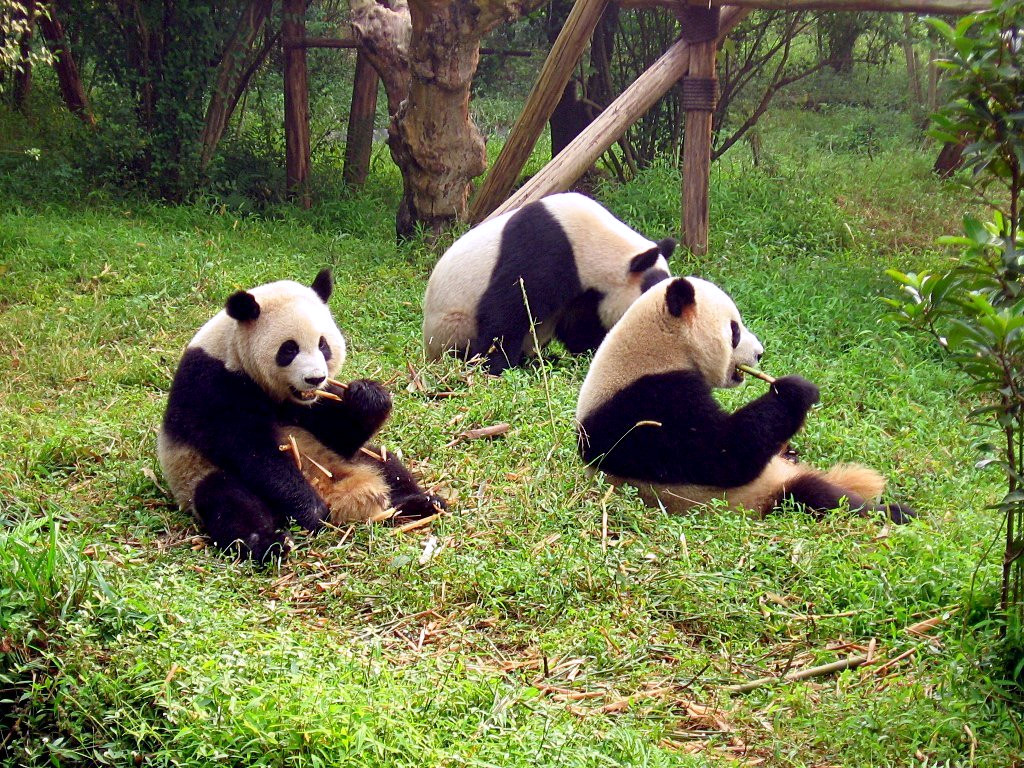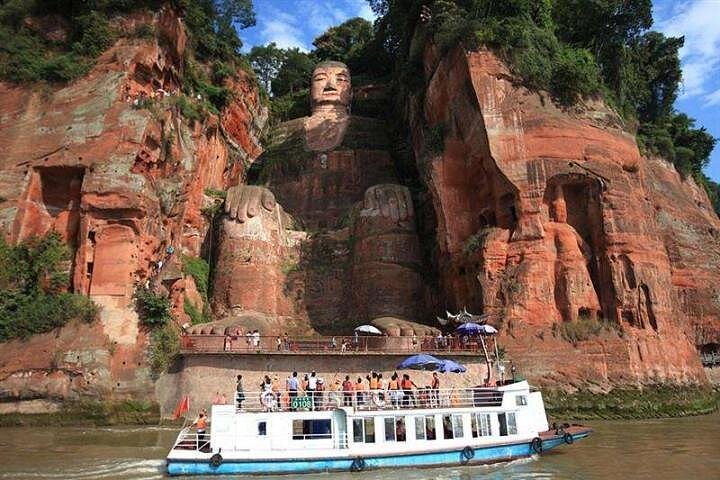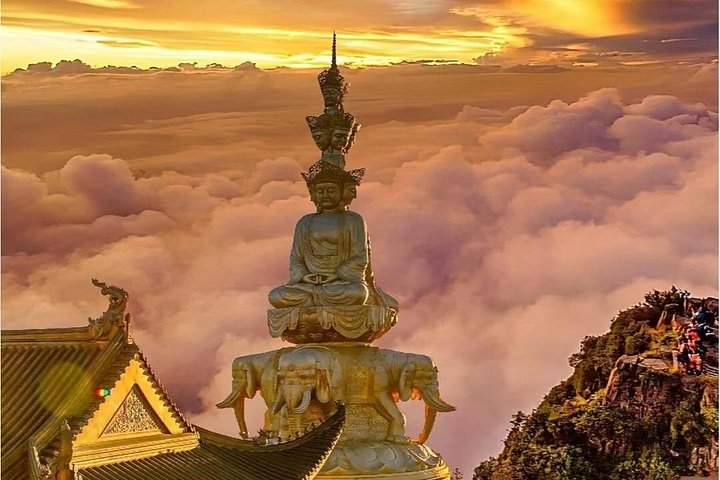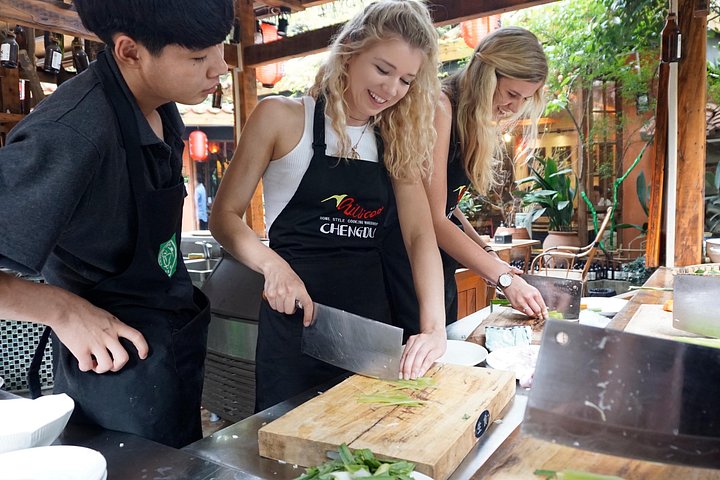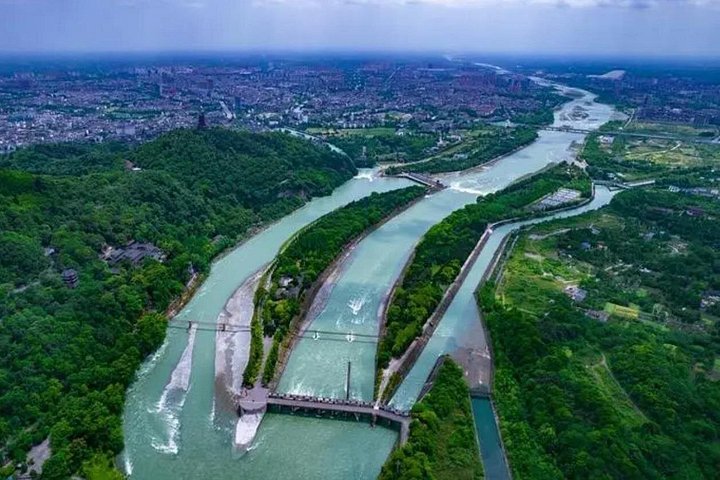
Dujiangyan is the quieter, more thoughtful day trip from Chengdu. Its irrigation system was built in the third century BC, and the tourism guidance describes it as the only surviving ancient irrigation system in the world that diverts water without a dam. The engineer credited with it is the governor Li Bing, whose design splits the Min River with a fish-shaped levee, so that floodwater is sent away and a controlled flow feeds the farmland of the Chengdu plain. The site has a pleasant walk across suspension bridges and past the temples dedicated to Li Bing and his son, with the river rushing beneath you. Nearby are Mount Qingcheng, a Taoist mountain of forests and temples, and the Dujiangyan panda base, where pandas and red pandas live in a valley setting. The site was inscribed by UNESCO in 2000 with Mount Qingcheng. This tour combines the irrigation system with a choice of Qingcheng or the panda park.
How to visit
Dujiangyan lies roughly an hour from Chengdu by high-speed train, with taxis or local buses from the station. A day tour from the city includes the transfer, which is easier than juggling a train, a bus and separate tickets, and the irrigation system, Qingcheng and the panda park are some distance apart. Tickets to the irrigation system are charged at the gate.
What to expect
The main walk takes two hours or so, crossing the Anlan suspension bridge and following the river to the Fish Mouth levee. In the cooler months the water is cold and loud but the air is clear. The panda base here is smaller and less crowded than the Chengdu base, and it is where many volunteer programmes operate. Those programmes are paid, supervised days of cleaning and feeding tasks, and what contact with the animals is allowed varies, so ask exactly what is included.
Making the most of it
If you have to choose, pair the irrigation system with Qingcheng for scenery and history, and with the panda park if pandas are your priority. Start early; the train and the transfers fill the day.
November suits the walk well, with cooler weather and thinner crowds, though Qingcheng’s steps can be damp and slippery after rain.
What to expect
The experience
A day trip by train or car to walk the river works and bridges, then a choice of Mount Qingcheng or the Dujiangyan panda park.
Best time
Weekday mornings in autumn or spring, on a dry day when the steps are not slippery.
How long
Two hours at the irrigation system and a full day with the second stop and travel.
Tips
Wear shoes with grip, bring a light waterproof, check what any panda volunteer programme actually includes, and start early.
Quick picks
- Best for
- History and engineering lovers, and travellers who want a calmer alternative to the main panda base.
- Families
- The panda park and the bridges appeal to children, but Qingcheng’s steps are long.
- Couples
- The riverside walk and the temple terraces are scenic and unhurried.
- Pair with
- The Chengdu panda base on a different morning, or Mount Emei on a longer trip.
- Time needed
- A full day.
Good questions
How far is Dujiangyan from Chengdu?+
It is roughly an hour from Chengdu by high-speed train, with a short taxi or bus ride from the station. A day tour from the city handles the transfers.
Why is the Dujiangyan irrigation system famous?+
It dates to the third century BC and, according to Chinese tourism guidance, is the only surviving ancient irrigation system that diverts water without a dam. It still waters the Chengdu plain today.
Can you volunteer with pandas at Dujiangyan?+
Operators sell paid volunteer days at the panda base, typically involving supervised cleaning and feeding tasks. Contact rules vary, so check what is included and how welfare is managed.
Is Mount Qingcheng worth adding?+
Yes, if you enjoy forests, steps and Taoist temples, and it is commonly paired with the irrigation system. Skip it if you prefer pandas or a lighter day.
How long should I allow?+
Allow a full day, including the journey. The irrigation system alone takes around two hours.