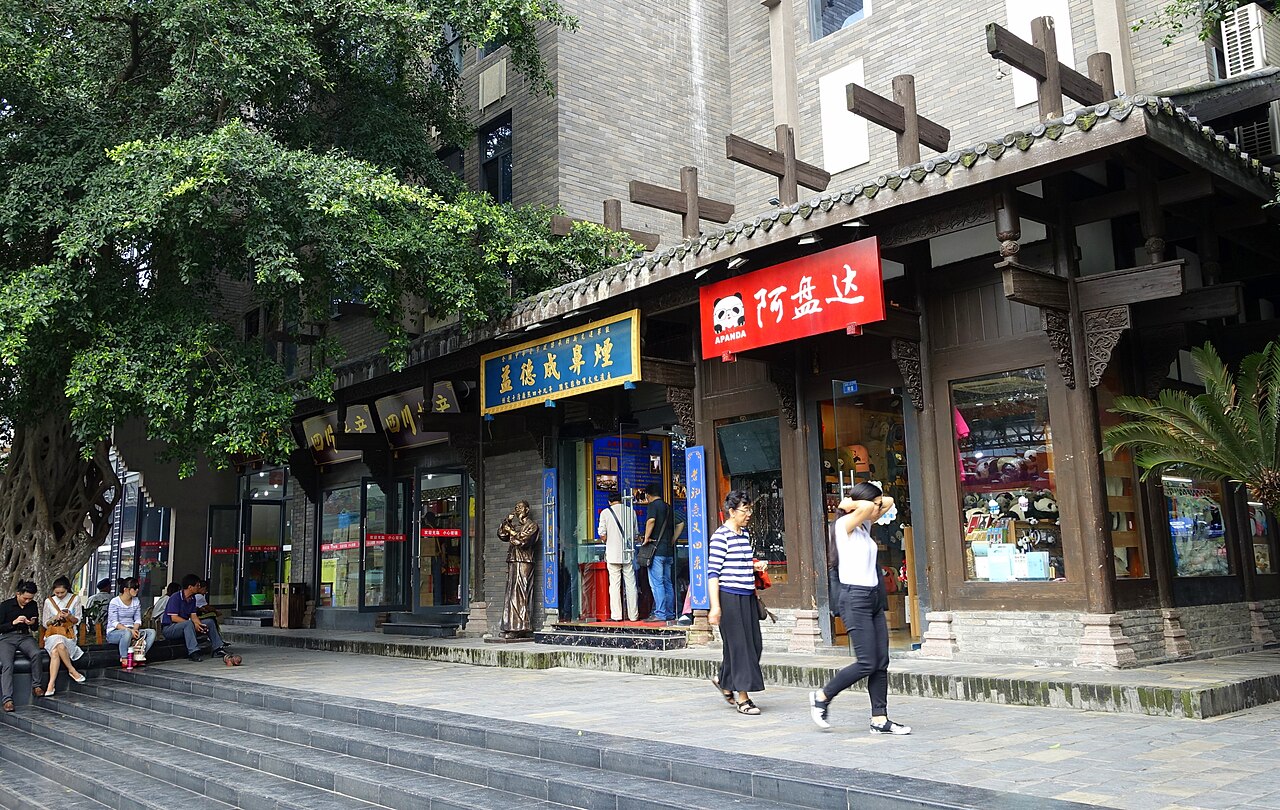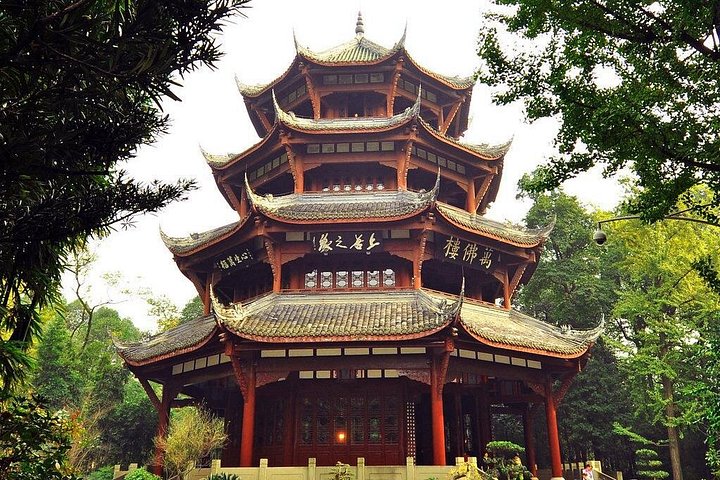
The Wuhou Shrine, also called the Temple of Marquis Wu, is the memorial to Zhuge Liang, the strategist who served the Shu emperor Liu Bei in the Three Kingdoms period, and it is one of the most beloved history sights in Chengdu. Shu was one of three rival states that divided China after the Han dynasty, with its capital here, and Chinese readers know the story through novels, operas and television. The present buildings date from 1672, in the Qing dynasty, and are laid out on a south-to-north axis: a gate, a second gate, the Hall of Liu Bei, a corridor and the Hall of Zhuge Liang. Clay statues of Liu Bei, Zhuge Liang and other Shu ministers and generals fill the halls, about 47 in all, and old cypress trees shade the grounds, which cover roughly 37,000 square metres. The poet Du Fu, who also lived in Chengdu, wrote of Zhuge Liang’s shrine among cypress trees, a line that gives the site much of its literary charm. This entry links to a guided city tour that visits Qingyang Palace, Wuhou Temple and Jinli Street together, an efficient way to see three neighbouring sights with a driver.
What to see
Start at the Hall of Liu Bei, then walk through the corridor to the Hall of Zhuge Liang, the emotional heart of the site. Between the halls, look for the inscribed stone tablets. The most famous, the Tablet of Triple Success, dates to 805 and is named for its three creators: Pei Du wrote the text, Liu Gongchuo did the calligraphy and Lu Jian carved it.
The mood is deliberately simple and dignified rather than showy, so the experience is about atmosphere, trees and stories more than spectacle. Signage in English is limited, which is where a guide adds real value.
Why a tour helps
The story of the Three Kingdoms is complex, with dozens of names, and the statues mean far more once someone explains who each figure was. The tour in this entry also stops at Qingyang Palace, a Taoist temple, and at Jinli Street, the lantern-lit lane of snacks and souvenirs that sits beside the shrine, so you leave with context for each. If you prefer to go independently, Metro Line 3 to Gaoshengqiao station followed by a short walk east along Wuhouci Avenue brings you to the gate.
Timing
The grounds are open in the daytime, with a late-afternoon closing, so arrive in the morning to enjoy the trees before the groups come. Allow about two hours for the shrine itself. Jinli is most atmospheric at dusk when the lanterns are lit, so a late-afternoon shrine visit followed by an evening in Jinli works well. Rain gives the cypress courtyards a lovely mood, though paths can be slippery.
Good to know
Opening hours and admission change, so check current details for your date. The complex is mostly flat and walkable, with some steps between halls. If you are short of time, prioritise the two main halls and the tablet, and leave the rest of the grounds for a slower second visit. If you enjoy the Three Kingdoms theme, ask your guide about the stories behind the clay figures, and look for the small details in the halls, such as the different postures and costumes that distinguish civil ministers from generals.
Children often warm to the shrine once they learn it is the setting of stories every Chinese schoolchild knows, and the open courtyards give them room to move.
What to expect
The experience
A walk through a cypress-shaded memorial complex of halls, clay statues and inscribed tablets, with a guided city tour option that adds Qingyang Palace and Jinli Street.
Best time
Mornings, before tour groups arrive; late afternoon followed by Jinli at dusk is also a good rhythm.
How long
About two hours at the shrine, or a half day with the guided tour.
Tips
Hire a guide or read up on the Three Kingdoms first, see the two main halls and the tablet, and check current opening hours.
Quick picks
- Best for
- Anyone interested in Chinese history, the Three Kingdoms story or traditional temple architecture.
- Families
- Open grounds and lots of statues keep children engaged, especially if you tell the stories of Liu Bei and Zhuge Liang.
- Couples
- Wander the cypress courtyards, then end at Jinli Ancient Street when the lanterns come on.
- Pair with
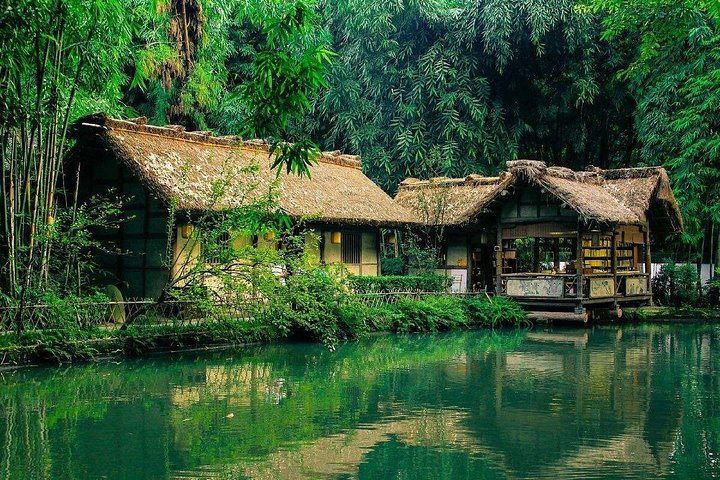
- Jinli Ancient Street next door, and Du Fu Thatched Cottage for a literary pairing.
- Time needed
- Two hours, or a half day with the tour.
Good questions
Who is the Wuhou Shrine dedicated to?+
It honours Zhuge Liang, chief minister of the Shu kingdom, and his emperor Liu Bei. The name comes from the title Marquis Wu that Zhuge Liang received.
How old is the Wuhou Shrine?+
The current buildings date from 1672 in the Qing dynasty, though the site honours figures from the third century. The exact original shrine location is not known.
How do I get to the Wuhou Shrine by metro?+
Take Metro Line 3 to Gaoshengqiao station, then walk east along Wuhouci Avenue for a few minutes.
Is Jinli Street next to the shrine?+
Yes, Jinli Ancient Street sits right beside the shrine, which is why many visitors combine them in one outing.
Do I need a guide?+
It is not required, but the Three Kingdoms story is intricate and English signage is limited, so a guide makes the statues and tablets much more meaningful.