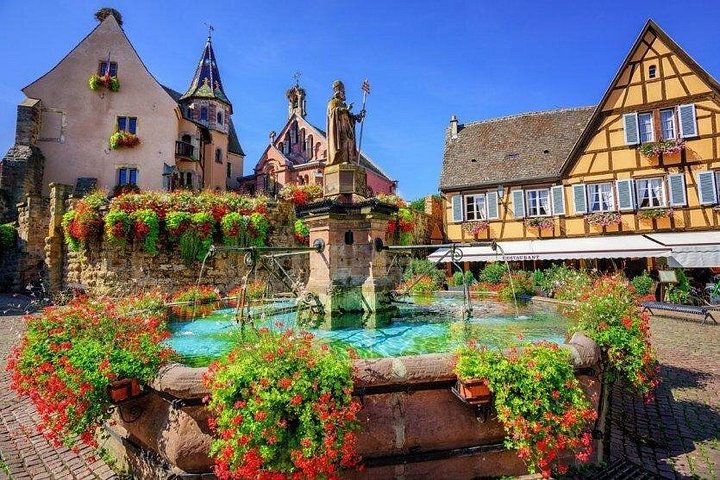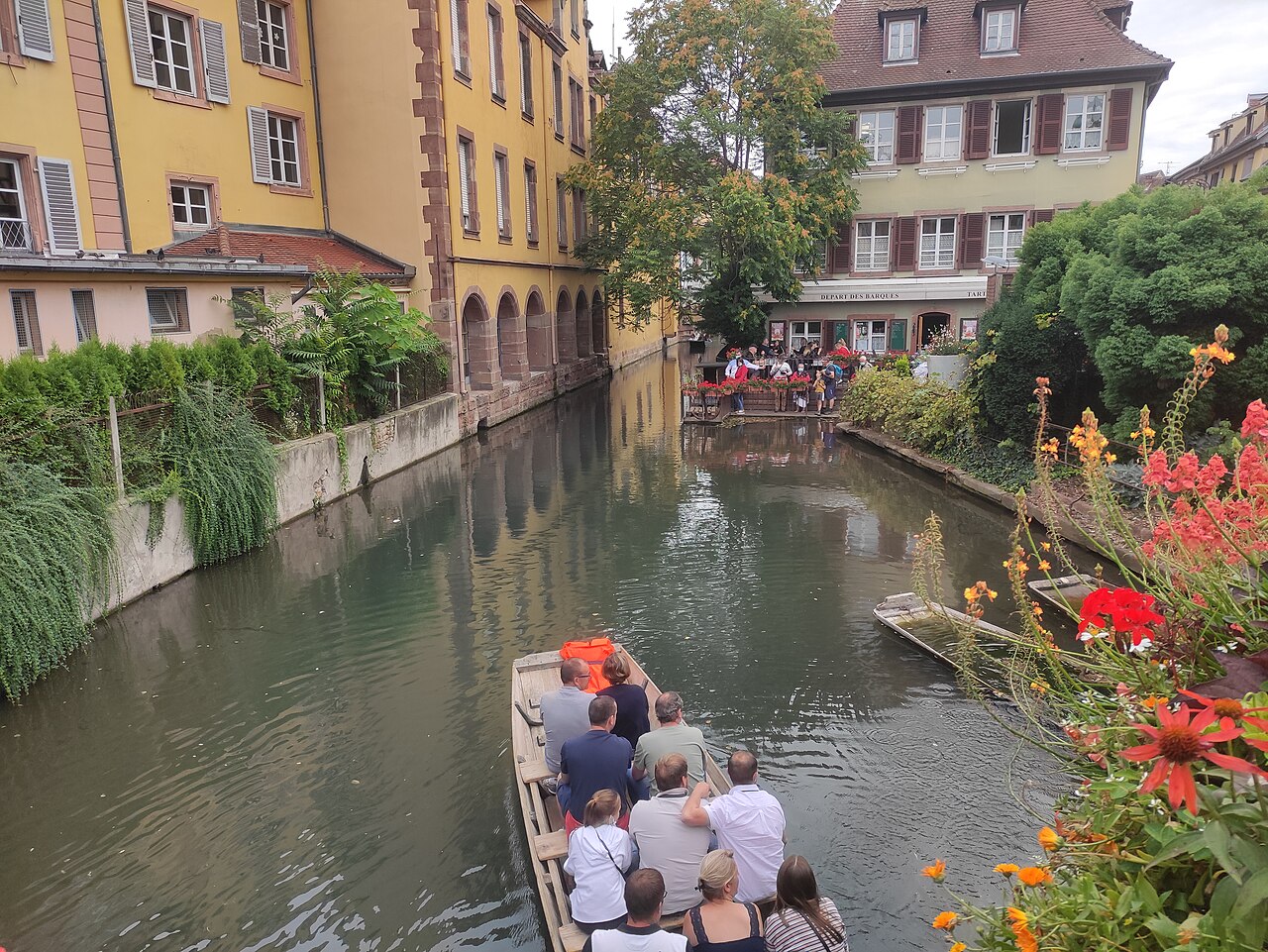
Kaysersberg sits where a Vosges valley opens onto the Alsace plain, with the little Weiss river running through the middle of the village and vineyards rising on both sides. Its name means imperial mountain, a reference to the free imperial status it enjoyed in the Middle Ages, and the ruins of the castle that gave it that name still crown the hill above the rooftops. The main street, lined with half-timbered houses, leads to a fortified stone bridge built in the sixteenth century, with a small chapel-like house set on its span, one of the most photographed corners in the region. Close by is the church of the Holy Cross, with its richly carved altarpiece and a doorway worth studying. Kaysersberg is also the birthplace of Albert Schweitzer, the physician, theologian and musician who won the Nobel Peace Prize, and a museum and a plaque recall him. The setting is calmer than some of the more famous villages, and the combination of river, bridge, church, castle and vineyards gives you a lot to see in a small area, without any entrance fee for the village itself.
How to see it
Walk the main street from end to end, pausing at the town hall, the carved fountains and the ornate house fronts, then cross the fortified bridge for views along the water. Visit the church of the Holy Cross for its altarpiece, and then climb the path to the castle ruins for a view over the roofs and the plain.
The climb is short but steep, so wear sturdy shoes. If you are interested in Schweitzer, look for the house where he was born and the small museum devoted to him, and check opening times in advance.
Wine and walks
The vineyards around Kaysersberg are known for Riesling and Pinot Gris, and growers around the village welcome visitors for tastings. Marked footpaths lead into the vines and along the valley, and the surrounding hills offer longer walks for those who want a break from cobbles.
Cyclists can join the Wine Route lanes between neighbouring villages, which are easy and scenic. The village is also the gateway to the higher Vosges valleys, with forest and mountain scenery within a short drive, which makes it a useful stop for travellers who want some nature as well as architecture.
Practicalities and timing
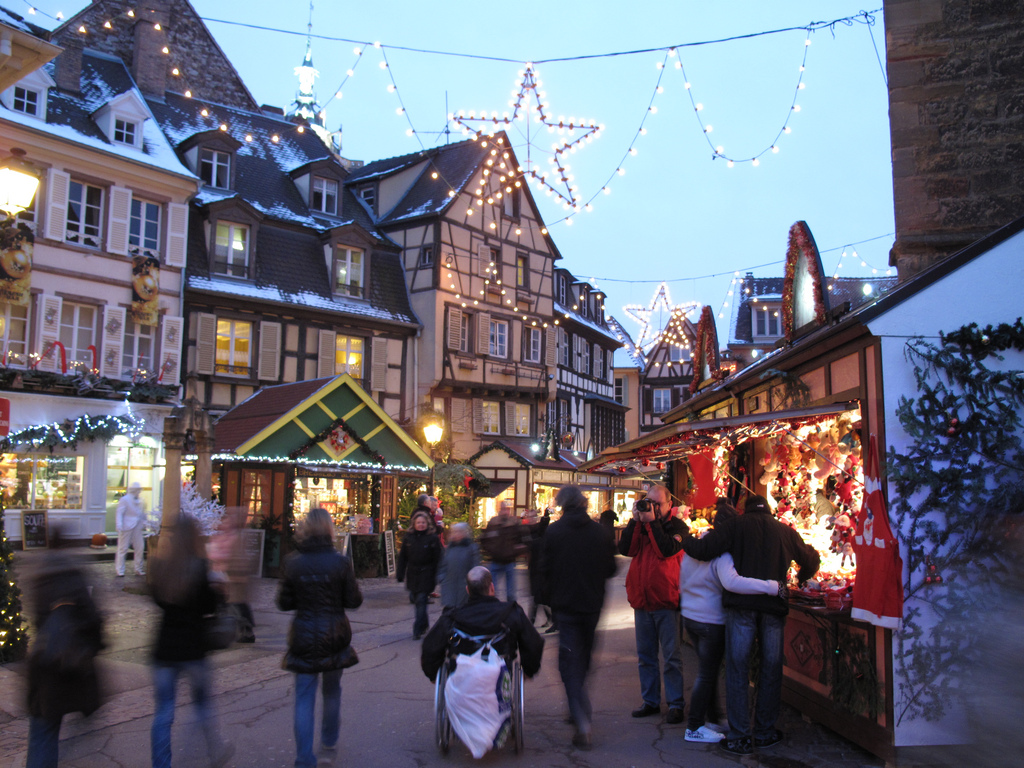
Kaysersberg is small enough to see in two hours, though lunch and a tasting will extend your stay. Weekdays outside holidays are calmest. The main street is busy in summer and at Christmas, when lights, stalls and winter treats fill the village, and an early start or a late afternoon visit helps you avoid the largest groups. Parking is at the edge of the village, with a short walk in. Small-group Wine Route tours often include Kaysersberg, so you can visit without a car.
Opening times for the castle path, the church and the museum vary by season, so check with the tourist office before you travel. If you enjoy walking, the paths above the village connect with longer trails through the vines, and a loop of an hour or two gives a different view of the bridge and the castle. Pair a stop here with a tasting at a nearby estate to round off the visit.
What to expect
The experience
A self-guided walk along the main street, over the fortified bridge and up to the castle ruins, with optional cellar tastings.
Best time
Early morning or late afternoon on weekdays; spring and autumn for good walking weather.
How long
Two to three hours, longer with lunch and a tasting.
Tips
Climb to the castle for the view, wear sturdy shoes, and check opening times for the church and Schweitzer museum.
Quick picks
- Best for
- Travellers who like a village with a river, a bridge, a castle and a story.
- Families
- Children enjoy the bridge and the castle climb; the path is steep, so take care with very small ones.
- Couples
- Photograph the bridge at golden hour, then dine in a courtyard restaurant.
- Pair with
- Riquewihr and Eguisheim on a Wine Route day, or a short walk into the Vosges valley.
- Time needed
- Two hours for the essentials, half a day with lunch.
Good questions
How far is Kaysersberg from Colmar?+
It is about eleven kilometres north-west of Colmar, a short drive, and a common stop on Wine Route tours.
Who was Albert Schweitzer?+
A physician, theologian, organist and humanitarian born in Kaysersberg, who received the Nobel Peace Prize. A museum and house recall his life.
Is it free to visit?+
Yes, the village streets, bridge and church exterior are free. The castle path, church interior or museum may have their own rules or charges.
Can I walk to the castle ruins?+
Yes. A short, steep path leads up from the village, and the view repays the effort. Wear sturdy shoes.
Is it worth visiting at Christmas?+
Yes. The village is lit and decorated, with a market and seasonal treats, and it is calmer than Colmar on busy weekends.