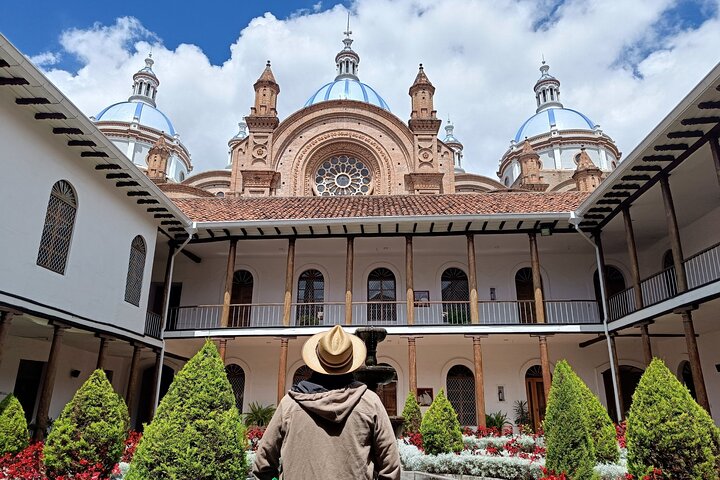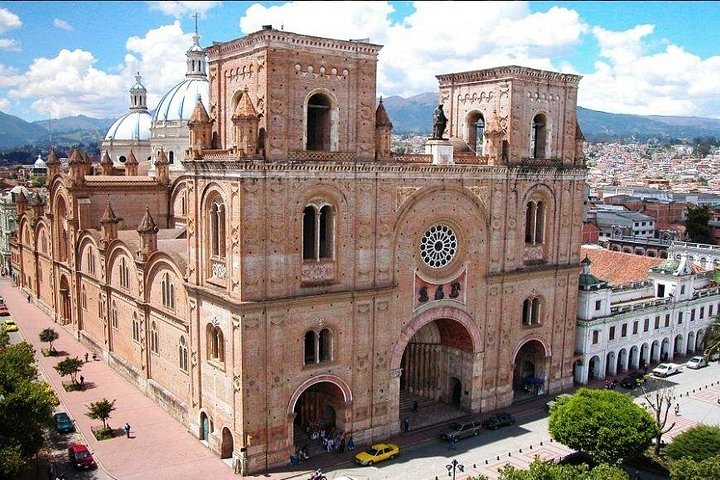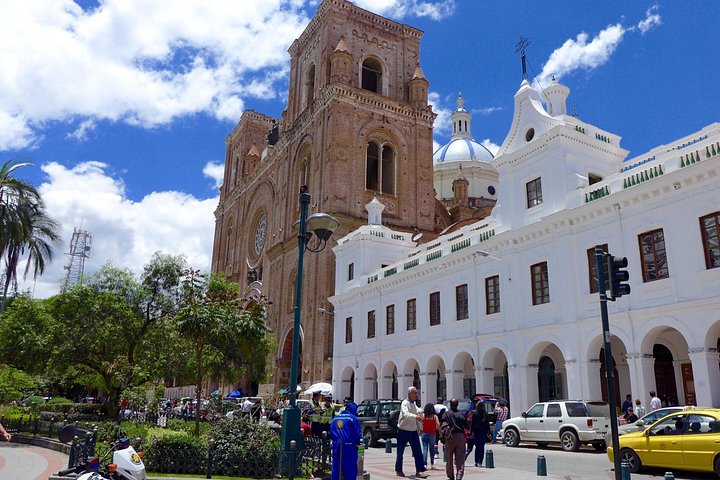
Parque Calderón is Cuenca's living room: a shaded plaza of palms, benches and a bandstand where families, students and shoeshiners pass the day, framed by the two cathedrals and the municipal buildings. The New Cathedral, formally the Cathedral of the Immaculate Conception, rises on one side with three blue and white domes that have become the symbol of the city. Construction began in the late nineteenth century and continued for decades, drawing on Neo-Romanesque and Renaissance ideas, and the facade uses local marble and stone. Inside, a high nave, stained glass, an altar of marble and gilded detail create a spacious interior that contrasts with the narrow streets outside. The Old Cathedral, El Sagrario, stands on the opposite side and shows an earlier colonial scale. Together they anchor the center, and sitting on a bench at dusk, when the domes catch the last light and the plaza fills, is one of Cuenca's simplest pleasures.
The New Cathedral's story is part architecture, part ambition. Planned by a German priest-architect and built over many years, it was intended to hold a huge congregation, and its scale still surprises visitors. A well-known anecdote says the tower plans were altered after a calculation problem, though guides tell different versions and the details are worth asking about rather than assuming.
Visitors can usually enter the nave outside service times, and some tours offer access to the domes or towers for views, subject to the schedule. Dress modestly, keep voices low and avoid flash during services.
The park around it is a sightseeing destination in its own right. Benches face the cathedral, vendors sell snacks, and on weekends there are small events, music and children playing. Around the square you will find cafes, ice cream shops with traditional pan-made ice cream, museums and the Old Cathedral, now used as a museum and cultural space. The mix of everyday life and heritage is what makes Cuenca feel lived-in rather than staged.
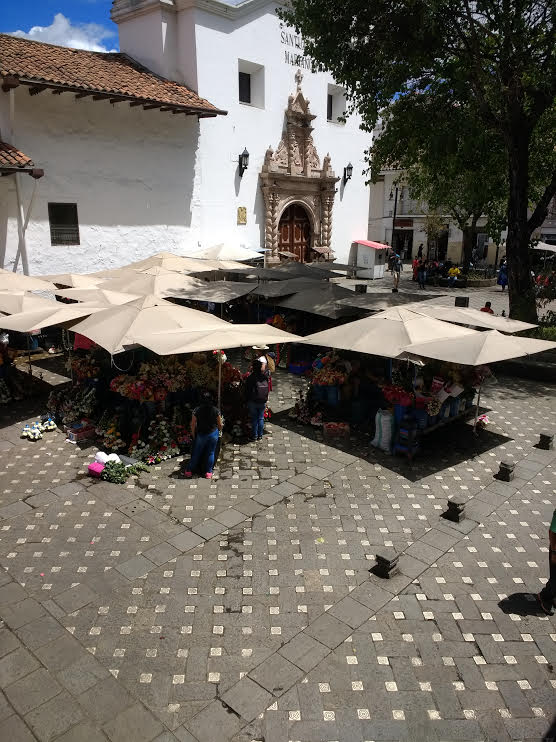
Use the plaza as a base for the rest of the day. It sits at the center of most walking routes, close to the flower market, the Calle Larga steps and several museums. Mornings are calm, midday busy, and evenings the most atmospheric, with lights on the domes and families strolling. Altitude and sun are real here, so a hat and water are sensible even for a short stop.
If you are looking for a free activity, this is it: sit, watch, listen to the bells and let the city come to you. Combine it with a walking tour or a coffee stop, and return at a different hour to notice how the light changes the color of the domes. For photographers, the best angle is from the corner of the plaza near the Old Cathedral, with the domes against a late afternoon sky.
Cuenca's calendar adds color to the square. Religious processions, concerts and holiday displays fill the plaza at certain times of year, and the annual celebrations around the city's anniversary in spring and its independence in early November draw crowds. Even on an ordinary evening, brass bands, students and families give the square a warm, unhurried energy. If you can, visit twice: once in daylight to see the facade and interior detail, and once after dark, when the lights and the crowd change the whole atmosphere.
What to expect
The experience
A self-guided stop at the main square and the cathedral, with free access to the plaza and interiors outside service times.
Best time
Late afternoon and early evening for light on the domes and a lively plaza.
How long
Thirty minutes to an hour.
Tips
Dress modestly for the cathedral, check opening hours, and sit with a coffee to enjoy the plaza.
Quick picks
- Best for
- Everyone, as the natural first stop in the center.
- Families
- Open space and ice cream shops make it easy with kids.
- Couples
- An easy, free romantic stop at dusk.
- Pair with
- The flower market and the historic center walking tour.
- Time needed
- Thirty to sixty minutes.
Good questions
Is the cathedral free to enter?+
Visiting the main nave is usually free outside services, but tower or dome access may have a fee and set hours. Check locally.
When was it built?+
Construction began in the late nineteenth century and went on for many years.
Is there a dress code?+
Dress modestly and avoid hats and loud talk inside.
What is nearby?+
The Old Cathedral, the flower market, museums and many cafes are within a few minutes' walk.
Is it good at night?+
Yes. The domes are lit and the plaza stays lively in the evening.