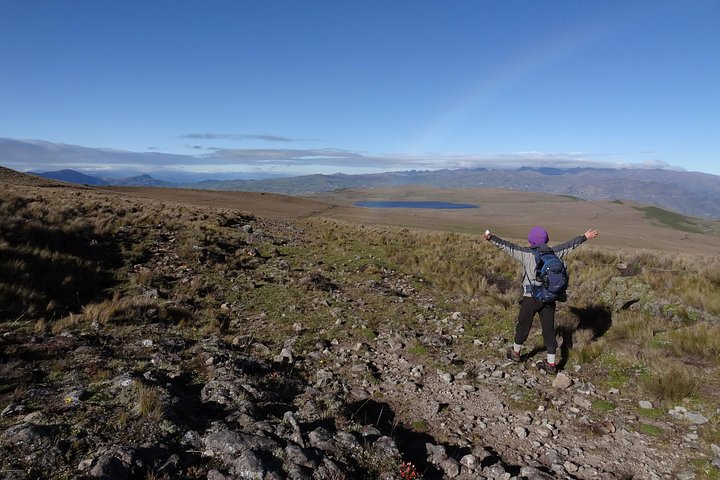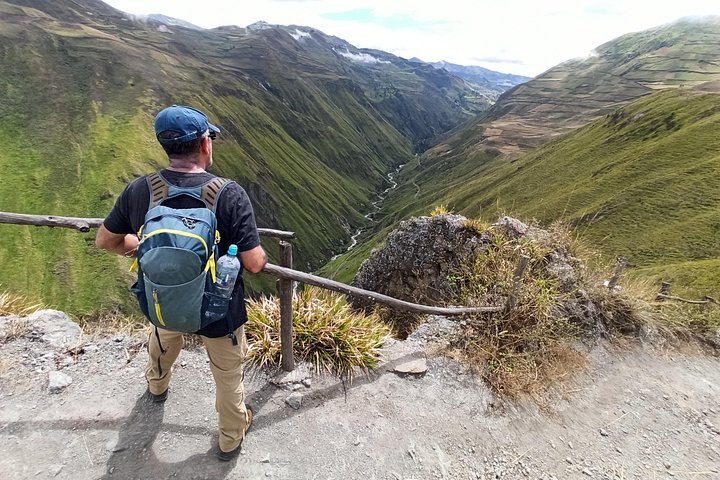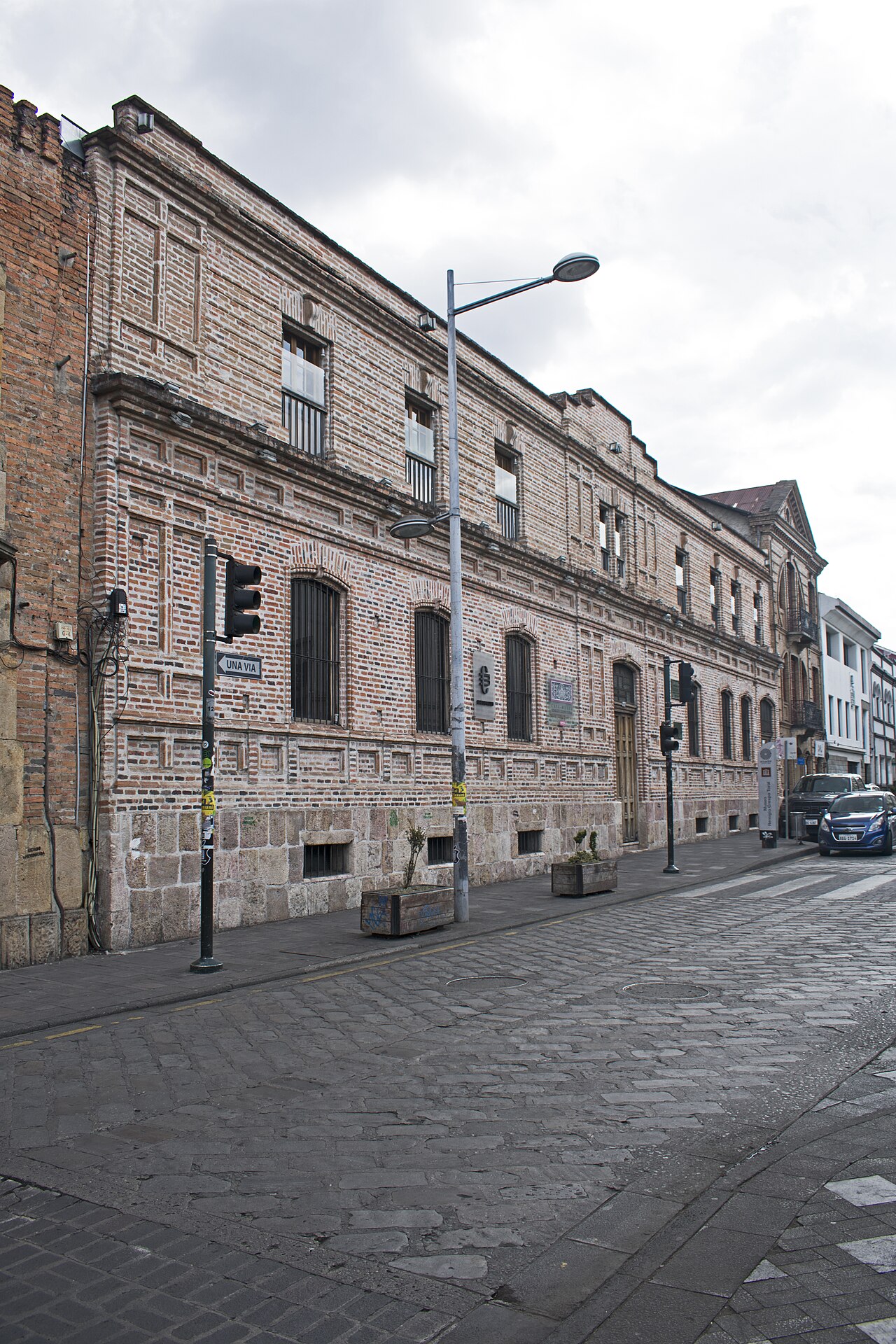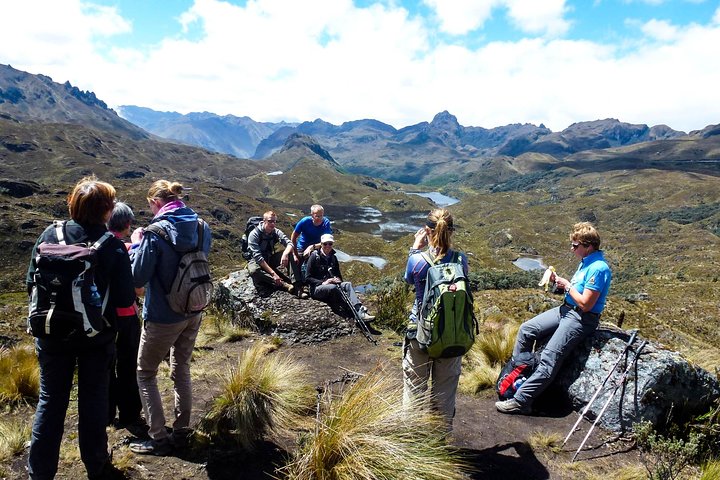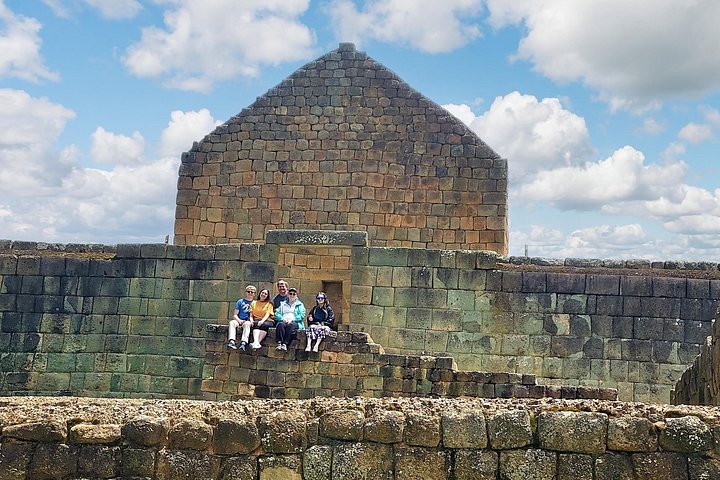
Ingapirca is the largest known Inca complex in Ecuador, and the most compelling reason to leave Cuenca for the day. The site sits on a high ridge about 80 kilometers north of the city, near the town of Cañar, and its centerpiece is a smooth oval building of fitted stone that archaeologists associate with the Temple of the Sun. What makes the place unusual is that the Inca did not build on empty land. They took over a sacred Cañari center, and the site still shows both layers: older local foundations beneath, imperial masonry above, and a cultural mix that tells the story of conquest and accommodation in the northern Andes. Guided visits walk through the elliptical structure, storage rooms, a plaza and a nearby rock outcrop that locals call the Face of the Inca, then visit the small museum and its collections. The setting is wide, windy and green, and the quiet around the stones feels very different from a busy town. Most tours from Cuenca add a village stop, lunch and often a viewpoint on the way.
The ruins are best understood with a guide, because the stones alone are subtle. Ingapirca means Inca wall in Kichwa, and the site was probably a ceremonial and administrative post linked to the road network that stretched from Cusco to Quito. The central oval structure, sometimes called the Temple of the Sun, is built of precisely cut stone laid without mortar and aligned with the solstices according to researchers.
Around it lie remains of storehouses, residential platforms and a plaza, while a short trail climbs to the natural rock formation sometimes read as a stone face. Interpretation varies, and honest guides will note where archaeologists agree and where the story is still debated.
A trip usually leaves Cuenca in the morning and takes around two hours each way, with the visit itself taking one to two hours. Because Ingapirca is high, around 3,100 meters, the air is cool and the wind can bite, so bring a jacket and a hat. Most group tours include transport, a guide and time for lunch; some add stops in Cañar or at roadside viewpoints.
Premium and private versions slow the pace, add meals or combine Ingapirca with artisan towns, which suits travelers who want depth over speed. Entrance fees may be included or paid separately, so check the details when you book.
Time the visit with the weather and the light. Mornings tend to be clearer, and afternoons can bring mist across the ridge, which can be atmospheric but hides the views. Visitors interested in Andean history should pair it with the Pumapungo archaeological park in Cuenca, which covers the Cañari and Inca city of Tomebamba, and the picture clicks into place.
Families find the open space and the quick pace of a guided visit manageable, while photographers enjoy the way late light warms the stone. Whether you are a student of archaeology or just want to see a place the Inca shaped, Ingapirca is the single clearest window into pre-colonial life in southern Ecuador and deserves a full day.
A few practical details help the day go smoothly. Carry some cash for the small stalls near the entrance, where women sell textiles and snacks, and for a tip for your guide. Toilets are available at the visitor center, but facilities along the road are basic. If you are sensitive to altitude, rest the evening before and keep the pace easy at the site, where the walk between structures is short but the air is thin. Photographers should bring a lens that handles open sky, because the ridge setting makes dramatic backgrounds.
What to expect
The experience
A guided day trip to Ecuador's main Inca site, with time among the oval Sun Temple, the museum and a nearby village.
Best time
Mornings are usually clearer. Dry months, roughly June to September, give the best visibility.
How long
Around eight hours including transport.
Tips
Bring a windproof layer, sun protection and cash for small purchases. Ask whether entry is included in the tour price.
Quick picks
- Best for
- History lovers and anyone curious about Cañari and Inca culture.
- Families
- Open space and a short guided walk work well for school-age kids; the drive is the long part.
- Couples
- A quiet, atmospheric outing with mountain views.
- Pair with
- Pumapungo in Cuenca, which tells the story of Tomebamba.
- Time needed
- A full day including transport.
Good questions
How far is Ingapirca from Cuenca?+
About 80 kilometers, roughly two hours each way by road.
Is a guide necessary?+
Strongly advised. The stones are subtle, and a guide explains the Cañari and Inca layers and the solstice alignments.
How long do I need at the site?+
One to two hours at the ruins, plus the museum and a village stop on most tours.
Is it the same as Machu Picchu?+
No. Ingapirca is smaller and quieter, but it is the best-known Inca site in Ecuador and rewarding for its mixed Cañari and Inca history.
Is it cold?+
Yes, it sits around 3,100 meters. Bring a jacket and hat even on sunny days.