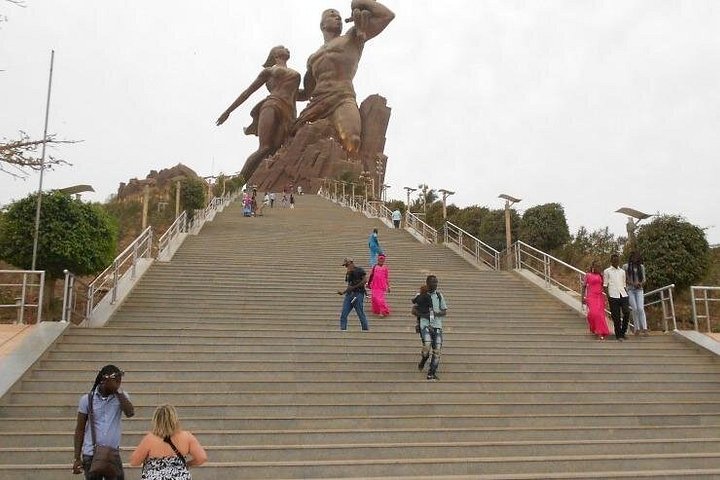
The African Renaissance Monument stands on one of the Mamelles hills at the western edge of Dakar, and it is visible from much of the peninsula. The Senegalese tourism agency describes it as a bronze and copper statue of a couple and a child, 52 metres tall, with a 360-degree view from the summit that is especially striking at sunset. It was inaugurated in April 2010 and has been a talking point ever since, praised as a bold symbol of African self-confidence and criticised for its cost and style. For visitors, that debate is part of the appeal. Whatever your view, it is a memorable place to stand, and the climb and the panorama give you a clear sense of how Dakar sits on its peninsula between ocean and hills.
Visits usually involve climbing steps and then taking a lift to the viewing area at the top, where you look out over Dakar, the Atlantic and the nearby coast. The tourism agency's Dakar page mentions a climb of 198 steps, and an older guide describes a simple visit that ends partway up and a fuller visit with the lift to the belvedere at the head.
Tickets are sold at the site, and prices and hours have changed over the years, so check current details with the site or the tourism agency before you set off. The monument has also needed maintenance, which has made some visitors and commentators cautious, so it is worth confirming that the summit is open on the day.
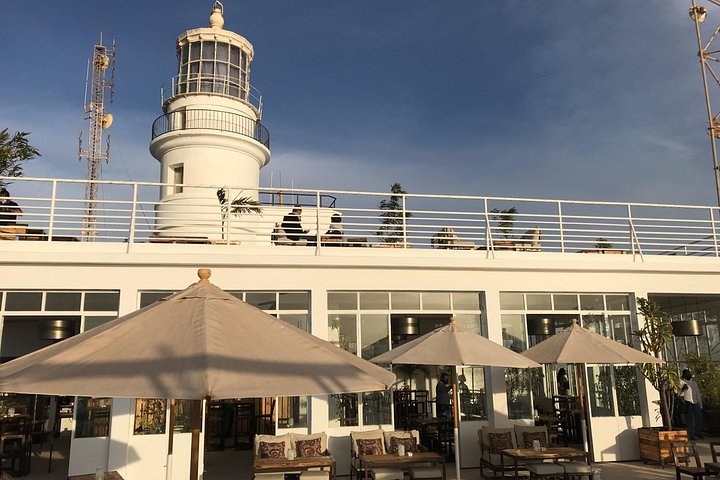
The best time to go is late afternoon, when the light is soft and the heat has eased, and it works well as a stop on the way to the Mamelles lighthouse or the Almadies. A taxi or driver is the simplest way to reach it, since the hill is outside the central district.
Bring water and a hat, wear shoes you can climb steps in, and keep a little time for the grounds and the vendors outside. Many tours combine the monument with the Museum of Black Civilisations, which makes for a strong half-day of Dakar's modern symbols.
What to expect
The experience
A visit to the statue's grounds and a climb, with a lift to the viewing area, for a panorama over Dakar and the Atlantic.
Best time
Late afternoon for softer light and cooler air, with sunset the most photographed moment.
How long
About an hour, including the climb, the view and a walk around the grounds.
Tips
Check opening and ticket details before you go, wear shoes for steps and bring water and a hat.
Quick picks
- Best for
- Photographers and first-time visitors who want the single best overview of Dakar.
- Families
- Children usually enjoy the lift and the size of the statue, though the steps and heat can tire small legs.
- Couples
- Go for the late-afternoon light and stay as the city begins to glow.
- Pair with
- The Mamelles lighthouse and the Almadies coastline are close, and the Museum of Black Civilisations suits a combined day.
- Time needed
- One hour at the site, plus travel time by taxi.
Good questions
How tall is the African Renaissance Monument?+
The Senegalese tourism agency gives its height as 52 metres. It stands on a hill, so it is visible from much of western Dakar.
Can you go to the top?+
Visitors can usually reach a viewing area at the top, with steps and a lift. Confirm that it is open on your day, as maintenance has affected access in the past.
When is the best time to visit?+
Late afternoon, for cooler air, softer light and sunset views. Avoid the midday heat.
How do I get there?+
The monument is on the Mamelles hill at the western edge of the city. A taxi or a driver is the easiest way, and tours often include it.
Is it controversial?+
Yes, its cost and style have been debated since it opened in 2010. That discussion is part of the experience, and local guides often have strong views to share.