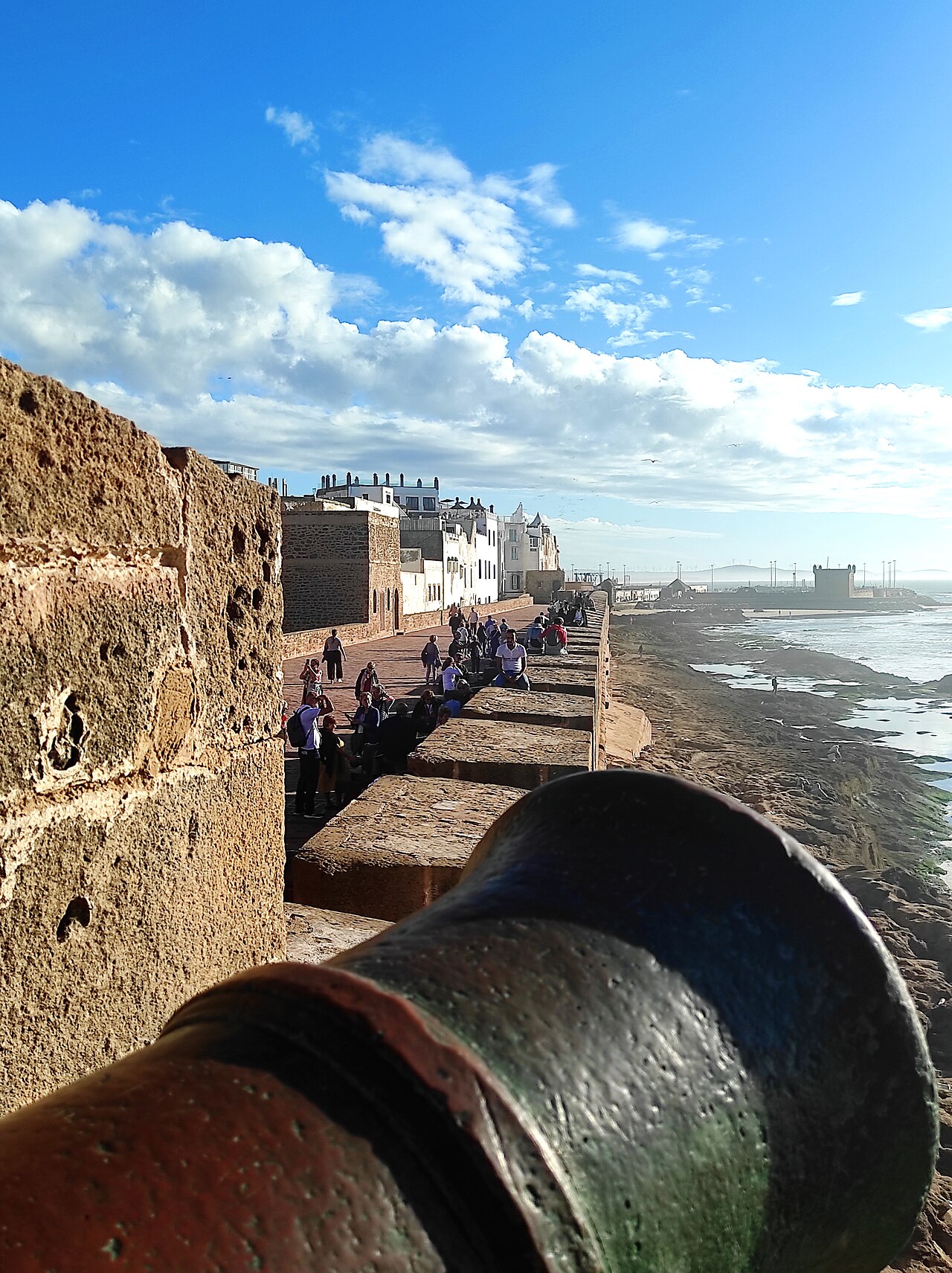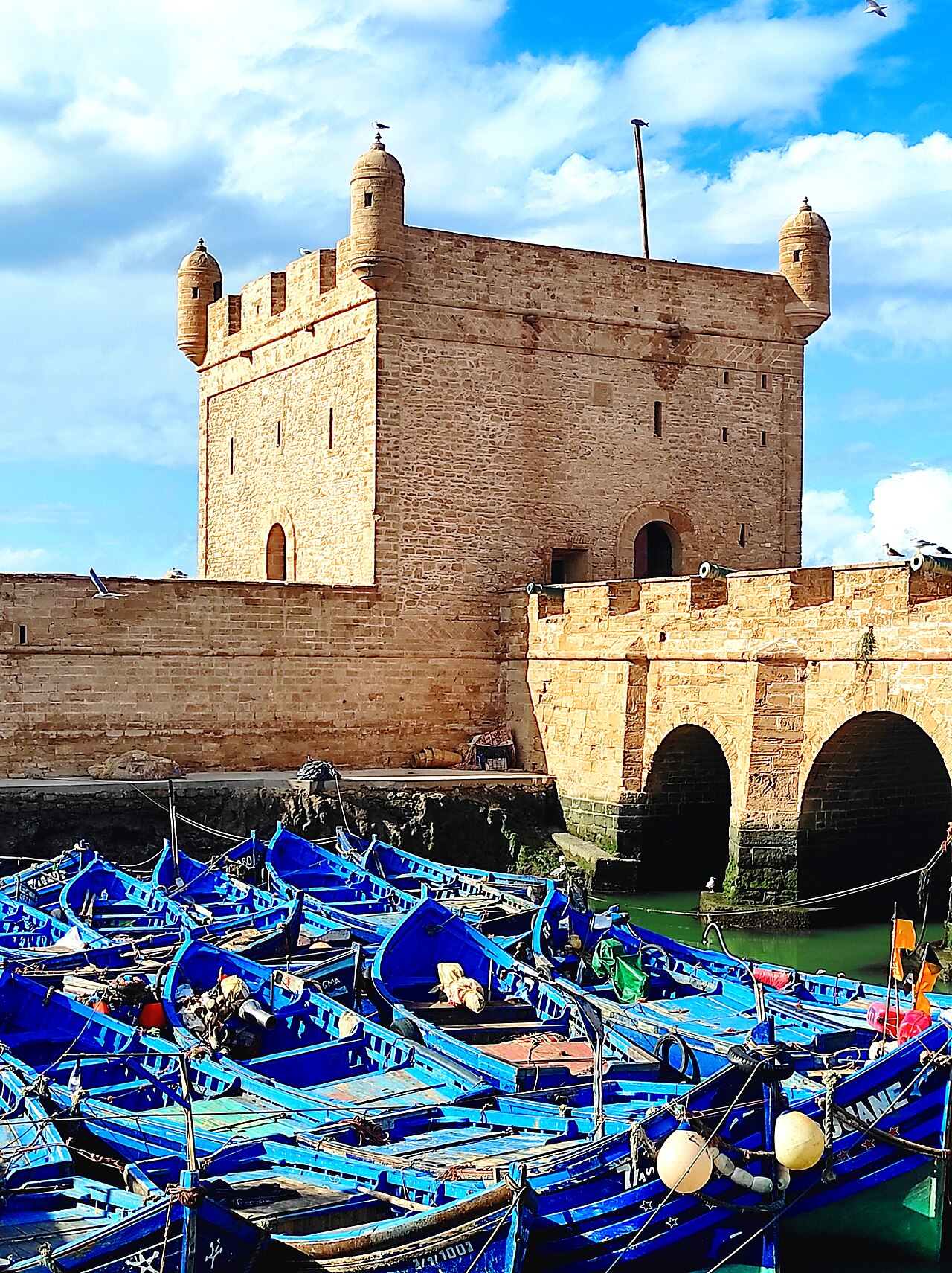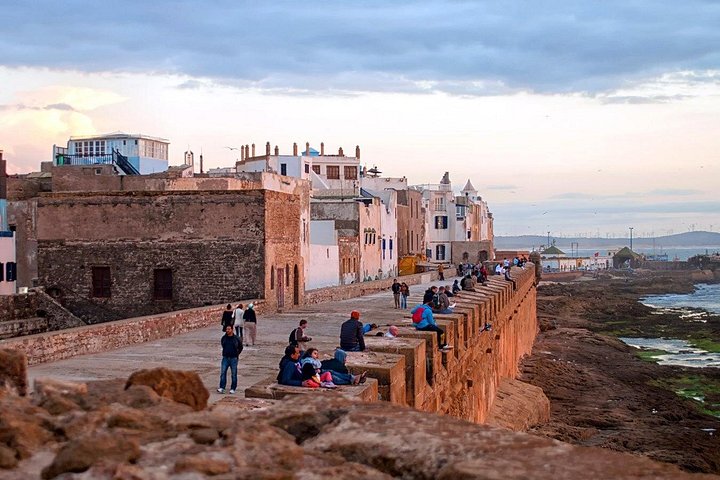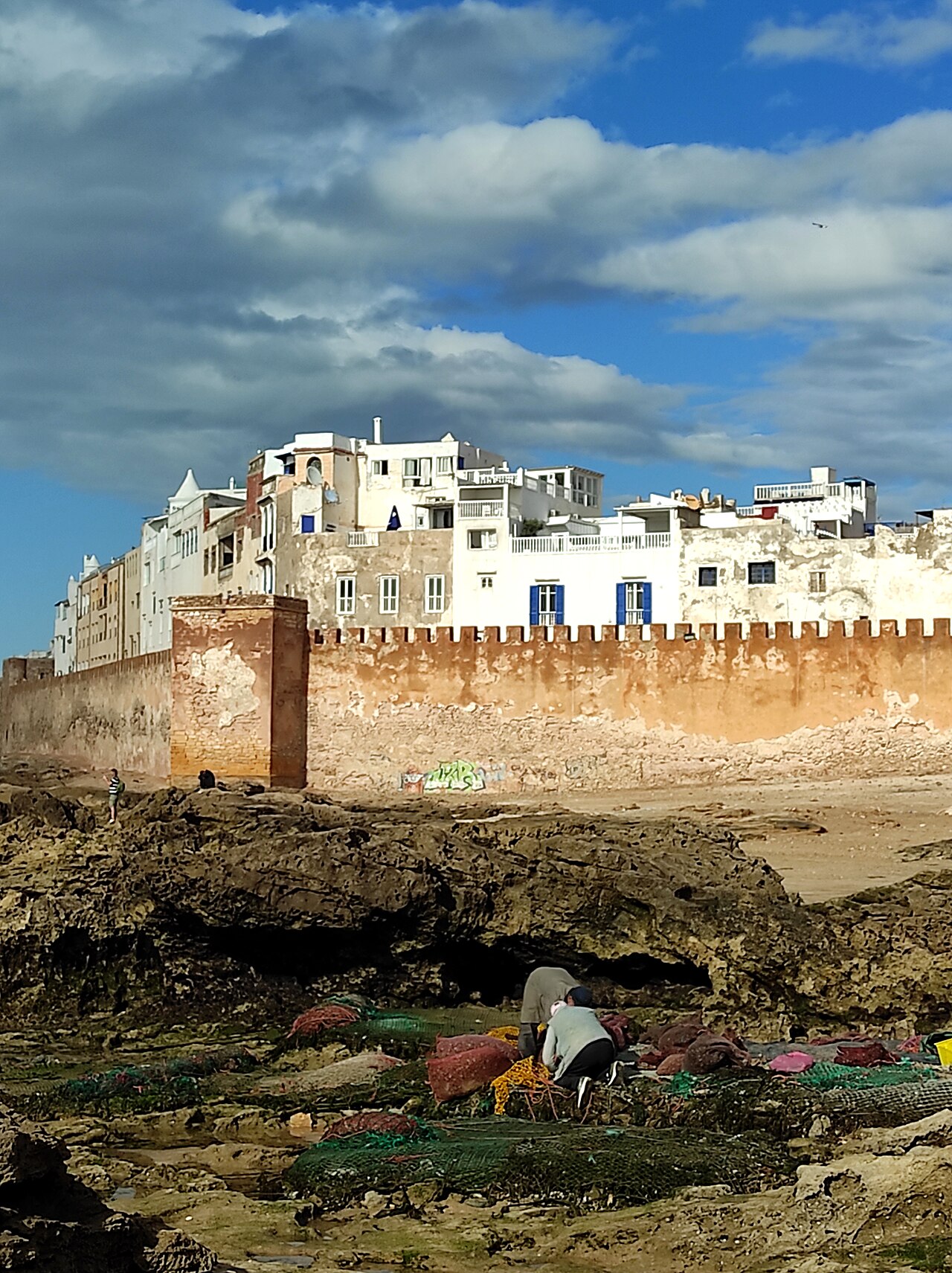
Most visitors look at the sea ramparts, but the medina's landward walls and gates are equally rewarding. Bab Marrakech, Bab Doukkala and the other entrances open onto the lanes in a pattern that reflects the 18th-century plan of the fortified port. Standing at a gate, you see the thick walls, the arches and the swirl of people, taxis, carts and shoppers that pass through. Outside the walls, daily life spills into squares, markets and cafes, while inside, the whitewashed lanes begin. A walk along this edge gives a different perspective from the touristed centre, and it helps you understand how the town's defences and trade worked together. The route is easy and free. You can trace the walls on foot in an hour or two, stopping at gates, viewpoints and small cafes, and you can join or leave the circuit at any point. It also makes a useful orientation walk early in your stay.
The gates are more than entrances. Bab Marrakech, for example, is the main arrival point for taxis and cars, and the square around it is busy with vendors, porters and travellers. Bab Doukkala marks another edge of the old town, close to a lively market area and a cemetery with a long history.
Each gate has a character shaped by the neighbourhood around it, from the bustle of commerce to the quiet of residential streets. Looking up, you will notice the sturdy stone, the crenellations and the sea-salt weathering that gives the walls their warm tone.
The planning of the town helps you read what you see. The medina was laid out in a regular grid under European military design influence but adapted to local building traditions, and the walls form a protective envelope around that grid. Towers and bastions guard the corners, and the gates connect the old port to the roads inland. You can imagine caravans arriving from the interior with goods bound for ships, and merchants meeting them in the lanes. That mix of land and sea trade is why the port prospered.
For a pleasant walk, start at Bab Marrakech in the morning when light is soft and traffic is lighter. Follow the outer edge of the walls, glance into the market areas, and enter the medina through the gate that appeals to you. Keep an eye on traffic, because motorbikes and carts share the space with pedestrians. Wear sturdy shoes, carry small coins for drinks and stop for tea at a cafe with a view of the walls. If you want a deeper story, a guided walk will add names and anecdotes.
Photography is rewarding here. The arches frame the street life, and the weathered stone offers texture and colour, particularly in late afternoon. Ask permission before photographing people, and respect market stalls and private doorways. Combine the gates walk with the sea ramparts, the mellah and the craft lanes for a well-rounded day of heritage on foot. It costs nothing, needs no tickets and gives you a fuller picture of the walled town that the sea views alone cannot provide.
If you enjoy a challenge, try the walk in both directions at different times of day and compare the mood. In the morning the gates are busy with deliveries and commuters, while at dusk they glow with lamplight and the cafes fill up. Carry a small map or save an offline copy, though the walls themselves are the best guide, and finish with a glass of mint tea so your legs and your impressions both have time to settle.
What to expect
The experience
A free, self-guided walk around the landward walls and gates of the medina, with cafes, markets and viewpoints along the way.
Best time
Morning for soft light and lighter traffic, or late afternoon for warm stone.
How long
One to two hours at an easy pace.
Tips
Watch for traffic at the gates, wear sturdy shoes, carry small coins and ask before photographing people.
Quick picks
- Best for
- History and architecture fans, photographers and first-time orientation.
- Families
- Fine with care near the gates, where traffic and crowds can be busy.
- Couples
- A relaxed stroll with plenty of photo opportunities.
- Pair with
- Pair it with the Skala de la Ville and the mellah.
- Time needed
- One to two hours.
Good questions
What are the main gates?+
Bab Marrakech and Bab Doukkala are two of the best known entrances to the medina, each with its own character.
Is the walk free?+
Yes, the gates and walls are public and there is no fee.
Is it easy to follow?+
Yes, the walls give a clear route, and you can leave or join at any gate.
Is it safe to walk around the edge?+
It is generally relaxed, but watch traffic and keep valuables secure in busy spots.
When is the best time to go?+
Mornings are quieter and softer in light. Late afternoon gives warm tones on the stone.