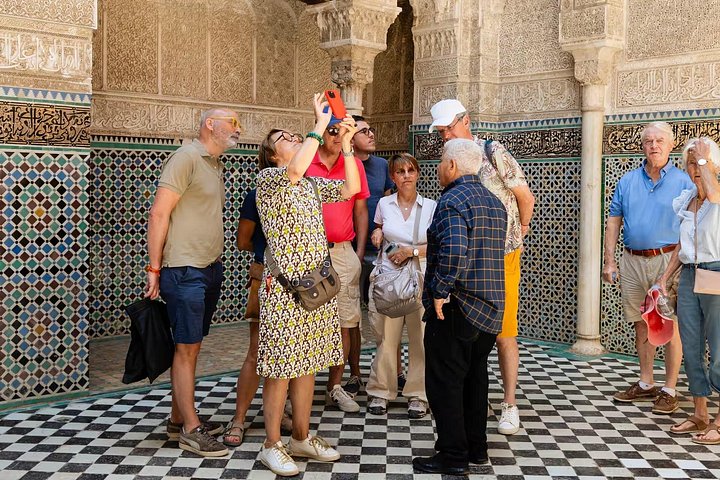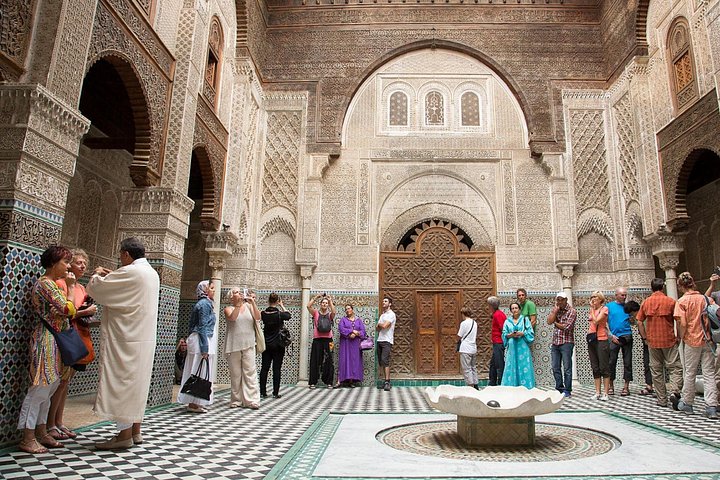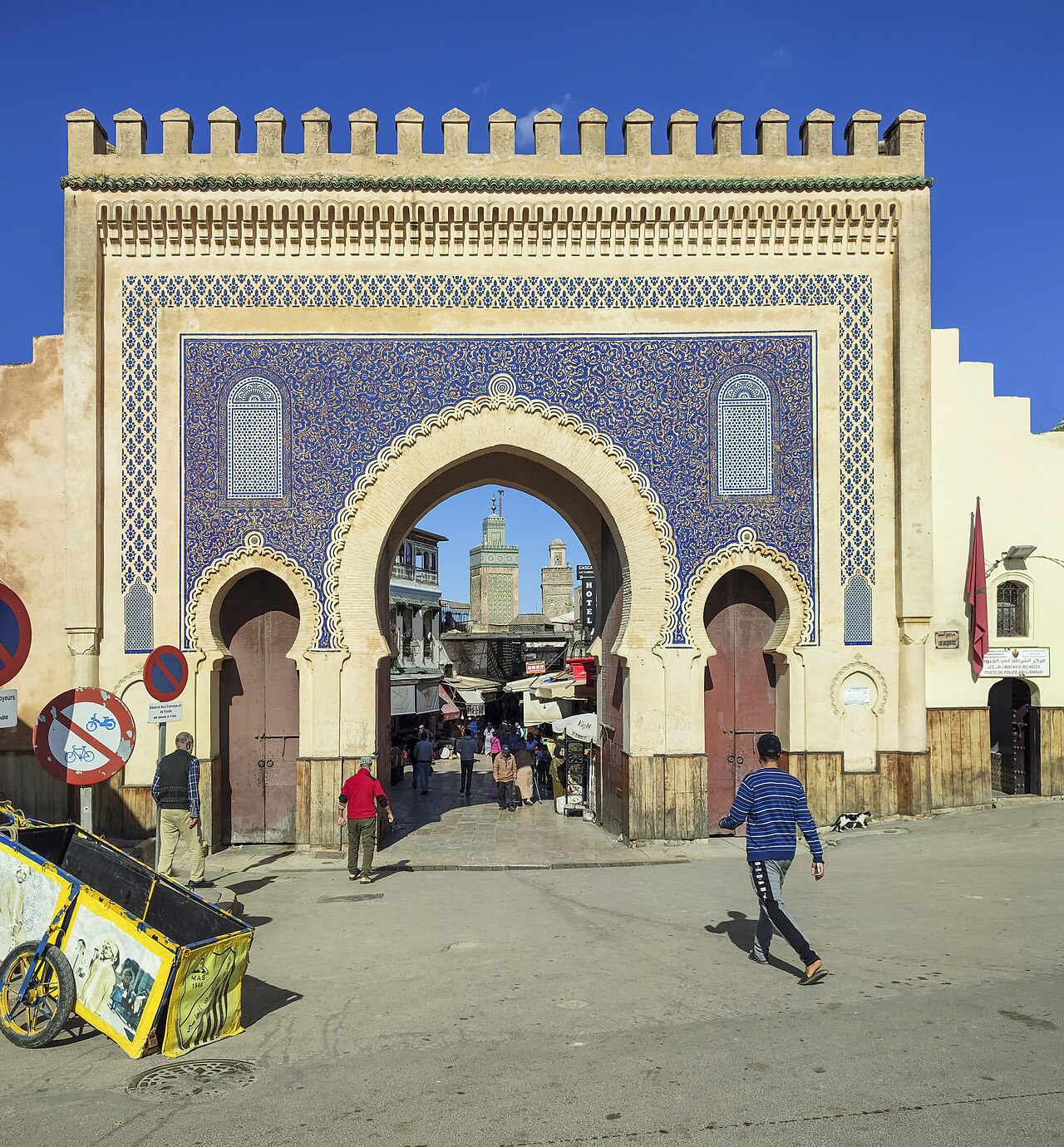
The Andalusian Mosque tells the other half of the story of Fes. While the Qarawiyyin is associated with the families who arrived from Kairouan, this mosque belongs to the Andalusian refugees who came from Spain and settled on the east bank, giving their name to the whole Andalusian quarter. Tradition dates its founding to the year 859, with major expansions and restorations in the twelfth and fourteenth centuries that added the minaret and much of the tilework. The style blends Moroccan and Andalusian influences, with zellige mosaics, carved cedar ceilings, stucco detail and horseshoe arches at the entrance, and an interior courtyard with a central fountain for ablutions. Non-Muslims cannot enter the mosque itself, which is reserved for prayer, but the exterior, the gateway and the lanes around it can be seen freely, and it is an unhurried, uncrowded corner of the medina compared with the main tourist routes.
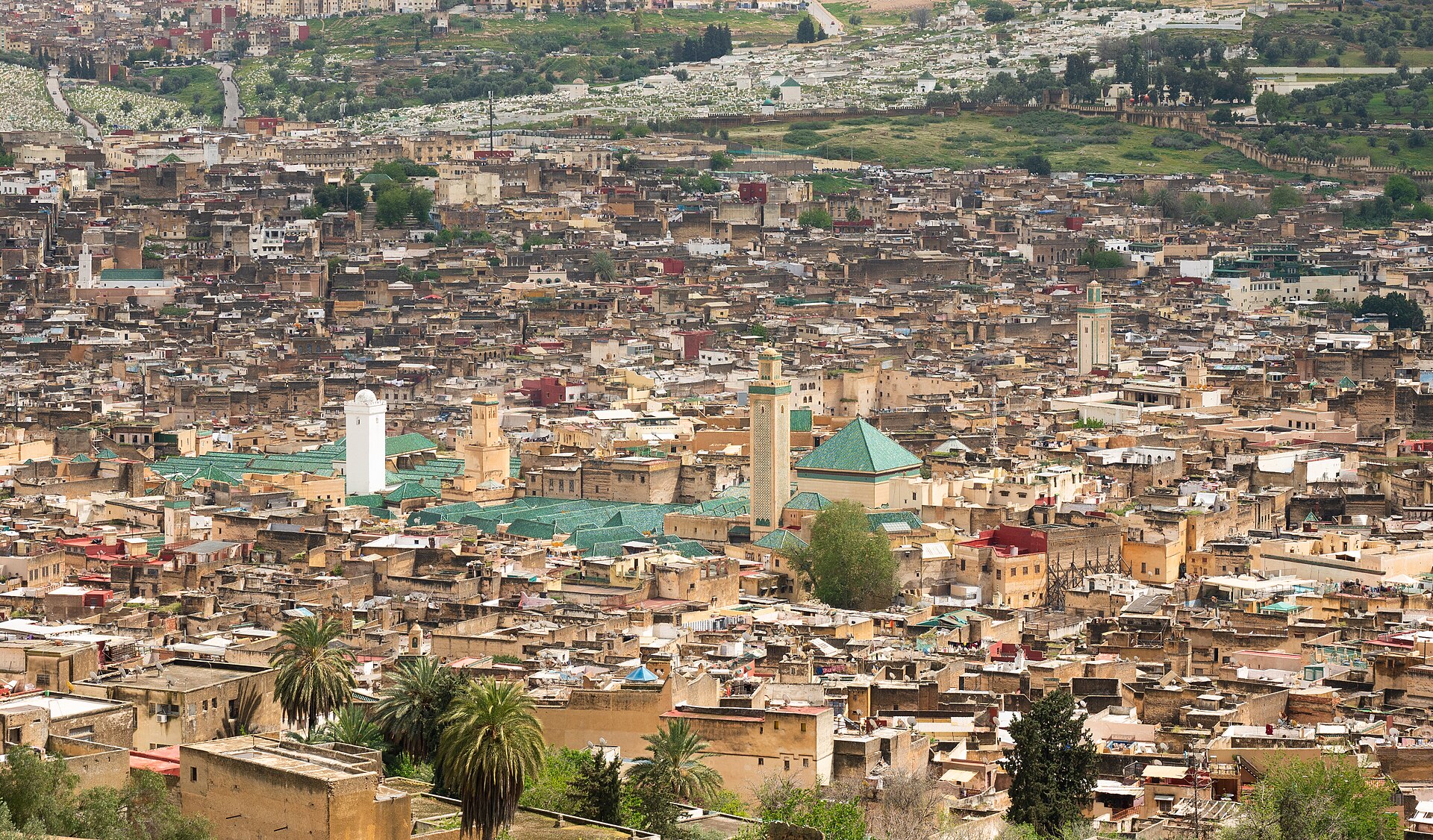
Because the interior is closed to non-Muslims, the value of this stop is the setting and the story. The mosque stands in the eastern part of the medina, near Bab Guissa, in the Andalusian quarter, a district of residential lanes, small workshops and everyday shops rather than souvenir stalls.
Walking it gives you a calmer view of Fes than the central arteries do: ordinary households, small workshops and neighbourhood shops going about their day. The minaret rises above the roofline and is a useful landmark if you are navigating by sight, which in this medina is a real advantage.
Visit early in the morning, when the light on the tilework is best and the lanes are quiet. Dress modestly, covering shoulders and knees, and keep your camera discreet near the entrance, because worshippers come and go and the doorway is not a stage set. During Ramadan the quarter has a different, more devotional atmosphere, with evening gatherings and a rhythm that follows the fast, and visitors should be especially respectful of prayer times.
If you are with a guide, ask them to explain the Andalusian migration into Fes and how the two banks of the Oued Fes grew up as separate settlements before merging into one city.
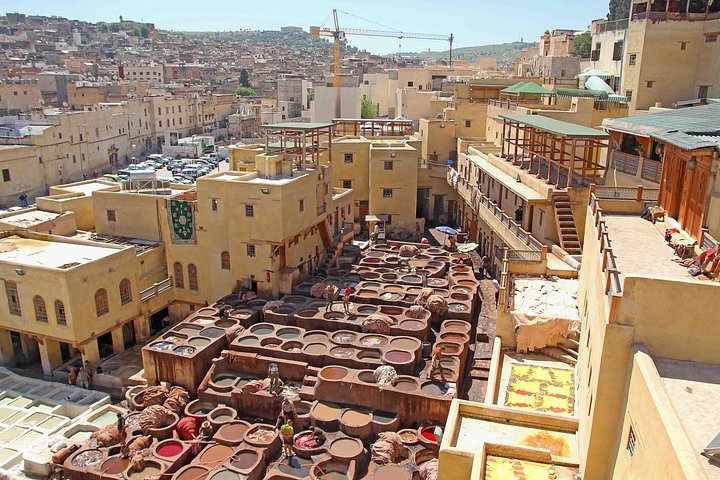
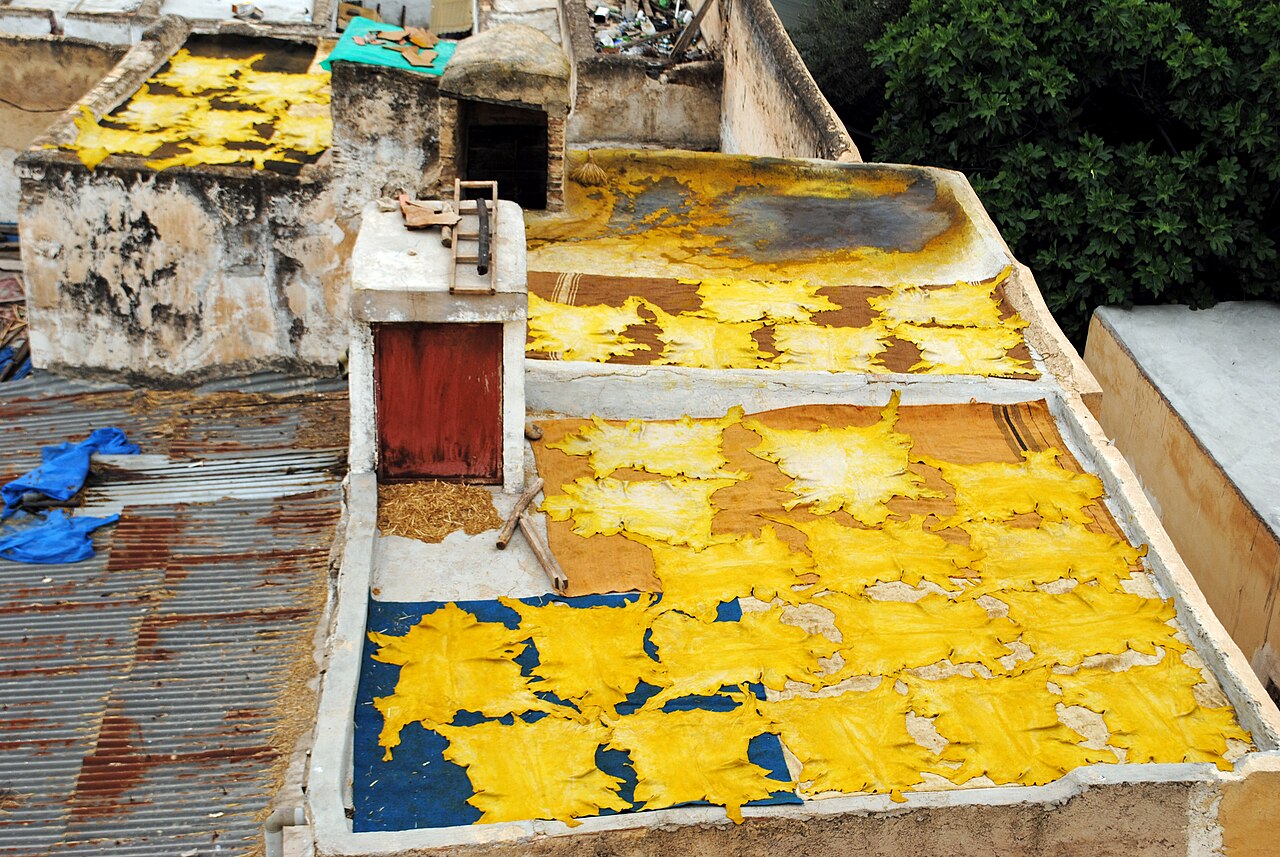
There is no ticket and no paid product to buy, so the visit costs nothing beyond whatever you tip a guide. It fits well into a morning that also includes the Chouara tannery, which lies nearby, and the Bou Inania Madrasa or Nejjarine fountain on the way back toward the centre. Wear sturdy shoes, expect uneven stone underfoot, and give yourself about half an hour at the mosque and the surrounding lanes. For travellers who care about how Fes came to look as it does, this is a modest but genuinely informative stop.
What to expect
The experience
A walk to the exterior of the mosque and through the Andalusian quarter, with a guide or on your own.
Best time
Early morning, for good light on the tilework and quiet lanes.
How long
About half an hour, longer if you wander the surrounding lanes.
Tips
Dress modestly, keep photography discreet near the entrance and respect prayer times.
Quick picks
- Best for
- History lovers who want the Andalusian side of the Fes story away from the main tourist routes.
- Families
- The lanes are quiet, but there is no interior to see, so older children who like history will get most from it.
- Couples
- A calm, atmospheric stop on a slow morning walk between the tannery and Bab Guissa.
- Pair with
- The Chouara tannery, Bou Inania Madrasa and the medina walk all lie within a short walk.
- Time needed
- Thirty minutes is enough, or fit it into a half-day medina route.
Good questions
Can non-Muslims enter the Andalusian Mosque?+
No, the mosque itself is reserved for Muslim worshippers. Visitors can admire the exterior, gateway and minaret from outside.
When was it founded?+
Tradition dates it to 859, with major expansions and restorations in the twelfth and fourteenth centuries.
Where is it in the medina?+
It stands in the eastern part of Fes el-Bali, in the Andalusian quarter near Bab Guissa.
Is there an entry fee?+
There is no ticket, because only the exterior and surrounding lanes can be visited.
Why does it matter?+
It reflects the Andalusian refugees who settled in Fes and helped shape its architecture, crafts and cuisine.