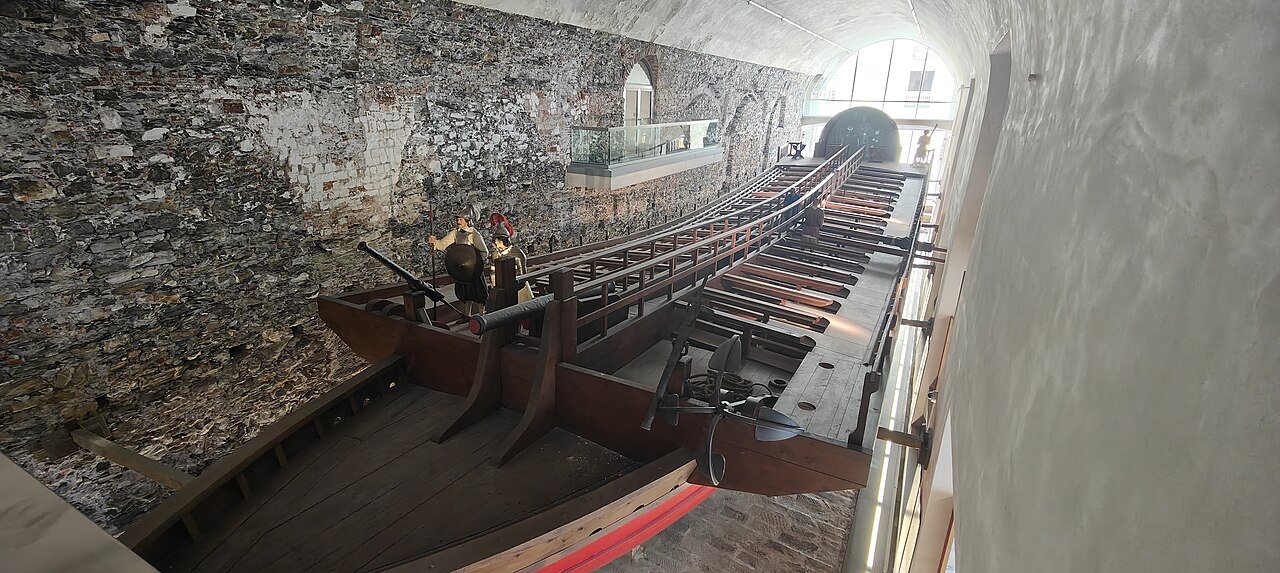
Galata Museo del Mare tells the story of Genoa as a maritime republic, and it does so with surprising energy. The museum occupies a converted seventeenth-century shipyard building on the Darsena, the old harbour basin, and it is regularly described as the largest maritime museum in the Mediterranean. Galleries cover Genoese seafaring from the medieval republic and the great navigators to the age of emigration, when thousands of people left the port for the Americas. Highlights include a full-scale reconstruction of a seventeenth-century galley that visitors can step aboard, a large collection of navigation instruments, maps and paintings, and rooms devoted to Christopher Columbus, who was born in Genoa. Outside, a docked submarine, the Nazario Sauro, can be visited, and offers a rare chance to see the cramped life of a submariner.
The galley is the showpiece. Standing on the deck, with its rowing benches, cannon and rigging, makes it far easier to imagine what life was like in the age of Mediterranean sea power. The details are clear and the setting dramatic, and children tend to love it.
The emigration galleries are the most moving part of the museum. They follow Italian migrants, many of whom left from Genoa, through the voyage, the dormitories and the arrival, with recorded voices and reconstructed spaces. Many visitors with Italian roots find it a powerful experience, and it gives context to the story of the port that goes beyond ships and trade.
The panoramic terrace at the top of the building offers a view across the Porto Antico towards the old town and the hills. It is one of the best free-feeling viewpoints in the area, and on a clear day gives a good overview of how the harbour is arranged, which helps when you set off to explore other sights.
Plan roughly two hours for the museum alone, a little more if you include the submarine. The entrance is on the Porto Antico, a few steps from the aquarium, so the two combine easily for a full waterfront day. Combined tickets are often available, and are worth comparing with single entry if you plan to visit both.
Information is provided in Italian and English, and audio guides are commonly offered. The museum is largely accessible, though some areas of the older building and the submarine are not suitable for visitors with limited mobility. Check opening days before you go, as it is typically closed one day a week. On a hot day, the air-conditioned galleries are a welcome break from the open quays.
Children often remember the submarine most. Climbing through its narrow compartments, past bunks, pipes and torpedo tubes, gives a sense of how little space crews had during long patrols. Adults tend to remember the emigration galleries. Both are good reasons to allow more time than you think, and to arrive with energy. A rooftop terrace and a small cafe make a pleasant stopping point before you step back into the sunshine of the harbour front and decide what to see next.
The museum is also a good first stop for understanding the whole city. The maps, portraits and ship models explain why the republic looked outward, how its banks and fleets worked together and why so many Genoese families settled abroad. Visiting before you walk the old town gives the lanes, palaces and harbour a story to hang on.
What to expect
The experience
A self-guided walk through maritime galleries, a full-size galley and an optional visit to a docked submarine.
Best time
Mornings or rainy afternoons. A good midday break from the heat.
How long
About two hours.
Tips
Allow time for the submarine and the roof terrace, and check the weekly closing day.
Quick picks
- Best for
- Families, history fans and anyone interested in ships.
- Families
- Children enjoy the galley and the submarine.
- Couples
- Rainy-day culture followed by a harbour-side drink.
- Pair with
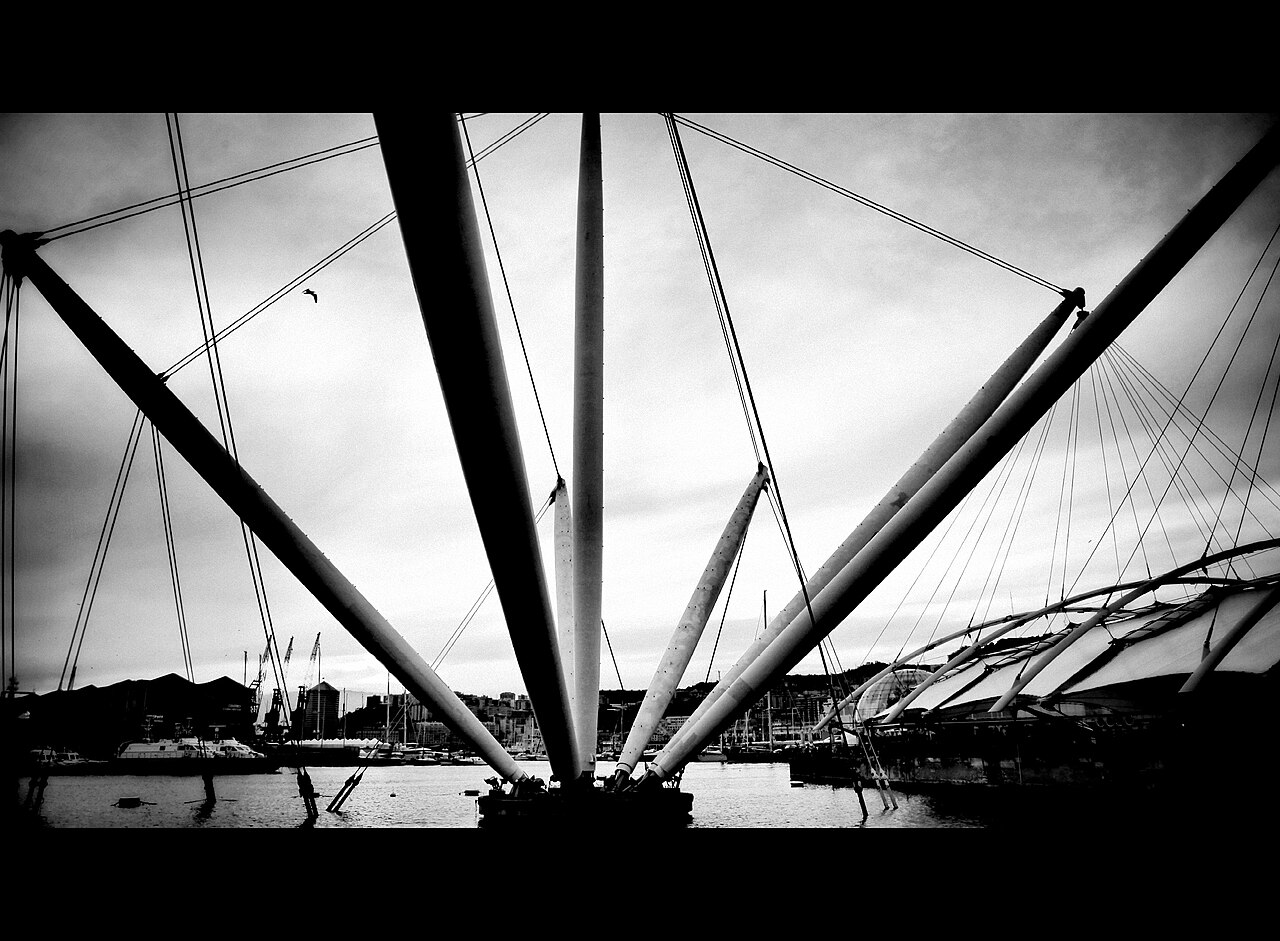
- The aquarium, the Bigo lift and the harbour boat tour.
- Time needed
- Two hours.
Good questions
Who is the museum for?+
Anyone interested in ships, exploration or migration. Children enjoy the galley and submarine.
Can I go inside the submarine?+
Yes, the docked submarine can be visited, though the spaces are tight and unsuitable for some visitors.
Is there a connection to Columbus?+
Yes. Columbus was born in Genoa, and the museum includes galleries about his life and voyages.
How long does it take?+
About two hours for the museum, a little more with the submarine.
Where is it?+
On the Darsena in the Porto Antico, a short walk from the aquarium.