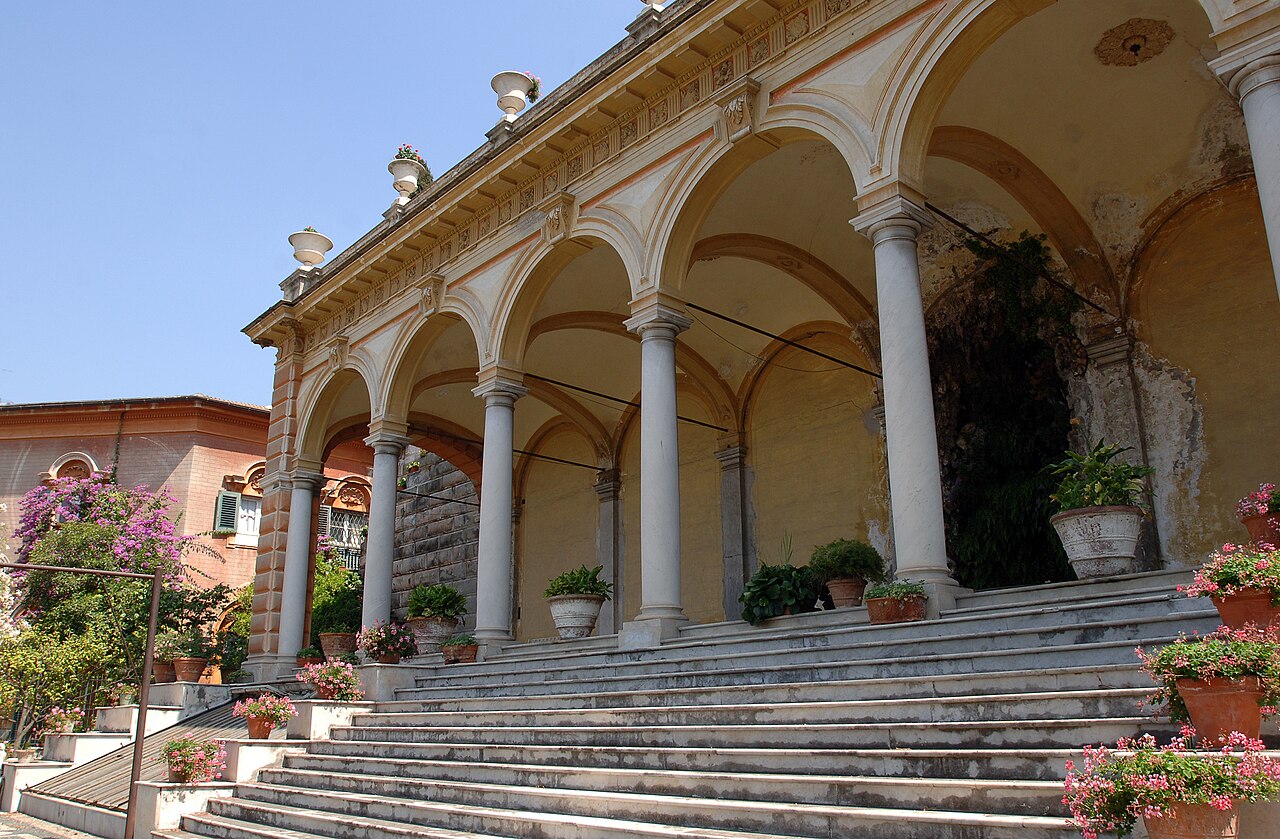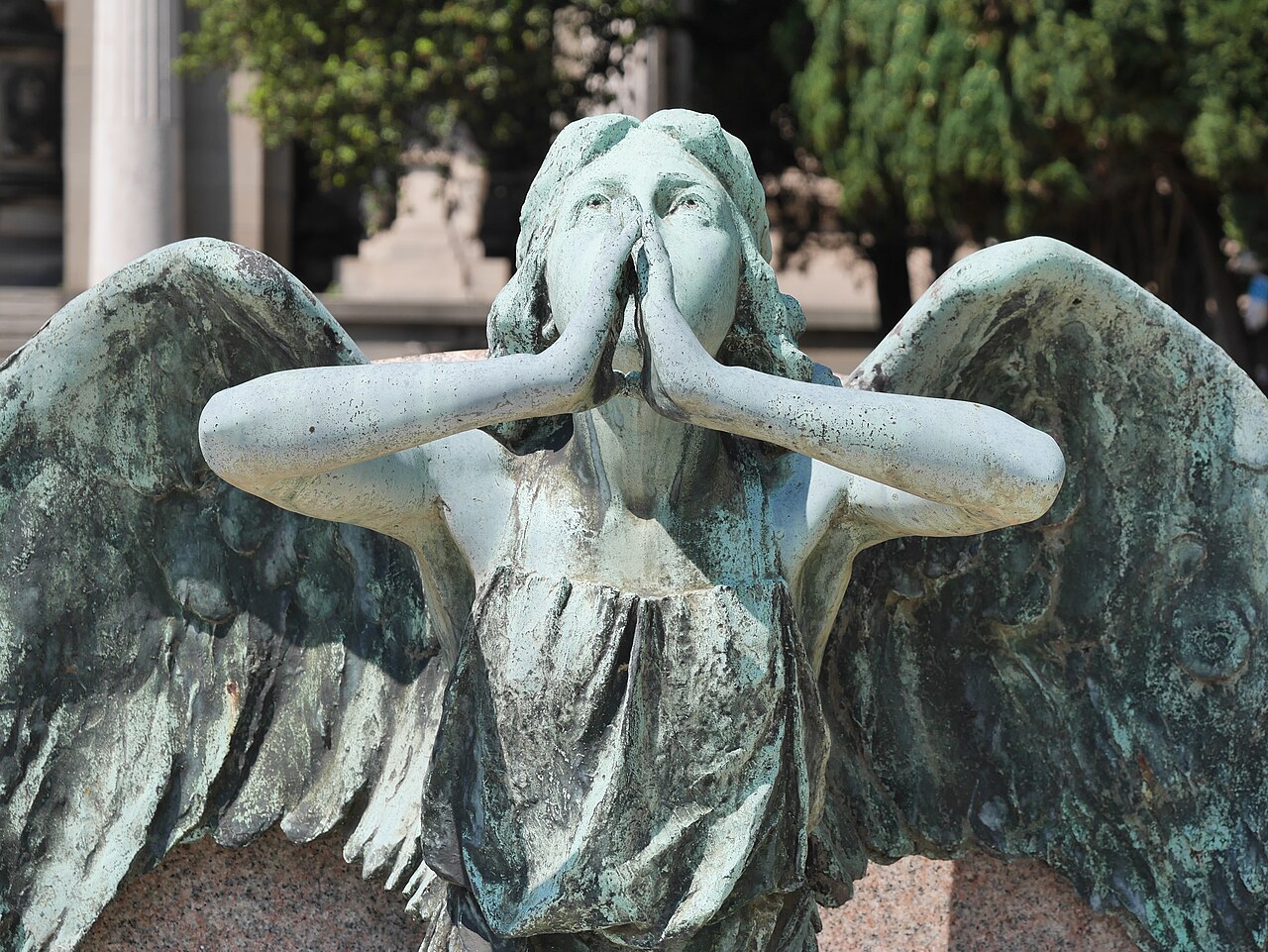
Staglieno does not sound like a tourist sight, but it is one of the most remarkable places in Genoa. Opened in the middle of the nineteenth century on the hillside of the Bisagno valley, the cemetery was planned as a monumental landscape, with long arcades, a grand neoclassical chapel and terraces climbing up the slope. The Genoese bourgeoisie, prosperous from trade, competed to commission the most impressive tombs, and sculptors responded with an extraordinary outpouring of realistic marble figures. Wander the galleries and you will find mourners in lifelike clothing, scenes of family life, angels, allegories and portraits so detailed that the lace and fabric appear soft. It was famous throughout Europe in the nineteenth century, and writers and travellers made the trip to see it. Today it remains a place of quiet reflection and of striking beauty.
The most famous sculpture is the tomb of a nut seller, Caterina Campodonico, shown holding her gold-coin necklace. It is often cited as a symbol of Staglieno, because it honours an ordinary working woman rather than a noble family. Elsewhere, Giuseppe Mazzini, the patriot of the Risorgimento, has a simple monument, and the cemetery contains the graves of notable foreign residents, including the wife of Oscar Wilde.
The scale is large, so choose your route. The main arcades near the entrance hold the most dramatic monuments and can be seen in an hour. A grand staircase leads to the Pantheon-like chapel on the hill, and from the upper terraces you get views over the valley. Allow longer if you want to explore the higher terraces and the quieter areas.
Staglieno is a working cemetery, and visitors are expected to behave accordingly. Dress modestly, speak quietly, and avoid photographing mourners or funerals. Photography of monuments is generally permitted for personal use, but check signs on arrival. Opening hours are limited, and the site closes in the afternoon, so aim for a morning visit.
The cemetery lies a few kilometres north-east of the centre. Staglieno has its own railway stop on the local line, and buses run from the city centre. A taxi is easy and not expensive for a short ride. Allow time for the journey and avoid combining it with an overly tight schedule.
For many travellers, this is the unexpected highlight of the trip. If you enjoy sculpture, history or atmospheric places, plan for it. If you are travelling with young children, consider whether the setting suits them, though many families find the statues engaging. Pair it with a visit to the historic centre in the afternoon to balance the mood.
Bring a camera with a steady hand, because the light inside the arcades is soft and the white marble reflects colour from the sky. Some visitors choose to hire a local guide who explains the stories behind particular tombs, from merchants and sailors to widows and children. Even without a guide, pause at the sculptures that catch your eye and read the inscriptions, because the lives behind them often reflect the city's rise and its social changes over the nineteenth and twentieth centuries.
Plan the journey so that you are not rushed. A slow circuit of the main arcades, a pause at the Campodonico statue and a climb to the upper terraces fills a satisfying morning, and the contrast with the busy harbour you left behind makes the day feel richer. Bring a light jacket in cooler months, because the arcades are shaded and can feel chilly.
What to expect
The experience
A free self-guided walk through monumental arcades and terraces filled with nineteenth-century marble sculpture.
Best time
Mornings, as the cemetery closes in the afternoon.
How long
One to two hours.
Tips
Dress modestly, keep voices low and check opening hours before you travel.
Quick picks
- Best for
- Sculpture and history lovers looking for something beyond the usual sights.
- Families
- Older children may be fascinated; consider the setting for very young ones.
- Couples
- A quiet, contemplative outing for couples.
- Pair with
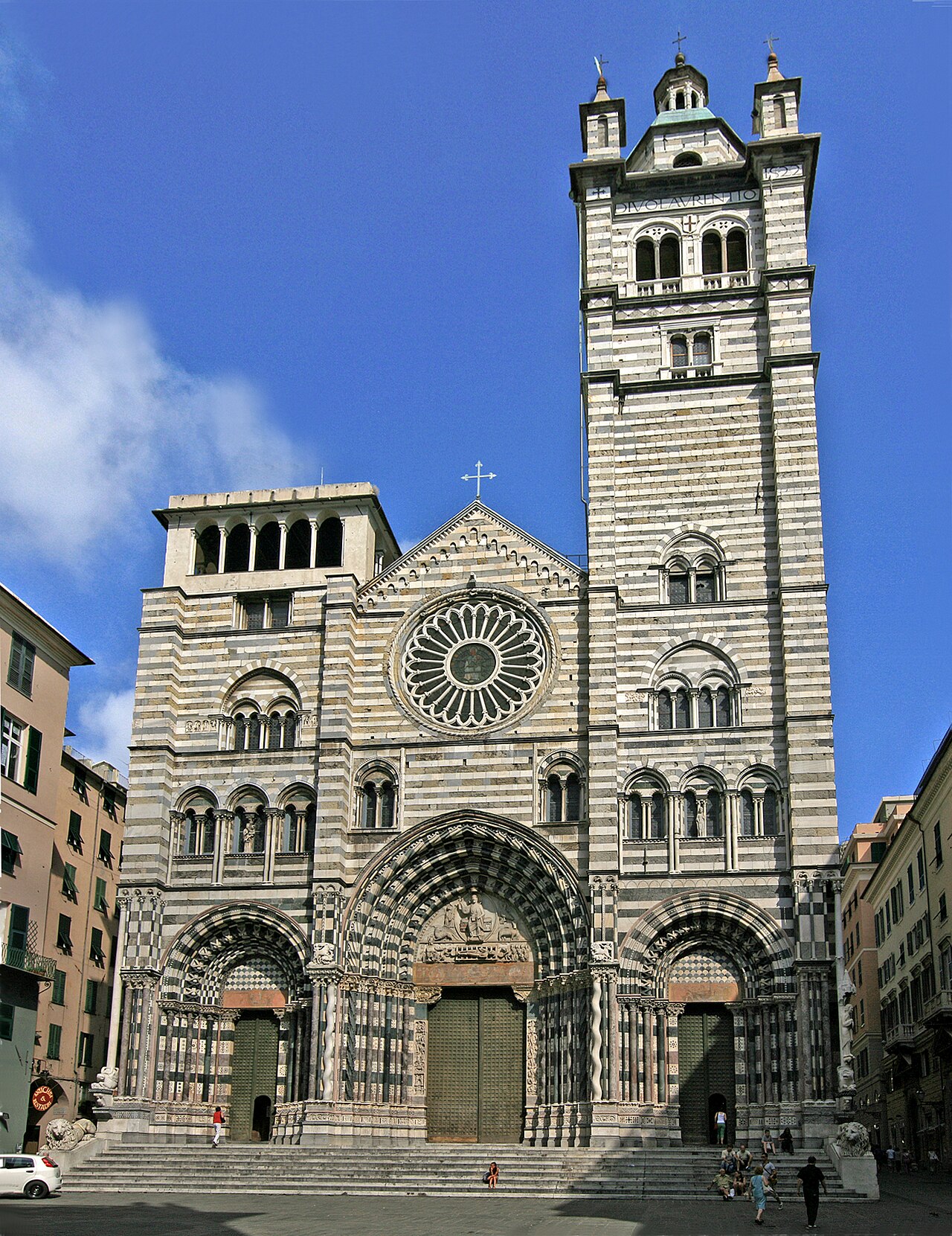
- Back in the old town for lunch and the cathedral.
- Time needed
- One to two hours plus travel.
Good questions
Is Staglieno free?+
Yes, entry is free.
Who is buried there?+
Notable figures include the patriot Giuseppe Mazzini and many wealthy Genoese families, as well as foreign residents.
How do I get there?+
By local train to Staglieno station, by bus from the centre or by taxi.
Can I take photographs?+
Photography of monuments is usually allowed for personal use, but be respectful and avoid photographing mourners.
What are the opening hours?+
It generally closes in the afternoon, so plan a morning visit and check before travelling.