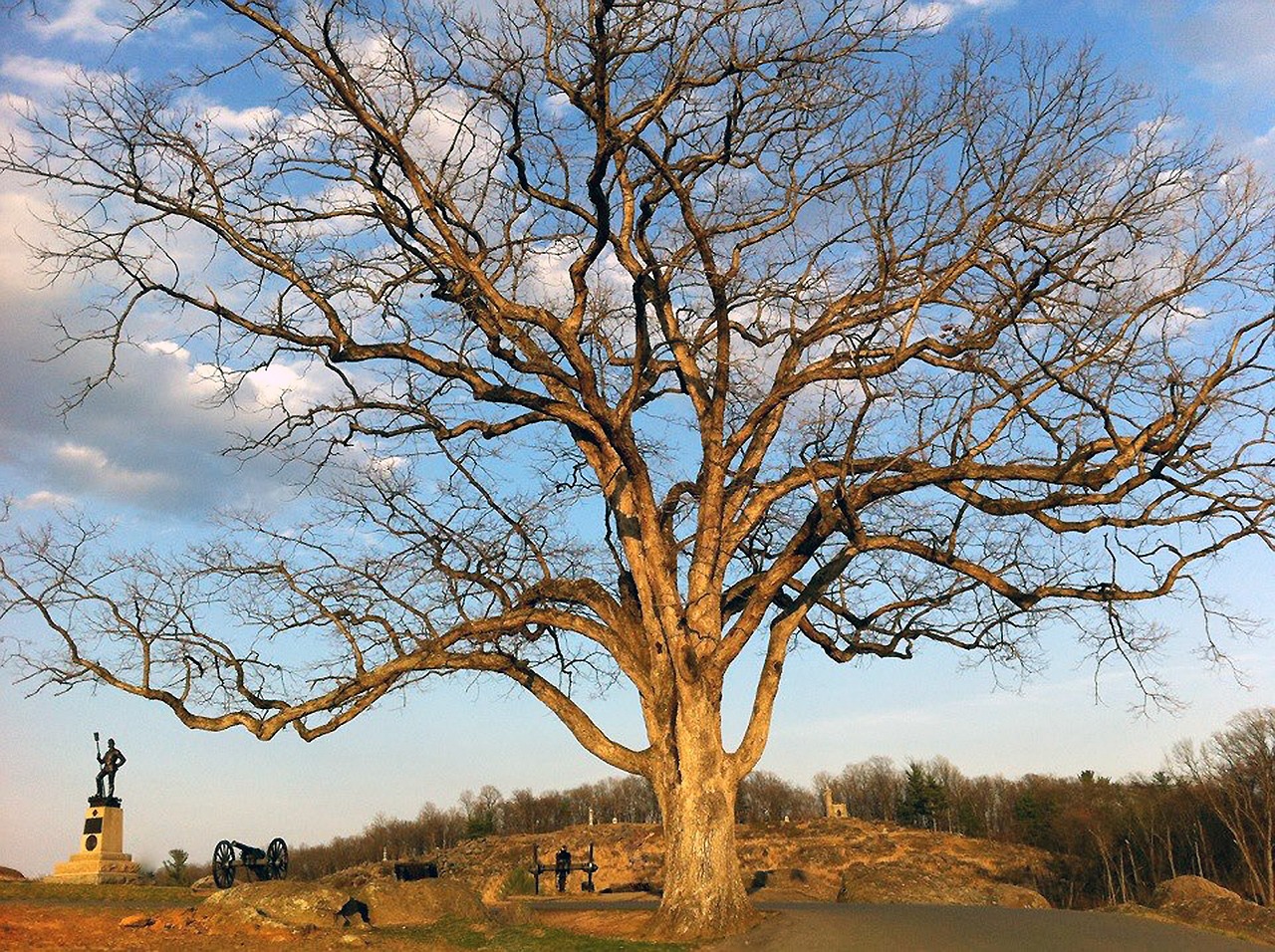
Many first-time visitors to Gettysburg arrive with a general sense that something important happened here, and then feel overwhelmed by the scale. The park covers roughly six thousand acres and holds well over a thousand monuments and markers. Without a plan, the battlefield can feel like a collection of statues. With a little structure, it becomes a story.
Start with the shape of the battle
The fighting took place over three days, July 1 to July 3, 1863. On the first day, Confederate forces drove Union troops back through the town. On the second, they attacked the Union flanks at Little Round Top, Devil's Den, the Wheatfield and the Peach Orchard, while the Union held a strong line on the ridges. On the third, after fighting on Culp Hill, the Confederates attempted the assault known as Pickett's Charge against the Union center on Cemetery Ridge. It failed, and the Confederate army began its retreat. Keeping that three-day outline in mind will make every stop easier to understand.
Choose your method
There are three good ways to see the field. A licensed guide on a bus tour provides narration, context and the chance to ask questions. A self-guided audio driving tour offers flexibility and a lower cost. A printed or downloaded park map suits readers who want to go slowly. Many visitors combine two methods, for example a bus tour in the morning and a return visit on foot in the afternoon. Whichever you choose, the Museum and Visitor Center is the best place to begin, because the film and Cyclorama frame the battle.
The stops that matter most
Seminary Ridge and the ridges west of town show the first day. Little Round Top and Devil's Den show the second. The Wheatfield and Peach Orchard, which changed hands many times, show how confusing and costly the fighting was. Culp Hill shows the struggle on the Union right. Cemetery Ridge and the area near the Copse of Trees show the high-water mark of the Confederate attack. The National Cemetery closes the story with Lincoln's Address and the burial of the dead.
Timing and comfort
Early morning is the best time for photographs and parking, and the late afternoon light is lovely on the monuments. Midday in July and August can be hot with little shade. Bring water, sun protection and sturdy shoes, since several stops involve walking on uneven ground. Rain is common in spring and autumn, so pack a light jacket. Mobile coverage can be unreliable, so download maps and audio before you go.
Respect and etiquette
The battlefield is a memorial. Stay off monuments and cannon, keep to paths where signs request it, and do not remove objects from the ground. Keep voices low at the cemetery and at places where many men died. Drone use, metal detecting and collecting are restricted in national parks.
Go deeper
If you want more, consider a longer private tour with a licensed guide, though many visitors find that a group bus tour covers the essentials. Read a short history before you travel, or listen to an audiobook on the drive. Visit the Seminary Ridge Museum for the first day, and the David Wills House for Lincoln. Try to see at least one stop at sunrise or sunset, when the fields are quiet and the light is gentle.
Sample half-day plan
Begin at the Museum and Visitor Center when it opens, take the film and the Cyclorama, and then board a guided bus tour or start the audio drive. Stop at Little Round Top for the views, walk the boulders at Devil's Den, and finish at the National Cemetery. Have lunch in town, then return in the late afternoon to the stop that most intrigued you. This plan covers the essentials in about six hours, with time to rest, and it leaves the evening free for a walking tour or dinner.
Common mistakes
The most frequent mistake is trying to see every monument. Another is skipping the museum and arriving at the field without any background. A third is underestimating the heat and the distances in summer. A fourth is expecting to find a single battle site; Gettysburg is a series of linked fights spread over miles. Avoid these errors and you will enjoy the park more. Finally, remember that the park is a living landscape with farms, roads and neighbours, so drive carefully and obey speed limits, especially near stops where visitors cross the road.
A closing thought
A battlefield visit can be physically easy and emotionally heavy. Build in breaks, take time at the places that affect you, and do not feel obliged to see everything. A few well-understood stops are worth more than a rushed tour of fifty.