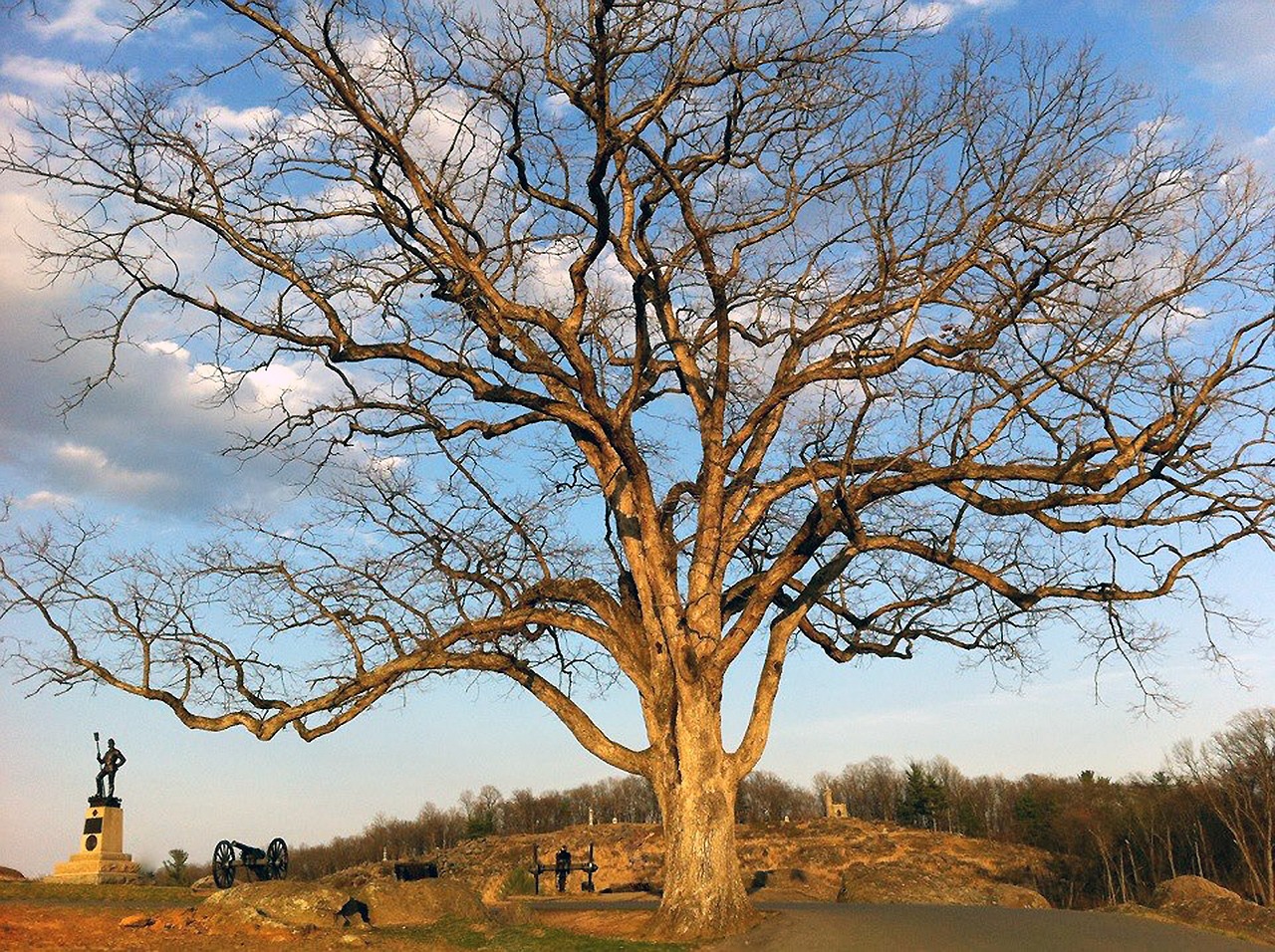
Gettysburg rewards a visitor who plans the order of things. The battle lasted three days, and a three-day visit lets you follow it in a similar rhythm: first an orientation, then the fighting itself, then the town and the people who lived through it. This itinerary assumes you have a car, because the battlefield covers thousands of acres, and it leaves room for meals, breaks and the evening activities that give Gettysburg its particular atmosphere.
Day one: orientation and the first day of the battle
Start at the Museum and Visitor Center on Baltimore Pike. Book timed tickets for the film, the museum galleries and the Cyclorama ahead of time, since summer and October fill up. The film sets the stakes, the galleries supply the details and the Cyclorama gives you the climax of the battle in a single sweeping painting. Allow two to three hours and have lunch at the cafe or in town. In the afternoon, visit Seminary Ridge Museum, where the cupola and the restored rooms tell the story of the opening fight and the field hospital that followed. Finish the day with a stroll around Lincoln Square and a relaxed dinner, and consider the Lincoln evening walking tour if you still have energy.
Day two: the battlefield
Spend the morning on the field itself. If you like narration and company, take the two-hour guided bus tour with a licensed guide; if you prefer to move at your own pace, use the self-guided audio driving tour. Either way, plan to stop at Little Round Top, where the 20th Maine held the Union left, and at Devil's Den, where the boulders and the valley below show how the terrain shaped the second day. After lunch, return to the places that moved you most, or take the Culp Hill carriage ride for a quieter look at the Union right. In the late afternoon, walk through the National Cemetery, where Lincoln delivered the Gettysburg Address, and read the speech on the spot. The hill is at its best in the soft light before sunset.
Day three: the town, the civilians and the wider story
Begin with the one-hour civilian experience walking tour, which brings the streets and houses of Gettysburg to life. Visit the David Wills House, where Lincoln spent the night before the Address, and the Jennie Wade House, which tells the story of the only civilian killed during the battle. For the afternoon, choose between the Eisenhower National Historic Site, reached by shuttle from the Visitor Center, and a lighter option such as the heritage train ride or the downtown food tour. Families with children may prefer the train; couples may prefer the food tour. In the evening, join one of the lantern-lit ghost tours, which combine the town's real history with its folklore.
Pacing and practicalities
Do the museum before the battlefield, and the battlefield before the ghost tours, because each experience prepares you for the next. Keep afternoons flexible, since summer heat and crowds can make midday sightseeing tiring. Bring water, a hat and comfortable shoes. Check opening hours and ticketing for every site, as schedules change with the seasons and some attractions run reduced hours in winter. Book the museum, any guided tours and the evening programs early if you are visiting in July or October.
If you only have two days
Combine day one and day two: the museum in the morning, a guided bus tour after lunch, and the cemetery at sunset. Drop the Eisenhower farm and the carriage ride, and keep one evening for a ghost walk. If you have more time. Add a day trip to the Catoctin Mountains, a longer visit to the Seminary Ridge Museum or a relaxed afternoon in the orchards and countryside of Adams County.
Eating and resting
Gettysburg is a compact town with a good range of casual restaurants, taverns and cafes around Lincoln Square and along Baltimore and Chambersburg streets. Lunch near the Visitor Center is convenient on day one, while dinners in the center fit naturally with evening tours. Build in a late-afternoon break at your hotel, because three days of walking, driving and absorbing hard history is more tiring than it looks. A simple routine works well: a substantial breakfast, one big morning activity, a relaxed lunch, a lighter afternoon and an evening that ends early or late depending on whether you are joining a tour.
Booking order
If you reserve only a few things in advance, make them the museum tickets for day one, the guided bus tour on day two and the evening program you care most about. Everything else can be arranged closer to the date, and midweek visits are generally easy. If the weather turns, swap the days: the museum and the Seminary Ridge Museum make strong rainy-day plans, and the battlefield can wait until the sky clears. Flexibility is the quiet secret of a good Gettysburg trip, and it costs nothing to build in.
The best advice for any length of stay is to leave room for reflection. Gettysburg is a place of loss as well as history, and the quiet moments, on Cemetery Ridge, at the cemetery or on the porch of an inn after dinner, are often the ones visitors remember. A three-day plan gives you enough time to see the highlights and to let them settle.