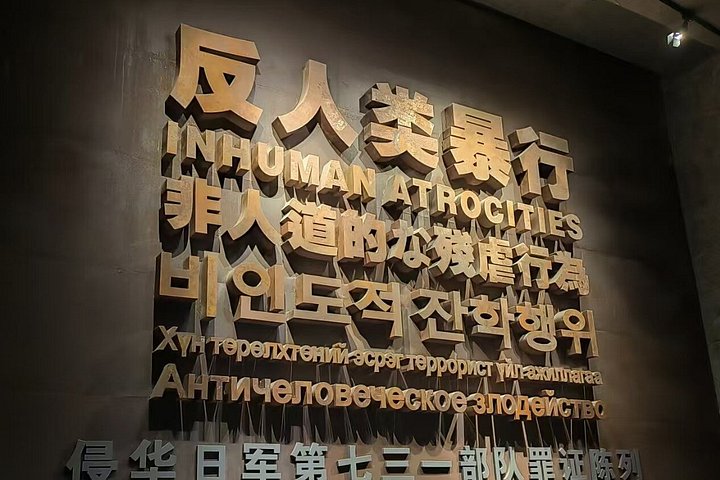
The museum at Pingfang, on the southern edge of Harbin, preserves the remains of the headquarters of Unit 731, a secret Japanese army research unit that carried out human experimentation and developed biological weapons in northeast China before and during the Second World War. Thousands of prisoners, most of them Chinese but also including Russians, Koreans and others, were killed in the unit's laboratories and prisons, and biological attacks were launched against Chinese towns and villages. When the war ended the Japanese army destroyed much of the complex, but surviving foundations, boiler rooms, a power plant chimney, laboratory ruins and a section of the original prison block remain on a large site. A modern exhibition hall presents documents, photographs, models and testimony from the survivors, researchers and families, and an outdoor area allows visitors to walk among the ruins. The museum is not a conventional tourist attraction. It is a place for quiet reflection, and many visitors describe the experience as moving and sobering. Those who go are usually interested in modern history, the Second World War in Asia and the ethics of science and war.
How to visit
The museum is in the Pingfang district, a drive of roughly forty minutes to an hour from the city centre depending on traffic, and the easiest way to go is by taxi, ride-hailing or a pre-arranged car. The linked product is a museum admission ticket, so check what it covers and how entry is arranged when you book. In general, visitors should expect security checks, a reservation system and identity checks at the gate, and the museum has closing days, so confirm the current rules before you travel and carry your passport.
Exhibits are in Chinese with English translations in many areas, and audio guides or a guide can add context. Allow two to three hours, since the exhibition hall and the outdoor ruins both deserve time. The material is disturbing, and the museum is not suitable for young children; older teenagers and adults should be prepared for graphic content. Behave respectfully: keep voices low, avoid joking or posing for casual photographs, and follow the posted rules about cameras in certain halls.
Many visitors pair the trip with a quiet meal afterwards rather than another sightseeing stop. It helps to prepare mentally and practically before you go. Read a short, reliable summary of the history beforehand so that the exhibits make sense, since the museum assumes some background knowledge and the displays can be dense. Wear comfortable shoes, because the outdoor site is large and uneven in places, and bring a light rain jacket or warm layers depending on the season, since you will spend a good part of the visit outside.
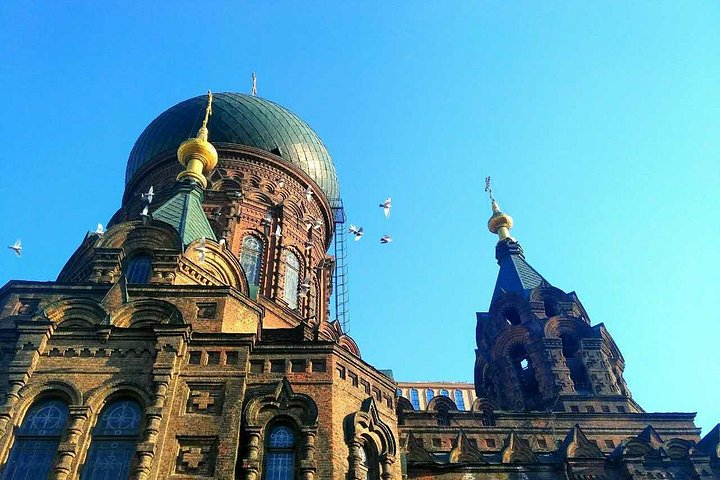
Water and snacks are limited near the site, so eat before you go. Visitors from many countries come here, including Japanese groups who travel specifically to learn about the wartime record, and the atmosphere is quiet and respectful. If the visit leaves you feeling heavy, the city offers gentle places to reset afterwards, such as a riverside walk or a quiet cafe near Saint Sophia Cathedral. Consider allowing a free evening rather than a packed schedule on the same day.
What to expect
The experience
An exhibition hall and an outdoor ruins site documenting the wartime Unit 731 complex, with documents, models and testimony.
Best time
Morning, when the site is quieter and you have time to take it all in. Check closing days first.
How long
Two to three hours, plus about an hour each way from the centre.
Tips
Carry your passport, confirm the entry rules in advance and allow time to reflect afterwards.
Quick picks
- Best for
- Visitors with a serious interest in modern history and the Second World War in Asia.
- Families
- Not suitable for young children because of the graphic and distressing material.
- Couples
- Not a romantic outing; couples who share an interest in history may find it thought-provoking.
- Pair with
- A quiet meal or a visit to Saint Sophia Cathedral and its history exhibition.
- Time needed
- Half a day with travel.
Good questions
What is the Unit 731 museum?+
It is a museum and memorial on the site of a wartime Japanese army research unit that carried out human experiments and biological weapons work. It stands in Pingfang, south of central Harbin.
How do I get there?+
Taxi, ride-hailing or a pre-arranged car is the simplest option. The journey takes roughly forty minutes to an hour from the centre, depending on traffic.
Do I need to reserve or bring identification?+
Rules change, so check before you travel. Expect to show identification at the gate and possibly to use a reservation system. Carry your passport.
Is it suitable for children?+
It is not recommended for young children. The material is graphic and distressing, and older teenagers and adults should be prepared.
How long should I allow?+
Plan two to three hours for the exhibition hall and the outdoor ruins, plus travel time each way.