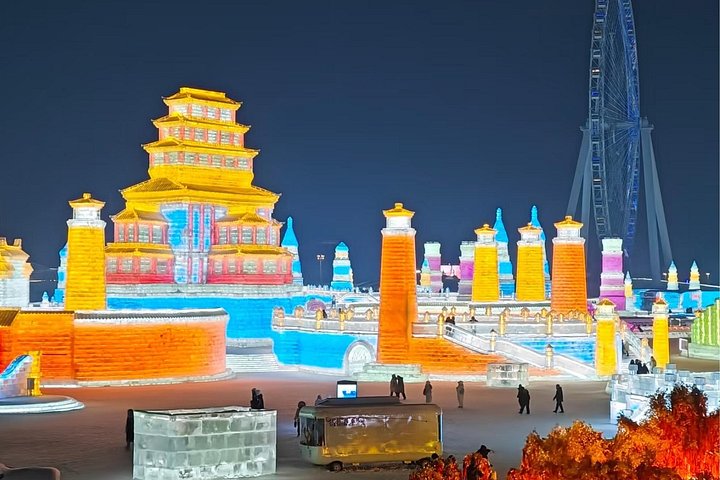
Harbin Ice and Snow World
Harbin Ice and Snow World is a winter city built from river ice and packed snow, with towers, castles and slides glowing in colour after dark. Dress for deep cold and go as the lights come on.
China
Harbin is the ice capital of China and the great Russian-flavoured city of the far northeast, a Songhua River metropolis that began as a railway town in 1898 and still wears its domes, cobbled avenues and bakeries with pride.
In winter it builds an entire city from river ice, carves monumental snow sculptures on Sun Island, lights lanterns in Zhaolin Park and turns the frozen river into a playground. In every season it offers Saint Sophia Cathedral and Central Street, Jewish and temple heritage, the serious memory of the Unit 731 museum, hearty northeastern dumplings and hot pot, and Harbin lager from one of the oldest breweries in the country. This guide books the city properly: 20 sights and day trips to ski slopes, snow villages, hot springs, tigers and cranes, 8 hotels and 6 travel guides.
Harbin Ice and Snow World
Harbin Ice and Snow World is a winter city built from river ice and packed snow, with towers, castles and slides glowing in colour after dark. Dress for deep cold and go as the lights come on.
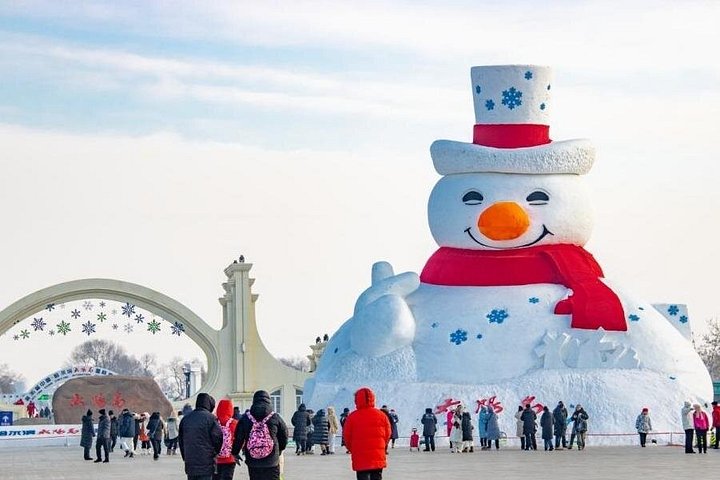
Sun Island Snow Sculpture Expo
Sun Island is the daytime counterpart to the glowing Ice and Snow World, a park of monumental snow sculptures carved by teams from around the world. It makes the best first stop of a winter day.
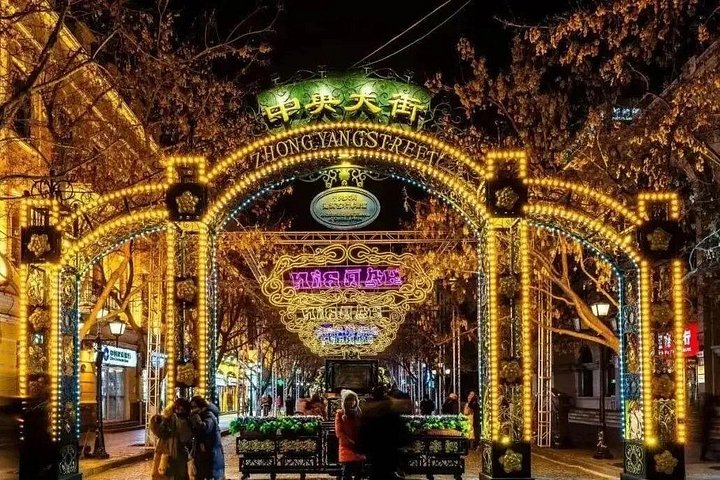
Zhongyang Street and the Baroque Quarter
Zhongyang Street is Harbin's pedestrian spine, a long cobbled promenade lined with European-style facades, cafes and street food. The old Baroque quarter nearby adds Russian-era courtyards and arches.
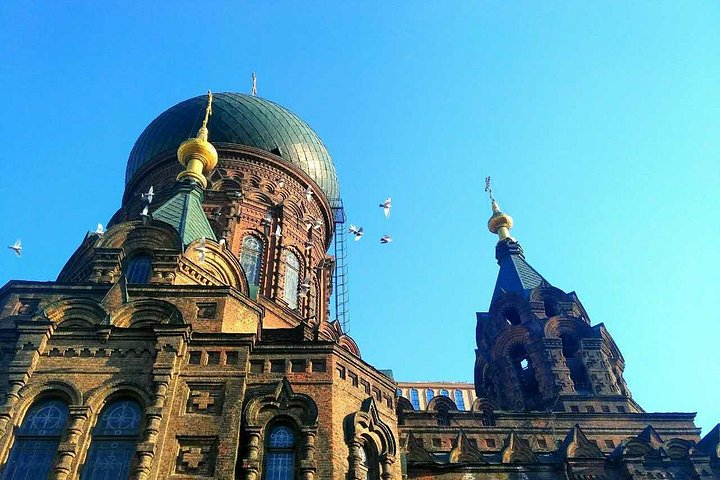
Saint Sophia Cathedral
Saint Sophia Cathedral is Harbin's best-loved landmark, a Russian Byzantine-style church with a green dome and red brick walls. It now serves as a gallery of the city's architecture and history.
Hand-picked: every experience here has strong traveler reviews and a verified booking link.
Harbin Ice and Snow World is a winter city built from river ice and packed snow, with towers, castles and slides glowing in colour after dark. Dress for deep cold and go as the lights come on.
Sun Island is the daytime counterpart to the glowing Ice and Snow World, a park of monumental snow sculptures carved by teams from around the world. It makes the best first stop of a winter day.
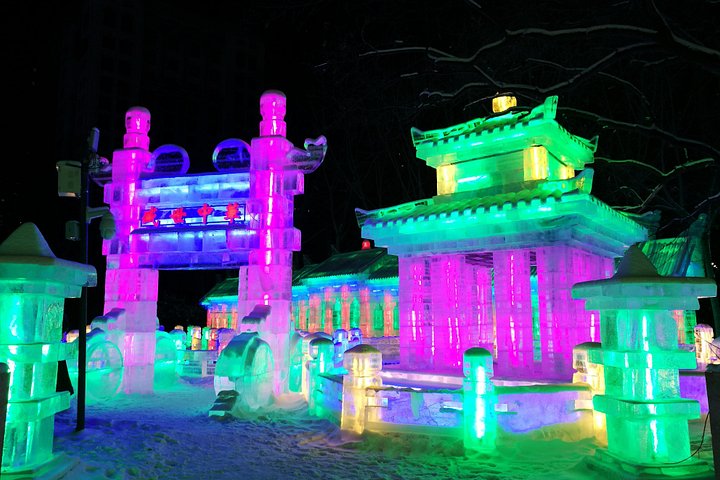
Zhaolin Park is where Harbin's ice lantern tradition began, and a winter visit pairs glowing carved ice with an easy walk to Central Street. A compact, central alternative to the big ice park.
Zhongyang Street is Harbin's pedestrian spine, a long cobbled promenade lined with European-style facades, cafes and street food. The old Baroque quarter nearby adds Russian-era courtyards and arches.
Saint Sophia Cathedral is Harbin's best-loved landmark, a Russian Byzantine-style church with a green dome and red brick walls. It now serves as a gallery of the city's architecture and history.
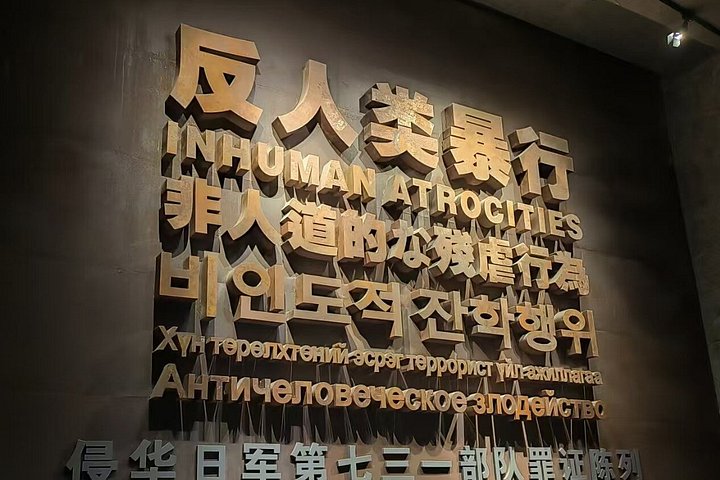
The Unit 731 museum stands on the site of the Japanese army's wartime biological warfare headquarters in Pingfang. It is a sober, serious place of memory and one of the most significant history sites in northeast China.
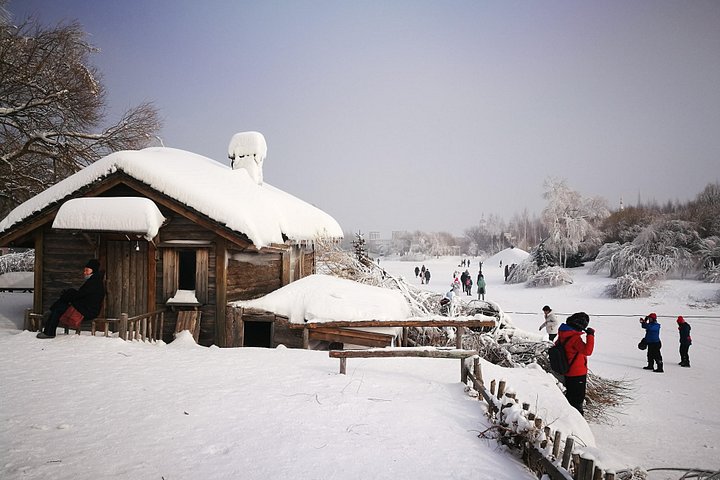
Volga Manor is a Russian-themed park on the edge of Harbin, with replica churches, gardens, folk shows and hearty food. A relaxed way to feel the Russian side of the city's heritage.
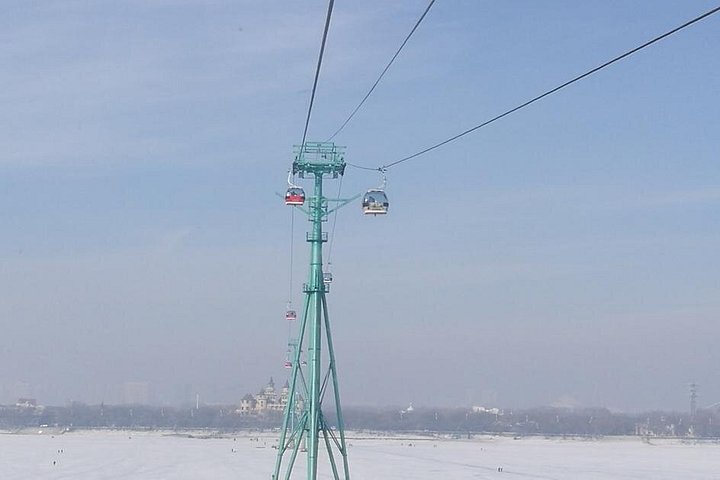
A ropeway ride over the frozen Songhua River gives a bird's-eye view of the ice, and the winter swimming show adds an only-in-Harbin spectacle. A compact city day with a view.
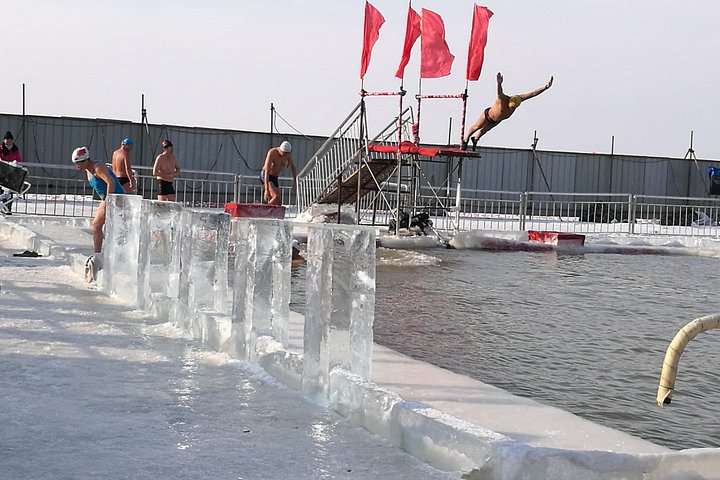
In deep winter the Songhua River becomes Harbin's playground, with sleds, ice bikes and horse-drawn sleighs on a surface thick enough to carry traffic. A short guided outing puts you right on the ice.
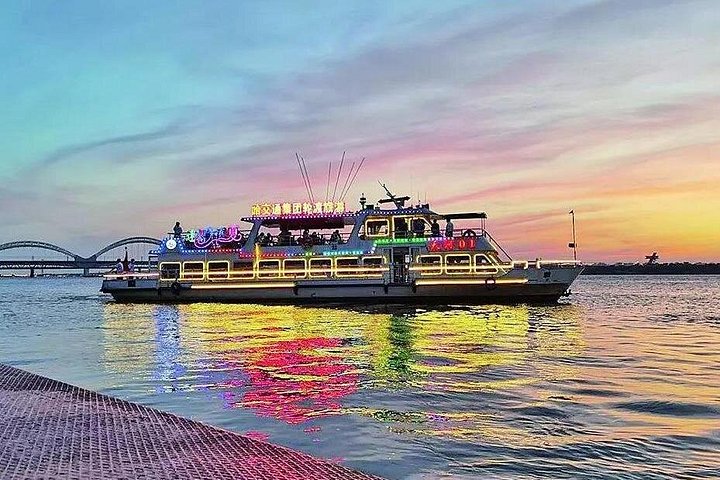
In the warm months the Songhua River turns from ice plain to open water, and a boat trip with local food shows Harbin from the river. A gentle way to enjoy summer evenings.
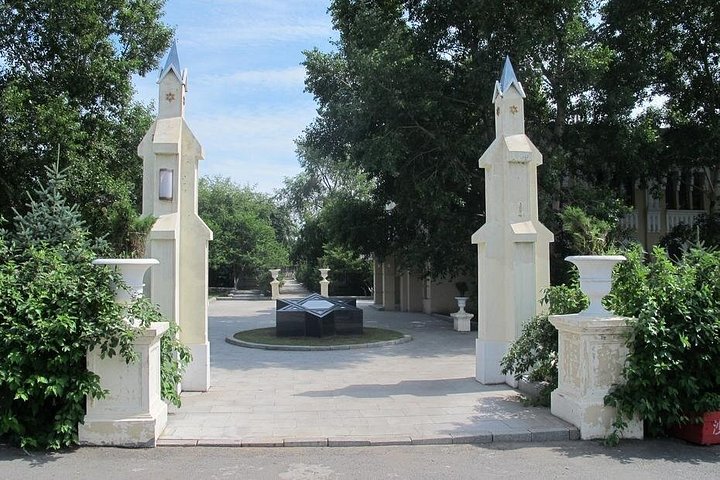
Early twentieth-century Harbin was home to a thriving Jewish community, and its synagogues, streets and cemetery tell a lesser-known chapter of the city. A private day tour connects the sites with the stories.
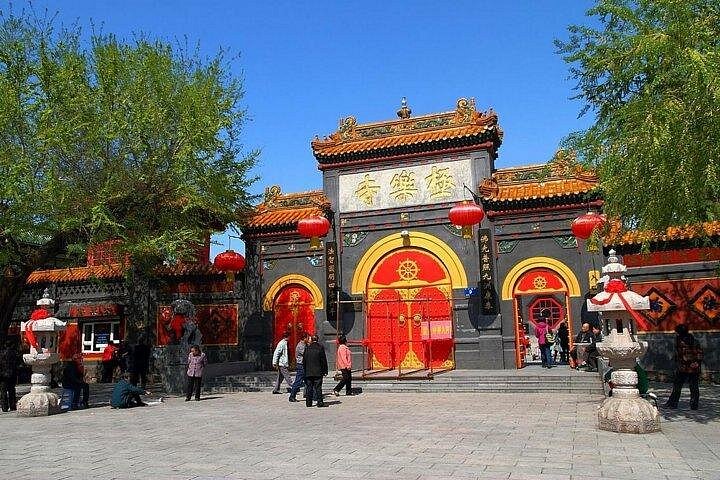
Harbin's Confucian Temple and Jile Temple offer a calmer, traditional Chinese counterpoint to the city's Russian streets. Red walls, carved eaves, incense and a seven-storey pagoda reward a half-day visit.
Hotels we would book ourselves, from splurges to good-value bases.
Daoli District
A full-service international-brand hotel on the Daoli side of the Songhua River, a comfortable base for Central Street, Sophia Cathedral and the riverfront.
Check rates →Harbin
A large, modern upscale hotel that suits families and groups who want space, dining choices and a warm base for ice festival days.
Check rates →Exhibition Center area
An international-brand hotel near the city's exhibition area, a practical choice for travellers who value familiar standards and easy transport links.
Check rates →Songbei District
A mid-range international-brand hotel in the Songbei district, close to the Songhua River's north bank and handy for the ice park and Sun Island.
Check rates →Songbei New District
A straightforward, good-value hotel in Songbei New District, practical for ice festival nights and early starts.
Check rates →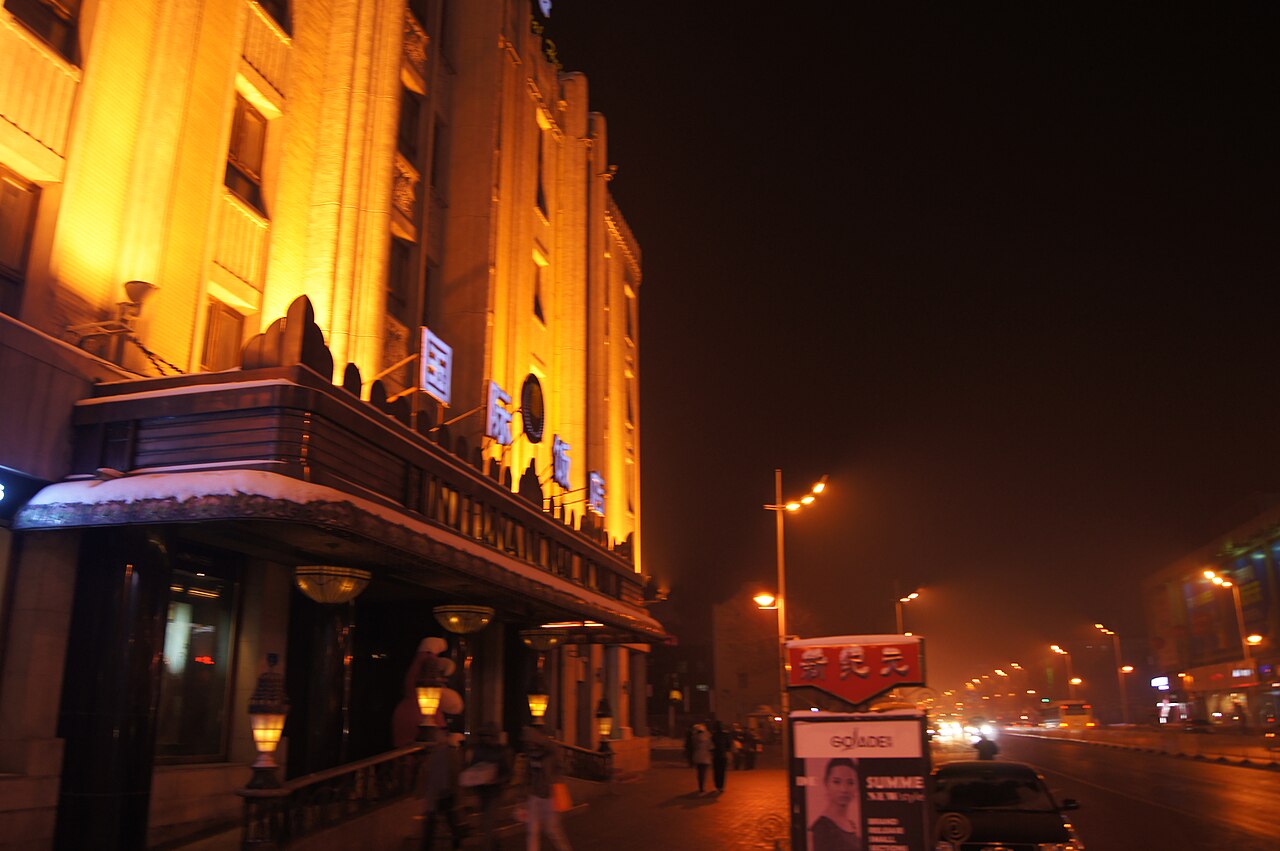 $$
Harbin
A city hotel with a straightforward name and broad appeal, suitable for travellers who want a conventional, comfortable stay in Harbin.
Check rates →Harbin
A local-style Harbin hotel that may suit travellers looking for a simple stay at a moderate price; check the location and room details first.
Check rates →Harbin
A modest Harbin hotel that may appeal to budget-minded travellers; confirm the location and facilities before booking.
Check rates →Ready-made pairings: a top sight and a hotel that suits it. Add both to your trip and book each when you are ready.
Do
Harbin Ice and Snow WorldStay
Wanda Realm HarbinHarbin
Do
Sun Island Snow Sculpture ExpoStay
Mercure Harbin SongbeiSongbei District
Do
Zhongyang Street and the Baroque QuarterStay
Shangri-La HarbinDaoli District
A practical first-timer guide to Harbin: how the city is laid out, how to get around, what to see first, what to eat and how to cope with the cold.
How to plan the Harbin ice and snow season: the ice park, the snow sculpture park, the lantern show, the frozen river, what to wear and how to organise your days.
A three-day Harbin itinerary that balances the Russian-era old town, the ice and snow sights, local food and a quieter cultural day.
What to eat and drink in Harbin: dumplings, hot pot, pot-stewed pork, Russian-influenced bread and sausages, frozen fruit and the local beer.
A season-by-season guide to Harbin: the ice and snow winter, the short spring and autumn, and the green, mild summer, with packing tips for each.
The best excursions from Harbin: Yabuli ski resort, China Snow Town, Yingjie hot spring, the Zhalong wetlands and the Beifang Forest Zoo, with travel times and tips.