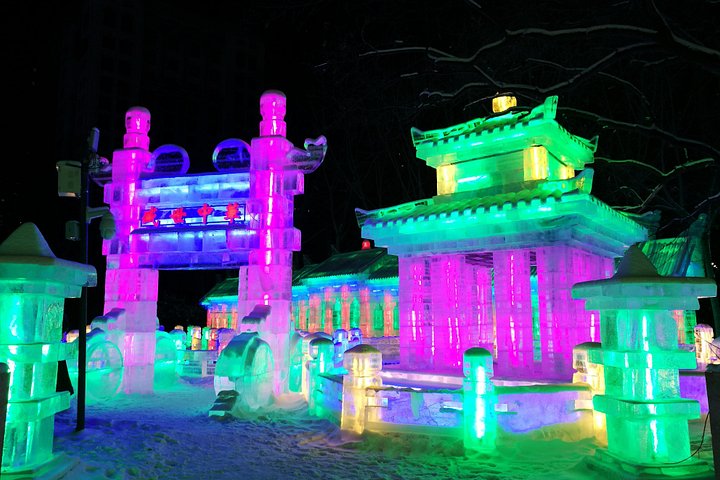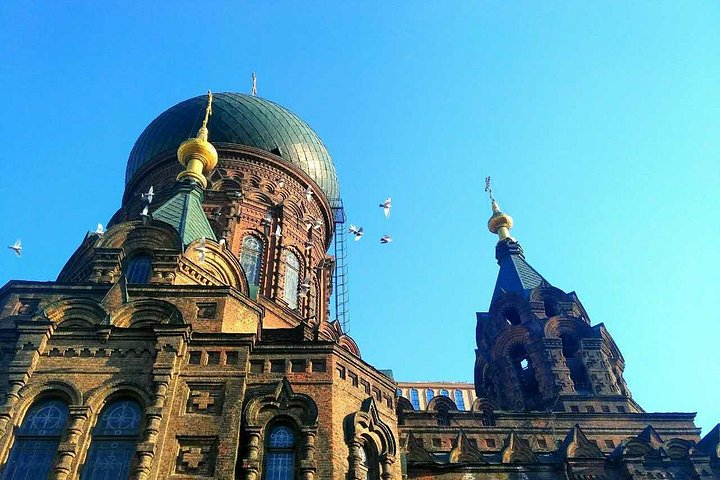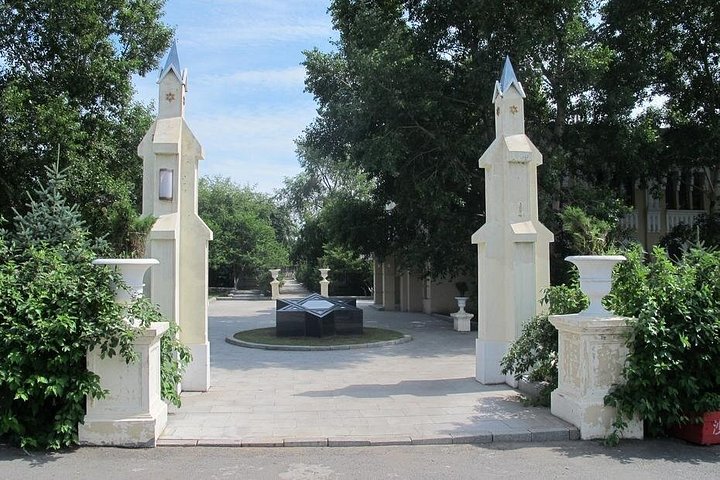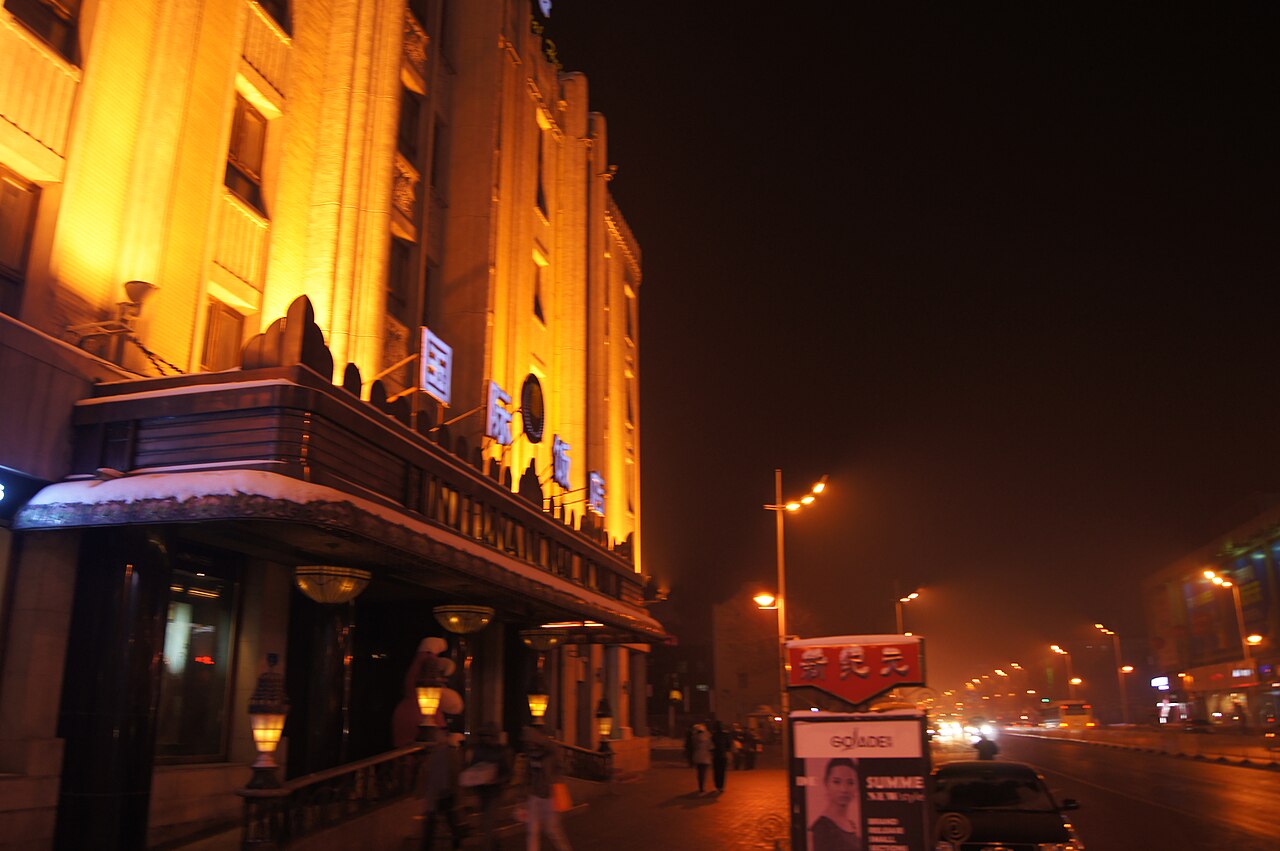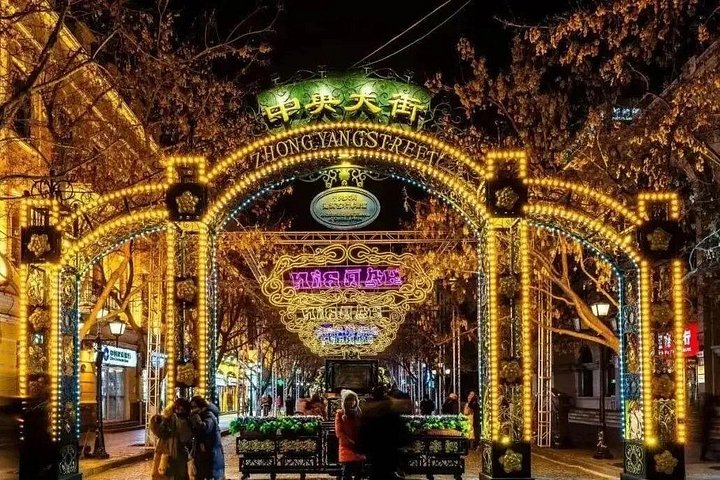
Zhongyang Street, often called Central Street, is the best place to understand why Harbin feels unlike any other Chinese city. It is a long pedestrian avenue running from the old commercial centre toward the Songhua River, paved in large stone blocks and lined with buildings in Baroque, Renaissance and Art Nouveau styles that date from the early twentieth century, when Russian engineers, merchants and refugees shaped the town around the Chinese Eastern Railway. Many facades have carved balconies, arches and decorative ironwork, and a number of them now house shops, hotels, restaurants and cafes. Street musicians, ice cream sellers and souvenir stalls give the avenue a lively, festival atmosphere in most seasons, and in winter the surrounding snow and ice carvings add to the scene. A short walk away lies the Baroque quarter, a cluster of lanes and courtyards in the same period style, where old houses and archways now hold craft shops, small galleries and local food. Together they make an easy, rewarding half day on foot, with no tickets and no need for transport once you are in the centre.
How to visit
Zhongyang Street is free to walk at any time, but the linked product is a guided cultural tour that runs from the street to the Baroque quarter with dinner, so it suits visitors who want context and a table arranged. Check inclusions and timings when you book.
On your own, start at the southern end near the river, walk north slowly and look up at the facades rather than just at the shopfronts. Stop for a Russian-style ice cream or a bakery treat, and try the local sausages and bread sold in old-style shops.
The street is busiest on summer evenings and winter weekends, and early morning is the calmest time for photographs. In winter the stone surface can be icy, so wear boots with grip; in summer the cobbles are warm and the cafes spill onto the pavement. Allow at least two hours for a relaxed walk, more if you add the Baroque quarter and a meal. Evening is lovely, when the buildings are lit and the crowds thin slightly.
Pair the street with Sophia Cathedral, a short walk away, and the Songhua River promenade for a full introduction to central Harbin. It helps to know a little of the story behind the buildings as you walk. In the late nineteenth century the Chinese Eastern Railway brought thousands of Russian workers and engineers to what had been a small river settlement, and the street that is now Zhongyang grew as the commercial heart of that new town, with banks, hotels, department stores and pharmacies built in the latest European fashions.
After the revolution in Russia, waves of refugees arrived, followed by Jewish, Polish, Japanese and other communities, so that the city became an unusually international place in the early twentieth century. Many of those buildings survive, restored and repainted, and a few carry small plaques giving the date and original use. A good habit is to walk one side of the street in one direction and return on the other, so that you notice the upper storeys, the gables and the decorative details that are easy to miss in the crowd.
What to expect
The experience
A self-guided or guided walk along a long pedestrian avenue lined with European-style buildings, plus the nearby Baroque quarter.
Best time
Morning for quiet photographs; evening for lights and atmosphere.
How long
Two to three hours, longer with a meal.
Tips
Look up at the facades, wear boots with grip in winter and sample bakery and ice cream stops.
Quick picks
- Best for
- First-time visitors, architecture fans and anyone who wants an easy, free introduction to old Harbin.
- Families
- Pedestrian-only and easy for strollers, with plenty of snack stops.
- Couples
- A romantic stroll at dusk with lit facades and a table at a Russian-style restaurant.
- Pair with
- Sophia Cathedral, the riverside promenade and a dumpling dinner.
- Time needed
- A half day.
Good questions
Is Zhongyang Street free?+
Yes, walking the street is free at any time. The linked product is a guided tour with dinner, which suits visitors who want context and a table arranged.
Why does Harbin have European-style buildings?+
The city grew around the Chinese Eastern Railway in the early twentieth century, and Russian and other European engineers, traders and refugees built in the styles of their home cities.
What should I eat on the street?+
Try Russian-style ice cream, local bakery bread, smoked sausages and seasonal snacks. In winter, look for frozen fruit on a stick and hot drinks.
How long does the street take?+
A relaxed walk takes about an hour end to end, and two to three hours if you stop for food and add the Baroque quarter.
Is it safe for evening walks?+
Central Street is busy and well lit in the evenings, as in most major Chinese cities. In winter watch for ice underfoot.