Ibiza Town makes a convenient base, because most of the island is within an hour by road. Each part of the island has its own character, and each makes a satisfying day. This guide groups the day trips by direction so you can match them to the weather, the season and your energy. Opening times and boat availability change throughout the year, so check before you go and keep a flexible plan.
The north: churches, caves and a hippy market
Head north into the green hills toward Sant Miquel de Balansat. The fortified church there has a T-shaped plan, which the tourism board describes as unique among Ibiza's churches, with an arched courtyard and a bell wall. Nearby, the Can Marçà caves open in a sea cliff and offer a guided visit of thirty to forty-five minutes among stalactites and stalagmites. A small-group tour combines the cave with the Las Dalias hippy market and the cove of Benirràs, which is useful if you do not want to drive. On a weekend, finish at Las Dalias in Sant Carles, a garden-like market that runs through the winter on shorter hours. Allow a full day, and wear shoes with grip.
The east: Santa Eulària des Riu
Santa Eulària is a pleasant town with a river promenade, a marina and a hill topped by the whitewashed fortress-church of Puig de Missa. The church was consecrated in 1568, and the climb to its porch takes ten to fifteen minutes. The setting is calm, the views run to the sea, and the town keeps a good number of cafes and restaurants open through the quieter months. This is an easy half-day trip from Ibiza Town, about a quarter of an hour by car, and it pairs well with a market visit or a stroll along the coast.
The south: salt, birds and the first Phoenicians
The south of the island is flat and open, and its character is quite different from the north. The Ses Salines Natural Park protects lagoons, dunes and seagrass meadows, and around 210 species of migratory birds visit the ponds. Four routes can be walked or cycled, and the white salt mounds recall centuries of harvesting. Nearby, the Sa Caleta settlement dates from the latter part of the eighth century BC and is part of the island's UNESCO World Heritage designation. Visit in the late afternoon and finish with dinner on the coast. This trip is especially good in the cooler months.
The west: coves and sunsets
The west coast is the classic day out. Cala Comte and Cala Bassa are among the island's best-known beaches, Cala Salada and Cala Saladeta are quieter twin coves near Sant Antoni, and the Es Vedrà viewpoint gives a famous view of the limestone islet. Sant Antoni's bay is the place for the sunset. A rental car or private jeep safari makes the day easy, and a catamaran cruise or kayak trip can replace the land route in the warm season. Arrive early at the beaches and aim to be at your sunset spot half an hour beforehand.
The sea: Formentera
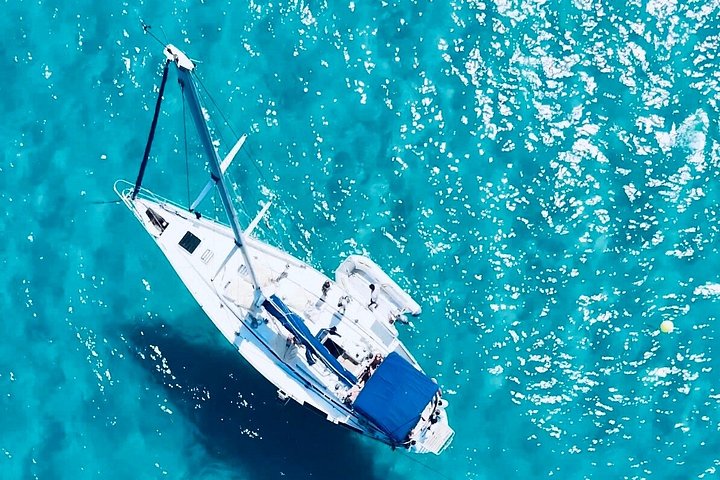
The sailboat day to Formentera visits S'Espalmador and Ses Illetes, with time for swimming, snorkelling and a paddleboard. It is a full day of around seven hours and runs mainly from about May to October, so book a date with free cancellation. Outside the season, the regular ferries still connect the two islands, and Formentera is pleasant to walk or cycle. The sea between the islands is part of the same natural park that protects the south of Ibiza.
Choosing and combining
If you have one day, choose the west coast in summer and the north or south in winter. If you have two, add the other. Day trips are easiest with a car, but taxis, tours and buses are workable for single destinations. Eat in the villages rather than on the beaches in the off-season, take water, and fill the tank before you leave the main roads.
Where to base yourself
Ibiza Town gives you the shortest drives to the north, east and south. Hotel Royal Plaza and The Standard are central, and Hotel Puchet in Sant Antoni suits the west coast. Return to town for dinner after a long day; the harbour streets are a pleasant place to finish.