Ibiza's food is better and more local than its party reputation suggests. Behind the beach clubs there is a farming and fishing island with a short list of traditional dishes, a strong salt and herb tradition and a good number of restaurants that stay open all year. This guide covers what to try, where to look and how the seasons change what is available. As always, opening times vary, so check before you travel, particularly in the quieter months.
Dishes worth trying
Look for bullit de peix, a fish stew served with a rice course, which is considered one of the island's signature dishes. Sofrit pagès is a hearty farmhouse stew of meats, potatoes and sausage, and arròs de matances is a rice dish traditionally linked to the winter pig slaughter. Local fish and seafood are best simple and grilled, and the island's markets sell tomatoes, figs, almonds and carobs. For something sweet, try flaó, a cheese and mint cake, and the Balearic ensaïmada pastry. Menus at traditional restaurants are written in Spanish or Catalan, so ask your server which dishes are made locally and what is in season.
Salt and herbs
Salt has been harvested on the south of Ibiza for centuries, and you will find local sea salt in shops and on restaurant tables. The salt lagoons of Ses Salines Natural Park are the landscape behind it, and a walk there makes a good companion to a lunch in the south. Hierbas ibicencas is the island's herbal liqueur, made from local herbs and served as a digestif. Many bars pour it after a meal, and it is a common souvenir.
Where to eat in Ibiza Town
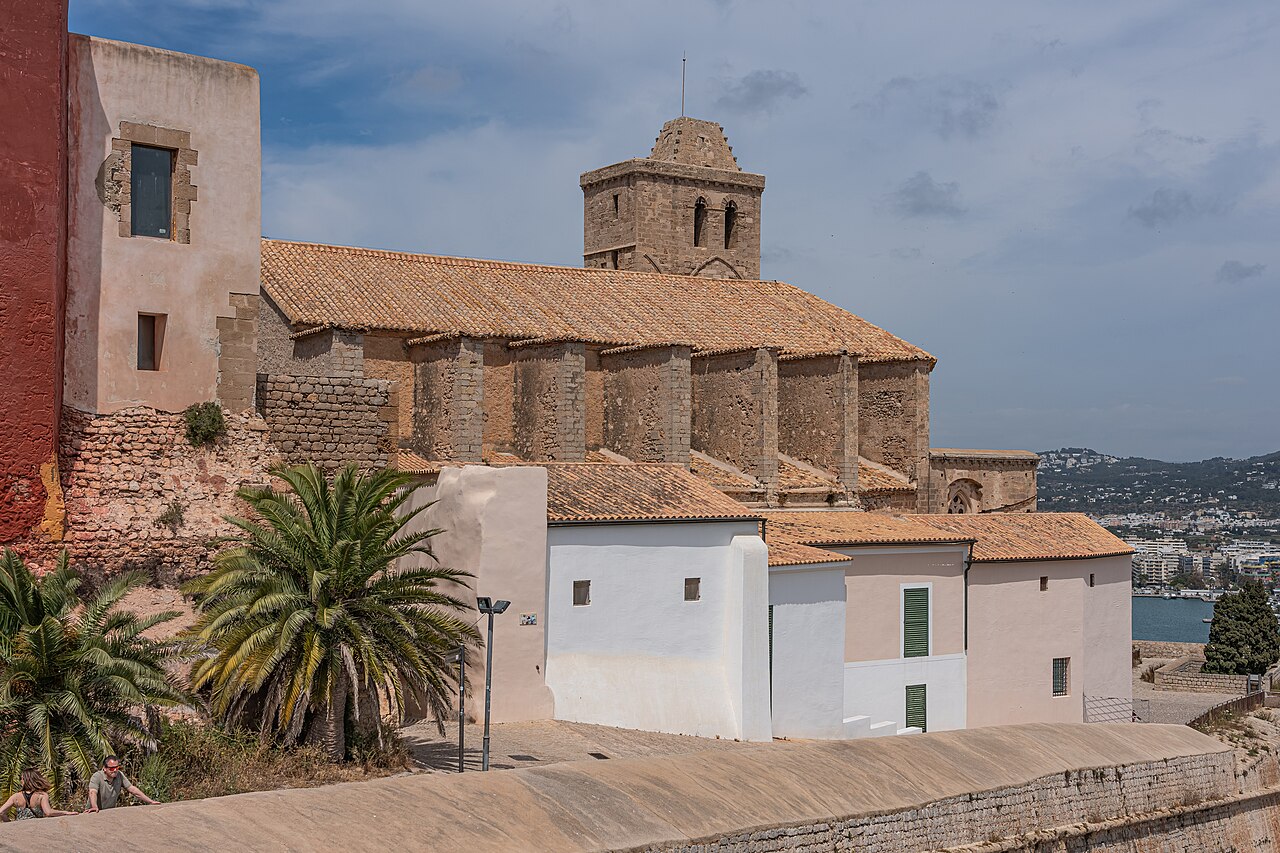
The lower town around Vara de Rey and the harbour has the widest choice and is the most reliable area from November to March, when many seasonal places close. Walk the lanes of the fishermen's quarter for small tapas bars and family restaurants. Inside the walls of Dalt Vila a handful of restaurants have terraces with views, but many close for the winter, so check the day before you climb. Breakfast at a cafe on the promenade, with coffee and a pastry, is a pleasant start before the old town walk.
Where to eat on the coast
The beach restaurants at Cala Comte, Cala Bassa and Cala Salada are lively in summer and mostly shut in the cooler months. A better winter strategy is to eat in the villages and towns. Sant Antoni keeps a number of restaurants open along the promenade, Santa Eulària has a riverside strip and a historic centre, and the villages of the north, around Sant Miquel de Balansat, have family-run places that serve local food. In the south, small beach restaurants near the salt lagoons and Cala Jondal open on weekends outside the peak, depending on the year.
Markets and shopping
The Las Dalias market in Sant Carles sells craft, clothes and food and runs on weekends through the winter. Local markets and bakeries are a good way to put together a picnic of bread, cheese, olives and fruit for a beach or viewpoint. Food shops and supermarkets in the main towns stay open through the year, and are a handy way to keep costs down.
Timing and etiquette
Spanish eating hours run late. Lunch is commonly from about two in the afternoon and dinner from nine, although tourist-oriented restaurants open earlier. Many kitchens close between lunch and dinner. Tipping is modest, and service is often not included, so a small tip for good service is welcome. If you have dietary needs, say so early; vegetarian and gluten-free choices are widely available in resorts and towns, but can be limited in village restaurants.
Sunsets and drinks
The sunset ritual in Sant Antoni is best enjoyed with a drink at a bar on the bay, although the famous venues operate mainly in the warm season. Outside it, buy a drink in town and walk to the rocks or the promenade to watch the light. Whether you are in a hotel in Ibiza Town or a base in Sant Antoni, ask the staff for their own favourites; locals eat at places visitors rarely find, and a short recommendation can be the best meal of the trip.