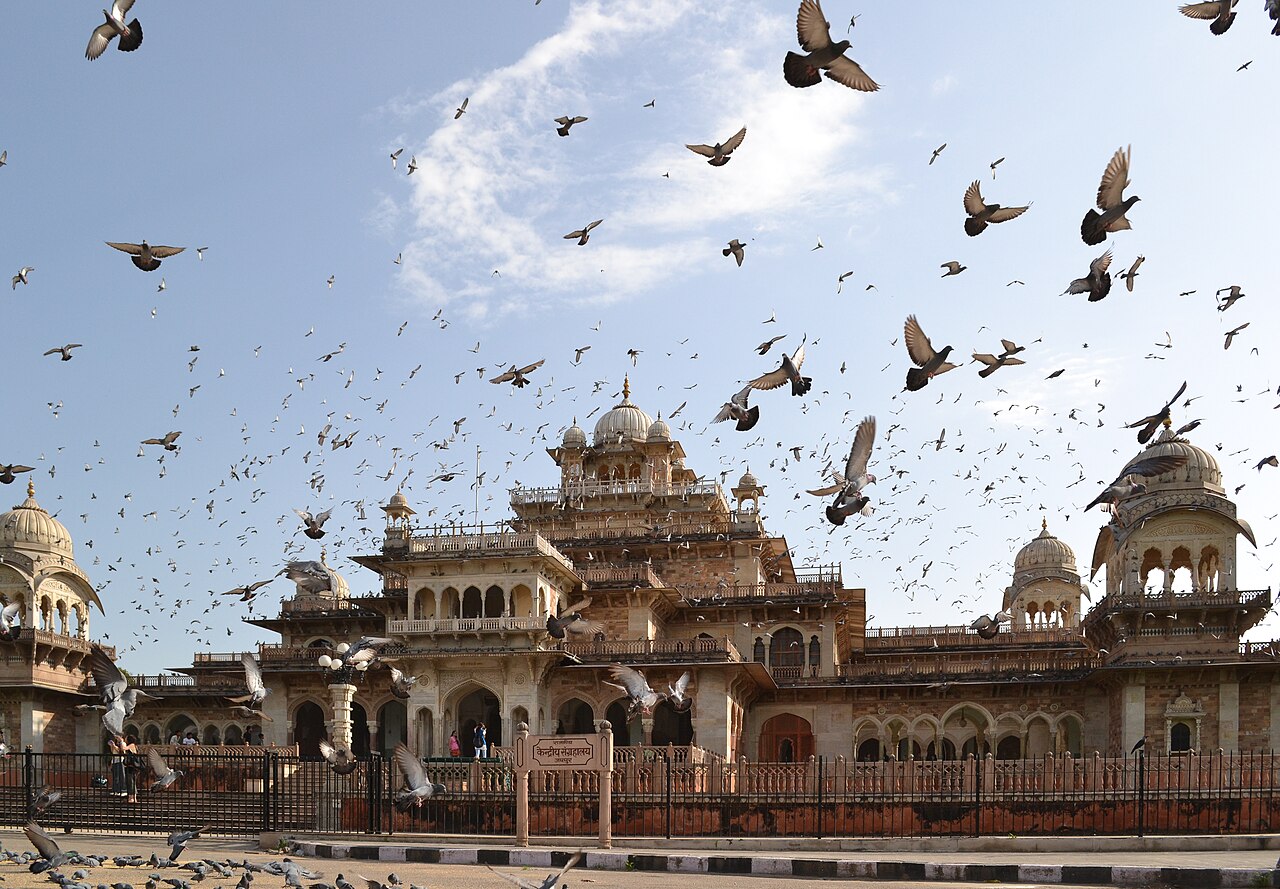
Albert Hall, the Government Central Museum, stands in the green of Ram Niwas Garden just outside the walled city. It was designed by Sir Swinton Jacob in the Indo-Saracenic style, which blends Mughal, Rajput and Gothic ideas, and the foundation stone was laid by the Prince of Wales in 1876. Its design was inspired by the Victoria and Albert Museum in London, and the building has been called one of the most beautiful museums in India. Inside, the collections cover Rajasthani arts and crafts: miniature paintings from several schools, carpets, jewellery, brass and metalwork, ivory carving, weapons and costumes. The museum also holds an Egyptian mummy, a surprise to many visitors. The central courtyard and arcaded galleries are lovely in their own right, and the upper floors have views over the garden. The museum is less crowded than the palaces, so it makes a calm hour for those who enjoy decorative arts. The building looks its best after dusk, when it is floodlit, and many visitors come at that time to photograph the facade even if they do not go in.
Why visit: the collection gives context to what you see in the bazaars. You can see classic block-printed textiles, enamel work and the Rajput miniature tradition, and the crafts you meet in the market are placed in a historical frame. Labels are in English and Hindi but can be sparse, so a short read about Rajasthani art beforehand or a guide helps. Allow about an hour to an hour and a half for the galleries.
Practical points: the museum is run by the state government, and the foreign visitor rate rose in January 2026. It is covered by the state composite ticket used at Amber, Hawa Mahal, Jantar Mantar and Nahargarh. Opening hours and any weekly closing day are listed on the official page and can change, so check before you go, especially if you plan an evening visit for the illuminated facade. Photography rules vary by gallery.
Where it fits: Albert Hall works as a gentle second-day stop after the busy palaces, together with a stroll in Ram Niwas Garden and lunch nearby. It is a good rainy-day option and good for travellers who like museums. The night view of the facade makes a good end to a walk from the old city. Pair it with a bazaar walk to connect the crafts in the cases with the workshops in the lanes.
What to expect
The experience
A self-guided walk through galleries of Rajasthani decorative arts, with a courtyard, arcades and garden views.
Best time
Mid-morning or late afternoon, with an optional visit after dusk for the lit facade.
How long
One to one and a half hours inside; extra time for the garden and photographs.
Tips
Check opening hours on the official page, carry water, and arrive at dusk to photograph the illuminated exterior.
Quick picks
- Best for
- Museum lovers, craft enthusiasts and photographers.
- Families
- Manageable length with unusual objects such as the mummy; the garden gives children space to run.
- Couples
- A calm indoor stop and a romantic night view of the facade.
- Pair with
- A bazaar and food walk, or a block-printing class.
- Time needed
- About an hour and a half.
Good questions
Why is it called Albert Hall?+
It is named after Prince Albert and was inspired by London's Victoria and Albert Museum. The Prince of Wales laid the foundation stone in 1876.
What can I see inside?+
Collections include Rajasthani miniature paintings, carpets, jewellery, metalwork, weapons and costumes. There is also an Egyptian mummy.
Is the building lit at night?+
Yes, the facade is floodlit after dark and is a popular photograph. Check the museum's current hours if you want to go inside in the evening.
Is it covered by the composite ticket?+
Albert Hall is one of the state-run sites covered by the government composite ticket. Check the current terms at the booking portal.
How long do I need?+
Around an hour to an hour and a half is enough for most visitors.