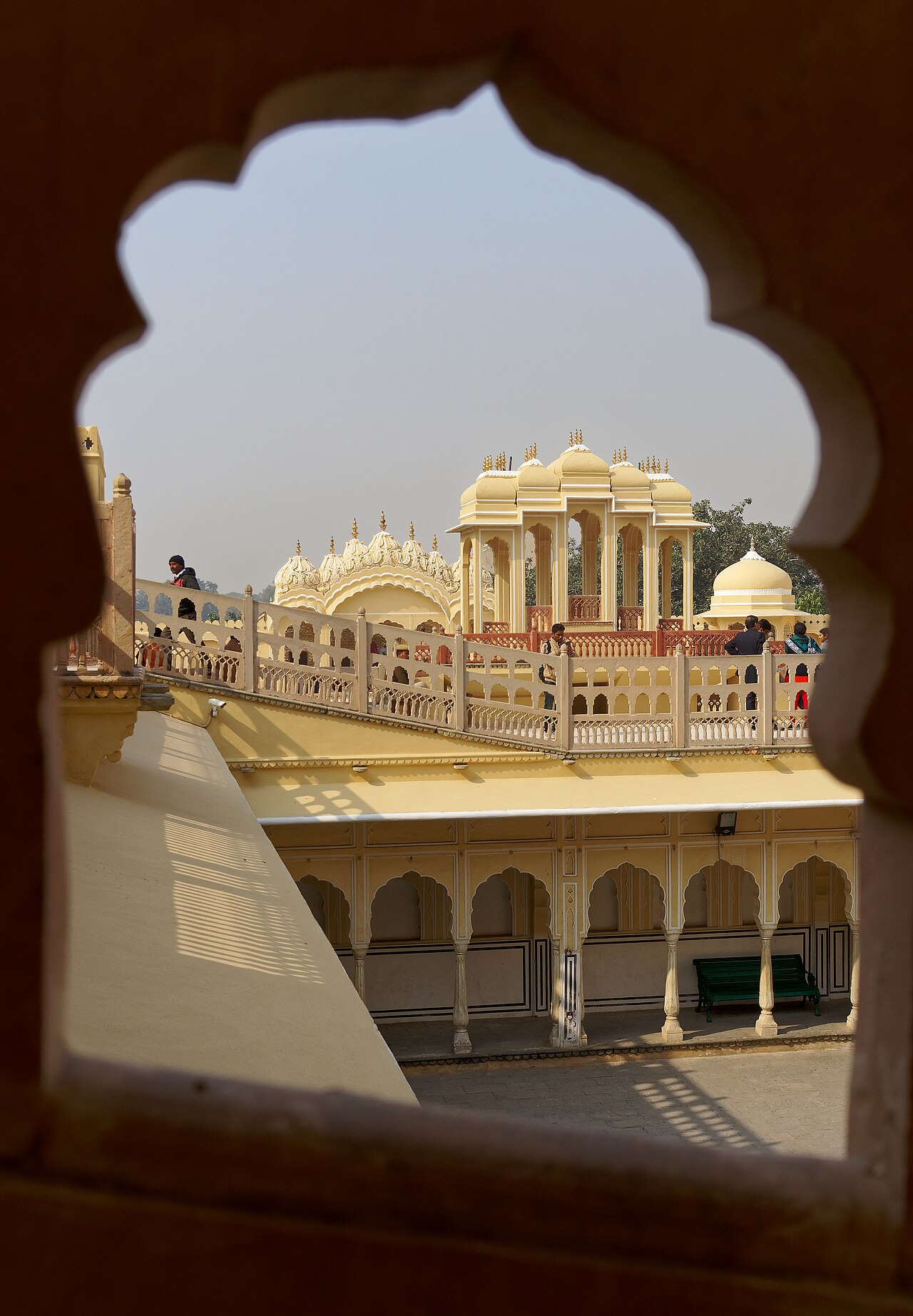
Hawa Mahal, the Palace of Winds, was built in 1799 by Maharaja Sawai Pratap Singh and is the most recognised building in Jaipur. Its five-storey facade of pink and red sandstone is pierced by 953 small windows, called jharokhas, each with delicate latticework. The design allowed the women of the royal household to watch processions and street life from behind screens while staying out of public view, and the pattern of windows lets breezes pass through so the interior stays cooler than the street, which is where the name comes from. It is less a palace than a screen wall, only one room deep, and visitors often walk past it without realising there is a way inside. The entrance is at the back, through a courtyard and passages, and a short climb on ramps rather than stairs leads past small chambers to open balconies at the top. From there you look down the Siredeori Bazaar and across to City Palace and the Jantar Mantar. A small archaeological museum occupies part of the courtyard. Most people spend under an hour inside but stay longer outside taking photographs.
Where to see it from: the facade faces east, so the best light falls on it in the morning, when the sandstone glows orange-pink. Several rooftop cafes across the road offer a front-row view with a coffee, and these are better than standing on the busy pavement. Sunset and early evening are also lovely, and the building is lit after dark. Be prepared for traffic noise, auto-rickshaws and hawkers; this is a working street, not a quiet square.
Going inside: tickets for the interior are managed by the state, and foreign visitor prices rose in January 2026, so check the current rate at the official page or the booking portal. A composite ticket covers several state monuments and is worthwhile if you plan to see Amber, Jantar Mantar and Nahargarh too. The interior is plain compared with the facade, and the main reward is the view through the windows from the upper level and a feeling for how the screen design worked. It can be busy and warm, so avoid the middle of the day.
Making a morning of it: walk here from City Palace and Jantar Mantar, enjoy the street, and continue into Johari Bazaar for jewellery and Bapu Bazaar for textiles. A bazaar and food walk starting nearby is a great way to understand the area. If you only have time for one photo stop, make it here, but give it at least half an hour to feel the street.
What to expect
The experience
A photo stop from the street or a rooftop cafe, then a short visit inside through the rear courtyard and up the ramps to the windows.
Best time
Morning for the glowing facade and the fewest crowds, or late afternoon for a softer light.
How long
Thirty minutes for photographs, up to an hour with the interior and the small museum.
Tips
Choose a rooftop cafe with a facade view, cross the road carefully, and keep an eye on your belongings in the busy street.
Quick picks
- Best for
- Photographers and first-timers who want the classic Jaipur image.
- Families
- A quick, easy stop, though the narrow pavement and traffic call for close supervision.
- Couples
- Coffee on a rooftop across the street at sunrise or sunset.
- Pair with
- City Palace, Jantar Mantar and a bazaar walk, all within a few minutes on foot.
- Time needed
- Under an hour, or longer with a rooftop breakfast.
Good questions
Can you go inside Hawa Mahal?+
Yes, the entrance is at the back of the building, and a ramped route climbs to balconies behind the famous windows. There is also a small museum in the courtyard.
Why does it have so many windows?+
The 953 latticed windows let royal women watch the street without being seen and allowed breezes to cool the building. That ventilation is why it is called the Palace of Winds.
What is the best place to photograph it?+
Rooftop cafes on the opposite side of the street give the clearest front view of the facade. Morning light is the most flattering.
Is it free to see?+
Viewing the facade from the street costs nothing. A ticket is needed for the interior, and the foreign visitor price is higher than the Indian rate.
How long should I plan?+
Half an hour covers the photographs and a look inside, though a rooftop coffee or a bazaar stroll can stretch it to a couple of hours.