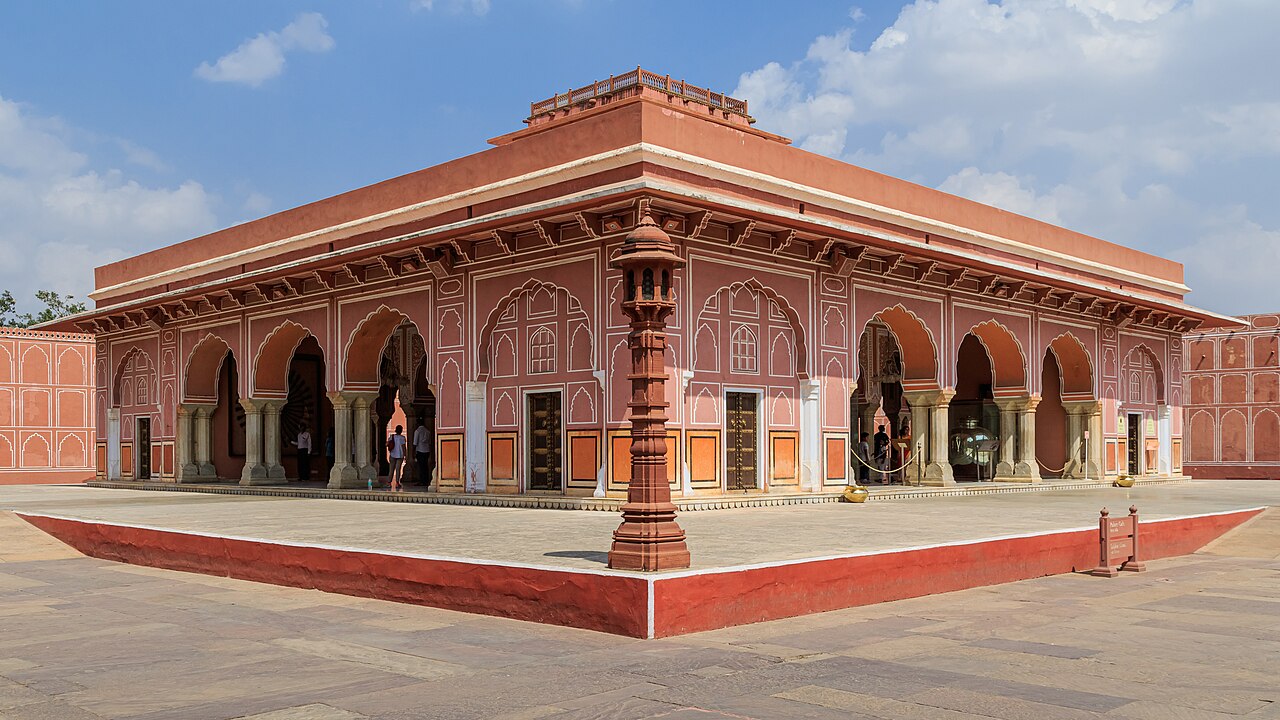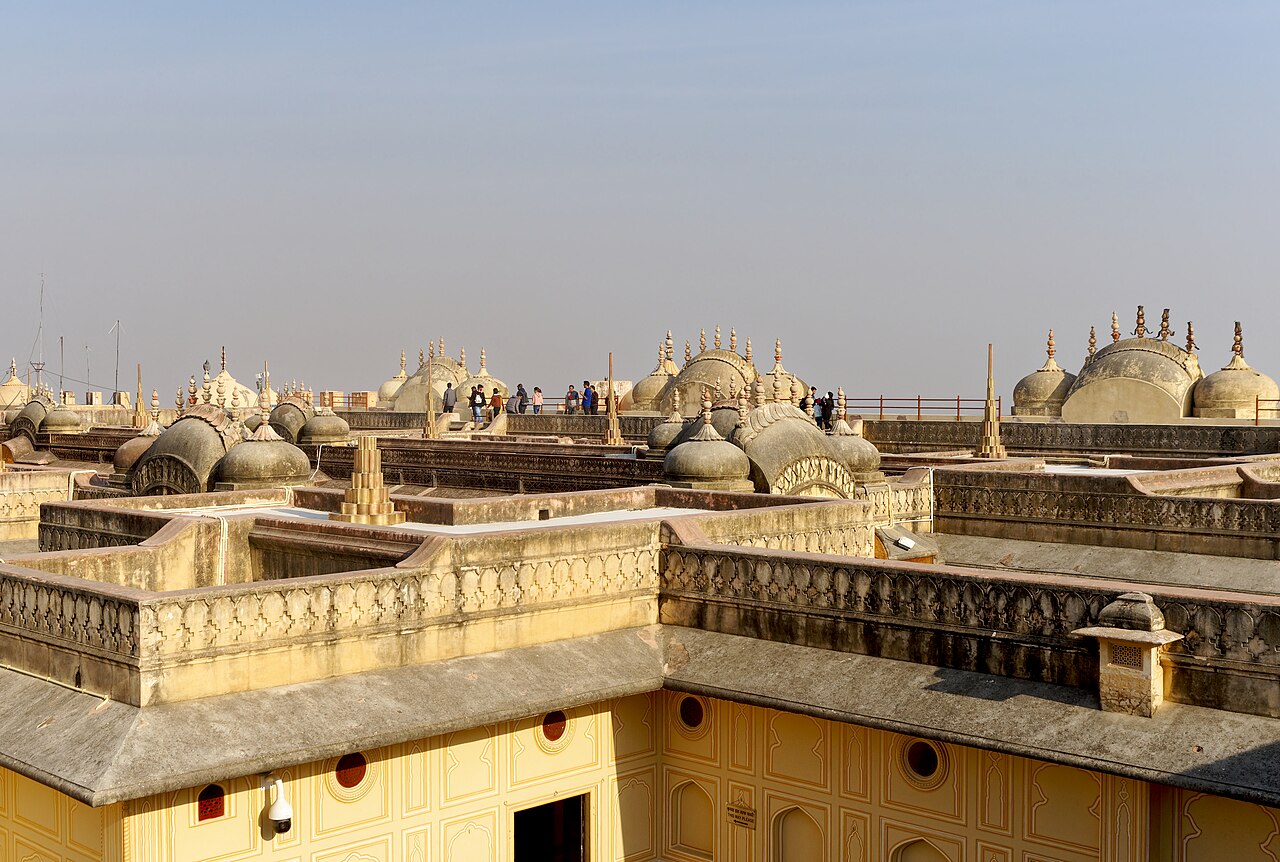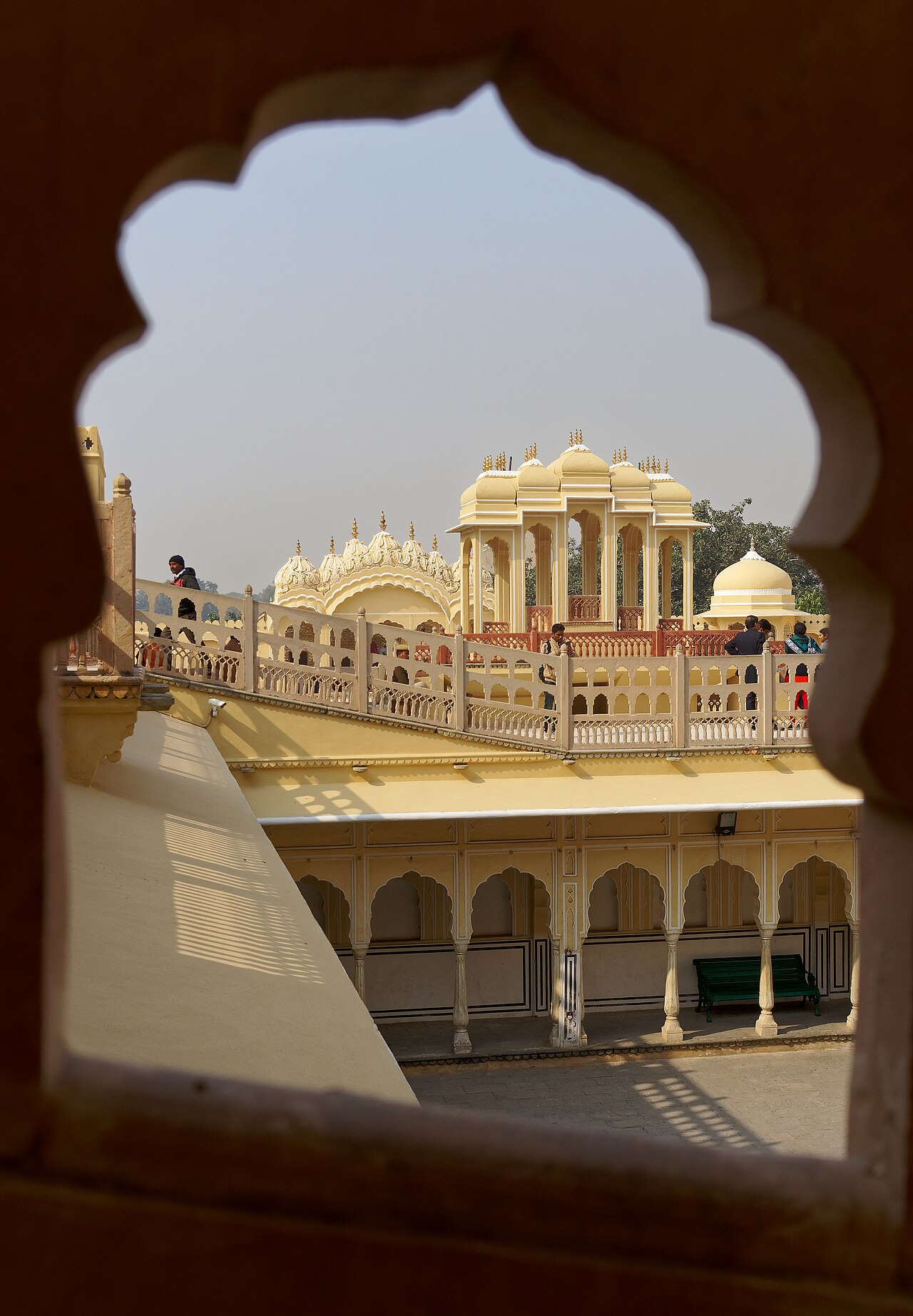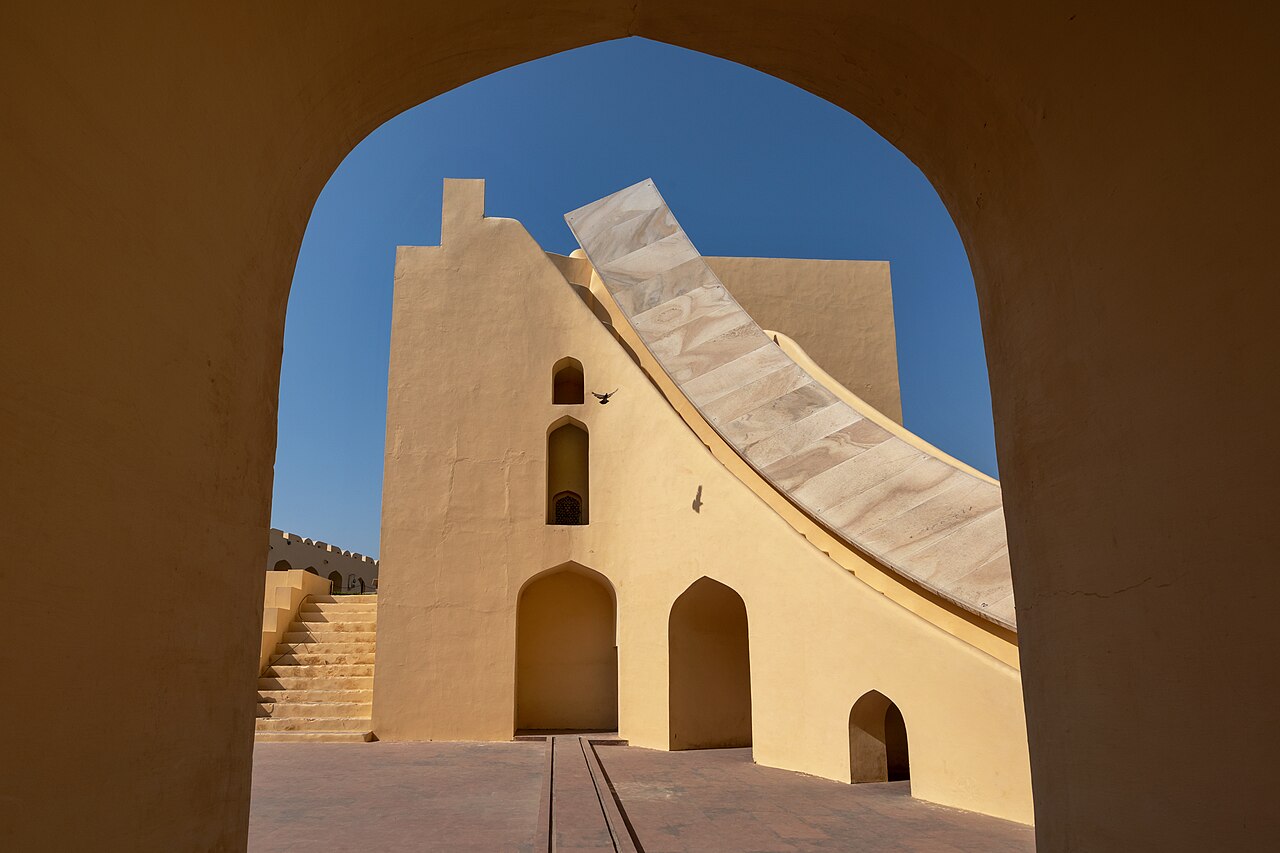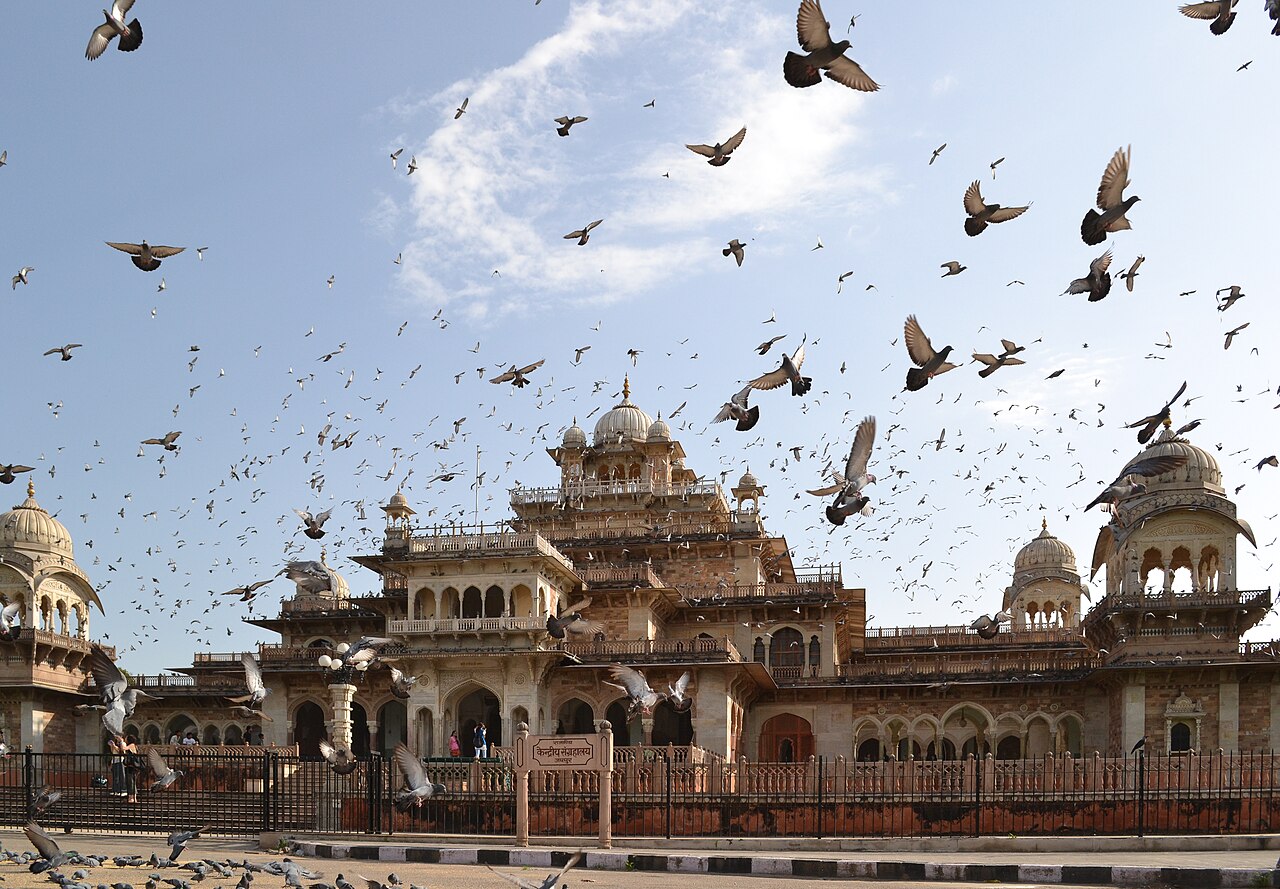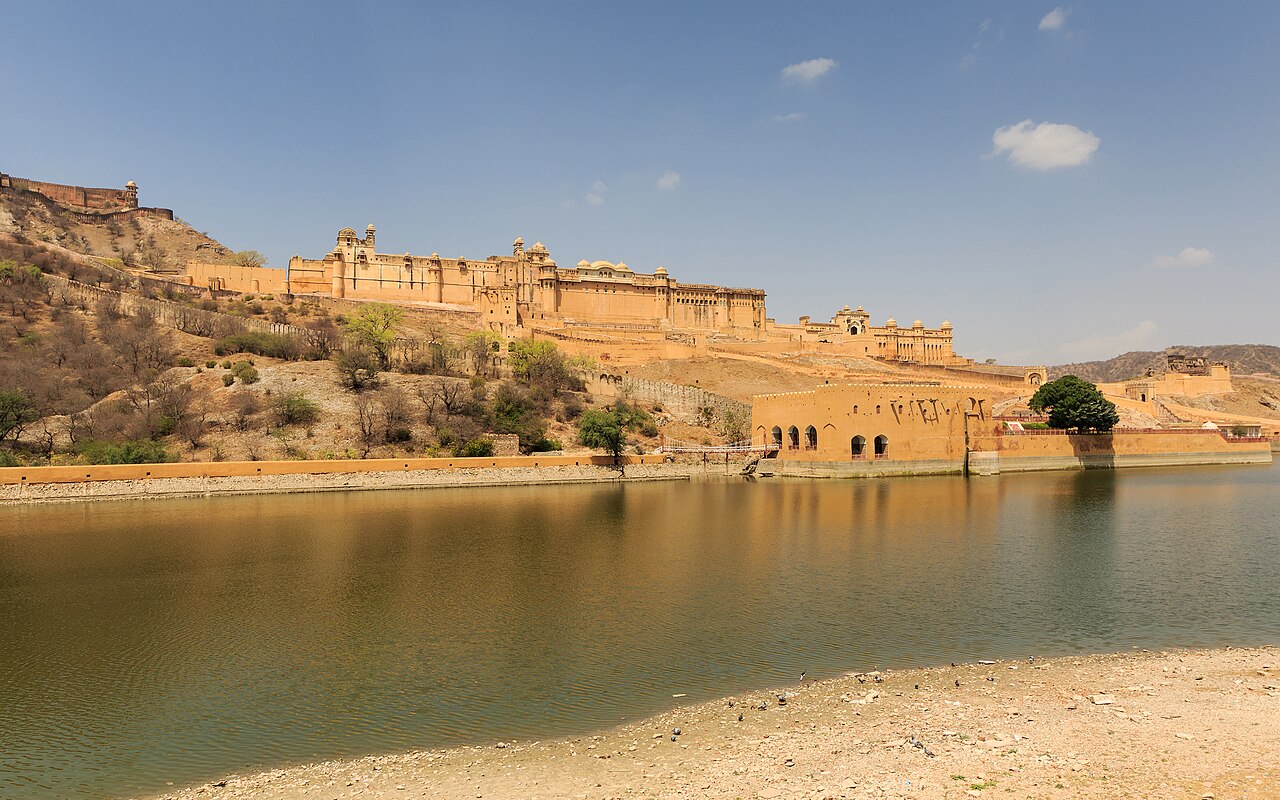
Amber Fort, known locally as Amer, sits on a ridge of the Aravalli hills about eleven kilometres north of the walled city, and it is the single sight that most visitors rate above everything else in Jaipur. The Kachwaha Rajputs ruled from here before Jai Singh II moved the capital to the plains in 1727. Construction began in 1592 under Raja Man Singh I and was finished by later rulers, and the result blends Hindu and Mughal ideas in red sandstone and white marble above the still waters of Maota Lake. It is part of the UNESCO listing for the Hill Forts of Rajasthan. You arrive through the Suraj Pol gate into the Jaleb Chowk courtyard, climb to the Ganesh Pol, a painted gateway above the Sheesh Mahal, and wander the Diwan-i-Aam, the Sukh Niwas and the Zenana quarters. The Sheesh Mahal, the hall of mirrors, is the showpiece: thousands of tiny mirror fragments set in plaster that turn a single candle into a night sky. Behind it a long wall walk links the fort to Jaigarh above, and the views over the lake and the Kesar Kyari garden are worth the climb alone.
Getting there and in: Amber is a short drive from the city, and most visitors come by car or auto-rickshaw. You can climb the ramp on foot, take a jeep up from the car park, or ride an elephant where it is operating, although many travellers now skip the animals on welfare grounds and walk up in about fifteen minutes. Foreign visitors pay a notably higher ticket than Indian visitors, and prices for state-run monuments rose at the start of 2026, so check the current rate and the composite ticket for several monuments at the official booking portal.
Making it worthwhile: a licensed guide earns the fee here, because the palace is a maze of courtyards and the best details, from the painted Ganesh Pol to the fine jali screens through which royal women watched ceremonies, are easy to walk past. The Viator half-day private tour linked here pairs the fort with Jal Mahal and a stepwell, with a driver and an expert guide, and is well reviewed. Start early. The coach parties arrive by mid-morning, the courtyards heat up quickly outside winter, and the Sheesh Mahal is calm before ten. Wear sturdy shoes, because the stone is polished and uneven.
Know before you go: security checks are routine, and large bags may be refused at the entrance. There is a sound and light show in the evening on a seasonal timetable, and the nearby Panna Meena ka Kund stepwell and the Jaigarh Fort above are good add-ons. An outer wall at the foot of the fort collapsed in heavy rain in August 2025 without injuries, and the fort stayed open, but it is sensible to confirm access on the day if you are visiting after heavy rain.
What to expect
The experience
A self-guided or guided walk up through the gates, courtyards and halls of the palace-fort, ending with the Sheesh Mahal and the wall-top views over Maota Lake.
Best time
Early morning on a weekday, before the tour groups arrive and before the heat builds; the cooler season runs from roughly October to March.
How long
Allow three to four hours with a guide, including the climb, the mirror hall and a coffee stop.
Tips
Hire a licensed guide or take a guided tour, wear comfortable shoes, and carry a small bag only. Walk up rather than ride if you can, and ask about the composite ticket if you plan to see other state monuments.
Quick picks
- Best for
- Every first-timer, and anyone who loves forts, mirrors and lake views.
- Families
- Children enjoy the gates, the tunnels and the sweeping ramparts; choose a cool morning and expect a fair amount of stairs.
- Couples
- Go early, linger in the Sheesh Mahal, then take a quiet lunch by the lake or watch the sunset from Nahargarh.
- Pair with
- Jal Mahal and the Panna Meena stepwell on the same trip, and Nahargarh Fort for sunset.
- Time needed
- Half a day with travel, or most of a morning if you start early.
Good questions
Is Amber Fort the same as Amer Fort?+
Yes, Amber is the traditional English spelling and Amer is the local name; both refer to the same hilltop fort-palace north of Jaipur. You will see both on signs and tickets.
How long does a visit take?+
Most people spend about two to three hours inside the fort, or three to four hours door to door from central Jaipur. Add time if you walk the ramparts or visit the stepwell.
Is it worth hiring a guide?+
Yes, particularly on a first visit. A guide explains the Sheesh Mahal, the Zenana and the gates, and can steer you around the busiest courtyards.
Do I need to book tickets in advance?+
Tickets can be bought at the site and online through the Rajasthan government booking portal, and a guided tour usually handles this for you. A composite ticket saves money if you will visit several state-run monuments.
Are elephant rides recommended?+
Rides may operate on some days, but many visitors choose not to ride for animal welfare reasons. Walking up the ramp takes about fifteen minutes and gives better views.